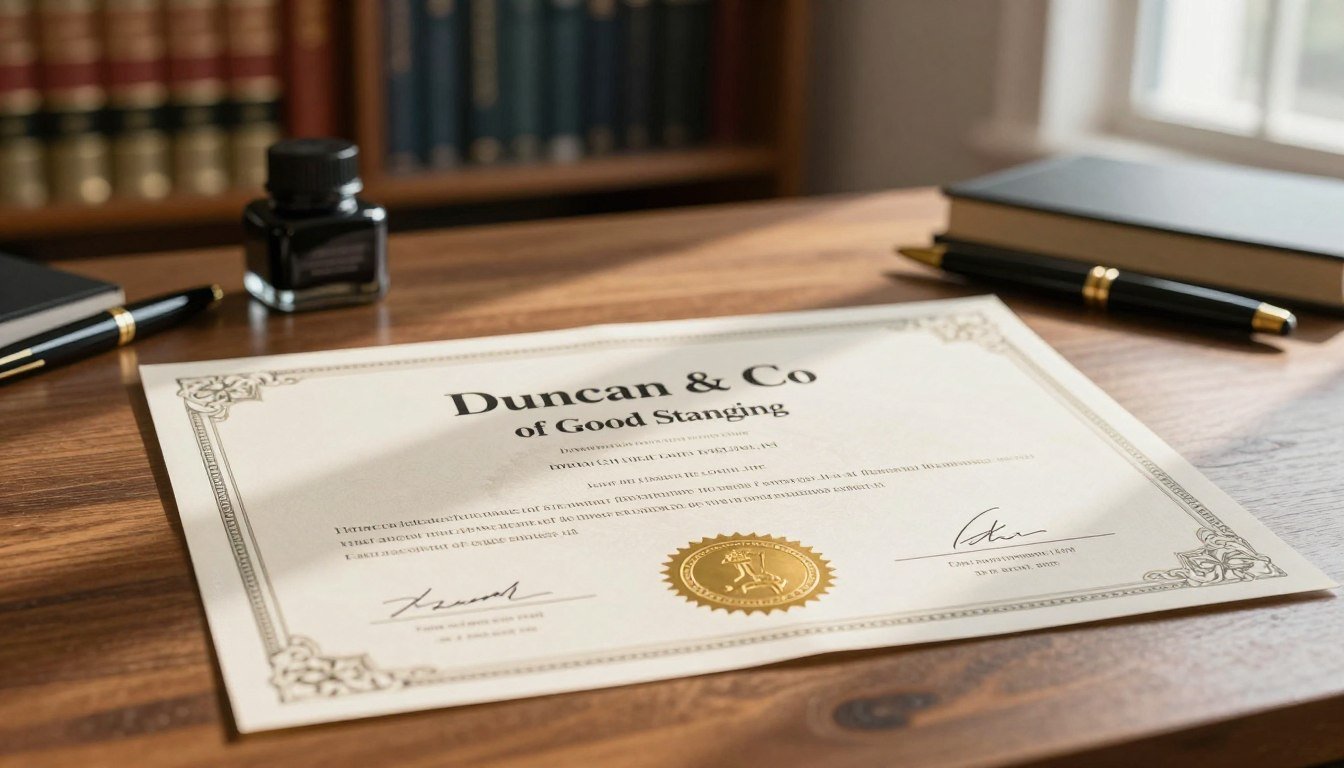
When international paperwork lands on your desk, it can feel personal and urgent. I remember standing in line at the Secretary of State office, palms tight, trying to make sense of foreign bank forms and unclear requirements. That worry is common and solvable.
This guide shows you how to decide whether an apostille or a state-issued certificate will meet the request. It explains why banks, regulators, and partners ask for a certificate good standing and how an apostille makes public documents valid in many countries.
The article covers key decision points: apostille vs authentication, how to get an apostille-ready certificate, step-by-step submission, and tips to avoid rejection. Requirements vary by country and by the requesting organization, so confirm the exact wording before you send documents.
For help, call or text 3038270632, or stop by 350 Terry St Ste 229, Longmont, CO 80501 for a quick document review before you submit. This piece stays current and process-focused, with references to the Secretary of State and the U.S. Department of State Office of Authentications.
Key Takeaways
- A certificate good standing often proves your legal status when you expand or transact abroad.
- An apostille is used for Hague Convention countries; some places require full authentication instead.
- Confirm the exact request language to avoid wasted time and denied submissions.
- Follow step-by-step submission rules and get an apostille-ready document from the Secretary of State.
- Common uses include opening foreign accounts, registering branches, and meeting compliance for agreements.
- Contact 3038270632 or visit 350 Terry St Ste 229, Longmont, CO 80501 for local assistance.
Why a Certificate of Good Standing needs international certification for business use abroad
When your company crosses borders, domestic paperwork often needs extra verification to be accepted overseas. A U.S. state-issued paper can be valid at home but still require outside proof before foreign banks, registries, or regulators will act.
Common scenarios that trigger a seal, signature, and certification request
Typical triggers include:
- Opening a corporate bank account or onboarding with a foreign payment processor.
- Registering a subsidiary, branch, or tendering on an overseas contract.
- Regulatory filings where the foreign office asks for an original with seal and authorized signature.
How foreign authorities and banks evaluate U.S. state papers
Recipients check issuing authority, certification type, and whether the copy is a qualifying certified copy. Words in the request matter — phrases like “apostilled,” “authenticated,” or “original with seal” change the required steps.
“Missing an official seal or signature is one of the fastest ways to get a packet rejected.”
Personal life-event certificates such as marriage or birth certificate follow the same verification logic, though they move through different channels. Use reliable resources — the requesting bank’s compliance team, the foreign registry, or the embassy — so you send the correct package the first time.
Does my small business need a Certificate of Good Standing apostilled?
First, identify where the paperwork will be used and what the recipient explicitly asks for.
Quick decision points based on destination and request
Confirm whether the destination country participates in the Hague Convention. If yes, an apostille usually applies. If not, expect authentication or consular legalization.
When a state-issued certificate is enough versus when an apostille is required
A state-issued certificate alone can suffice for domestic filings or when the foreign recipient states “no apostille required.”
Get an apostille when the request explicitly asks for it or when the country is a Hague member and requests apostille compliance.
When additional documents may be required
Many foreign transactions ask for more than one paper. Typical add-ons include Articles of Incorporation, a Certificate of Formation, bylaws excerpts, or a board resolution.
Verify all document requirements early so you avoid re-ordering and delays.
“Submitting the wrong certification type is a fast route to rejection.”
| Step | Action | Why it matters |
|---|---|---|
| 1 | Identify the country and check Hague status | Determines apostille versus authentication path |
| 2 | Read the recipient’s exact requirements | Some banks or regulators ask for extra documents or translations |
| 3 | Order a certified state copy, then pursue apostille/authentication | Timing and sequencing prevent rework and speed the process |
Apostille vs authentication: choosing the correct path under the Hague Convention
Choosing the right federal or state certification hinges on the destination country’s paperwork rules. The path you pick affects acceptance, time, and cost.
Apostille for Hague Convention countries and why it simplifies acceptance
Apostilles attach a single, standardized certificate that many foreign authorities accept without further embassy steps. For nations that belong to the Hague Convention, apostilles reduce extra legalization and speed approval.
Authentication for non‑Hague countries and when consular legalization may apply
Authentication is the federal or state confirmation used when a target country is not in the Hague Convention. Often, authentication is followed by consular legalization at the destination’s embassy or consulate in the United States.
Where the Secretary of State fits versus the U.S. Department of State Office of Authentications
State issuing offices (Secretary State) provide certified state documents and sometimes state-level apostilles. When federal processing is required, the U.S. Department State Office of Authentications issues the federal certificate.
“Using an apostille for a non‑Hague destination can be rejected as unusable and cause costly delays.”
Travel.State.Gov requires Form DS-4194 for federal steps. Mail to PO Box 1206, Sterling, VA 20166-1206 or visit 600 19th Street NW, Washington, DC 20006 (walk-in drop-off 7:30–9:00 a.m. Mon–Thu). The next sections explain how to get an apostille-ready certificate and assemble the correct packet.
Getting an apostille-ready Certificate of Good Standing from the Secretary of State
Start by ordering an original certified copy from the issuing office — not a printout or scan. The correct document must come from the state issuing authority to qualify for an apostille.
Requesting a certified copy and avoiding common mistakes
Order a newly issued certified copy from the appropriate secretary state office. Do not use photocopies or unofficial certificates.
For example, Nevada’s secretary state issues apostilles, charges about $20 per document, and commonly processes requests in 3–5 business days. Mail turnaround is often 5–7 days, while walk-in service in Carson City can be same‑day.
What the certificate must show
The certified copy must include clear issuing authority, the official seal, and an authorized signature that the state can validate for apostille processing.
- Check the certificate date if the foreign recipient requires recent issuance.
- Order extra certified copies when multiple entities each require their own apostilled set.
- Avoid submitting scans, unofficial seals, or documents missing the signature; those cause rejections.
“Apostille requests fail when the document is not a qualifying certified copy or lacks seal and signature.”
Once you have the correct certified copy in hand, assemble the apostille packet and choose return shipping based on urgency.
How to apostille your Certificate of Good Standing step by step
Start by confirming exactly how the destination will accept your document and whether an apostille, authentication, or translation is required.
Confirm country requirements and translation expectations
Check the recipient’s written requirements first. Note whether they ask for an apostille, full authentication, consular legalization, or a sworn translation.
Verify translation rules early. Some countries require a certified translator or legalized translation, which adds time and cost.
Prepare your documents packet
Assemble the certified certificate, the correct request form, and payment for the issuing office. Include the destination country name clearly on forms.
Do not send photocopies. Order extra certified copies if multiple recipients need originals.
Submit to state office and choose return shipping
Send the packet to your state apostille service or deliver it in person. Choose trackable, insured return shipping to protect original documents.
Non‑Hague route: U.S. Department State steps
If the destination is non‑Hague, complete Form DS-4194 for the U.S. Department State Office of Authentications. Mail to PO Box 1206, Sterling, VA 20166-1206 or use the physical address at 600 19th Street NW, Washington, DC 20006 (walk-in drop-off 7:30–9:00 a.m. Mon–Thu).
Choose mail-in or in-person based on urgency
Pick in-person drop-off for urgent requests when available. Mail-in is fine for routine orders but allow extra processing and transit time.
Order-of-operations tip: do not mix apostille and authentication assumptions; follow the recipient’s wording exactly.
“Confirming requirements before you send originals saves time and prevents costly rejections.”
For help confirming requirements or assembling the packet, call or text 3038270632, or stop by 350 Terry St Ste 229, Longmont, CO 80501.
Processing time, fees, and planning tips to avoid delays
Plan timelines and budgets early to avoid last‑minute rushes that can derail international transactions.
Typical state timelines and how mailing affects turnaround
State processing time varies by office and submission method. Many states process apostilles in days, but mail adds extra time.
Example: Nevada often completes apostilles in 3–5 business days. Mail transit can add 5–7 business days unless you use same‑day walk‑in service in Carson City.
Budgeting for fees and related costs
Plan for several fee categories: the state apostille fee, certified copy fees, shipping and return delivery, and potential translation costs.
Use the Nevada snapshot: typical apostille fee is $20 per document plus the certified copy charge and shipping. Multiply costs when you order multiple certified copies.
Federal steps and additional timing for non‑Hague destinations
When authentication is required, expect extra steps at the U.S. Department of State Office of Authentications and possible consular legalization.
Those extra layers frequently extend timelines by weeks, so start orders earlier than you think you must.
Top rejection risks and simple safeguards
Common operational causes for rejection include missing payment, incomplete request form, wrong certification type, unspecified destination, and non‑qualifying copies.
Safeguards: use trackable shipping, duplicate packets when multiple recipients need originals, confirm the correct state office address, and verify payment methods before you send.
| Item | Typical time | Typical fee | Action |
|---|---|---|---|
| State apostille | 3–7 business days | $10–$50 (example: $20) | Order certified copy from secretary state and submit to state office |
| Certified copy | Same day to several days | $5–$30 per copy | Order extra certified copies if multiple originals needed |
| Federal authentication + consular | Several weeks | $20–$100+ (varies) | Complete DS‑4194, mail to federal office, then consular steps |
| Shipping & translation | Varies by carrier | $15–$150 | Choose insured, trackable return delivery and certified translation if required |
“Rejections often force re‑ordering certified copies and resubmitting, which increases both fees and time and can jeopardize deal timelines.”
Quick checklist: confirm destination requirements, order qualifying certified copy, pay correct fees, use trackable shipping, and allow extra weeks for non‑Hague paths.
Conclusion
Final verification matters. Final verification of destination requirements and exact request language prevents most rejections.
Whether your business requires an apostille depends on the destination country’s Hague Convention status and the recipient’s wording. Use the apostille path for Hague countries and the authentication/consular path for non‑Hague countries to avoid costly denials.
Always order the correct state‑issued certificate, confirm the seal and authorized signature, and treat the process as a compliance project: gather documents early, plan shipping, and budget for translations if needed.
Quick action checklist: identify the country, confirm certification type, order certified copies, submit to the proper authority, and track return delivery.
For personalized guidance, call or text 3038270632 or visit 350 Terry St Ste 229, Longmont, CO 80501.
Leave a Reply