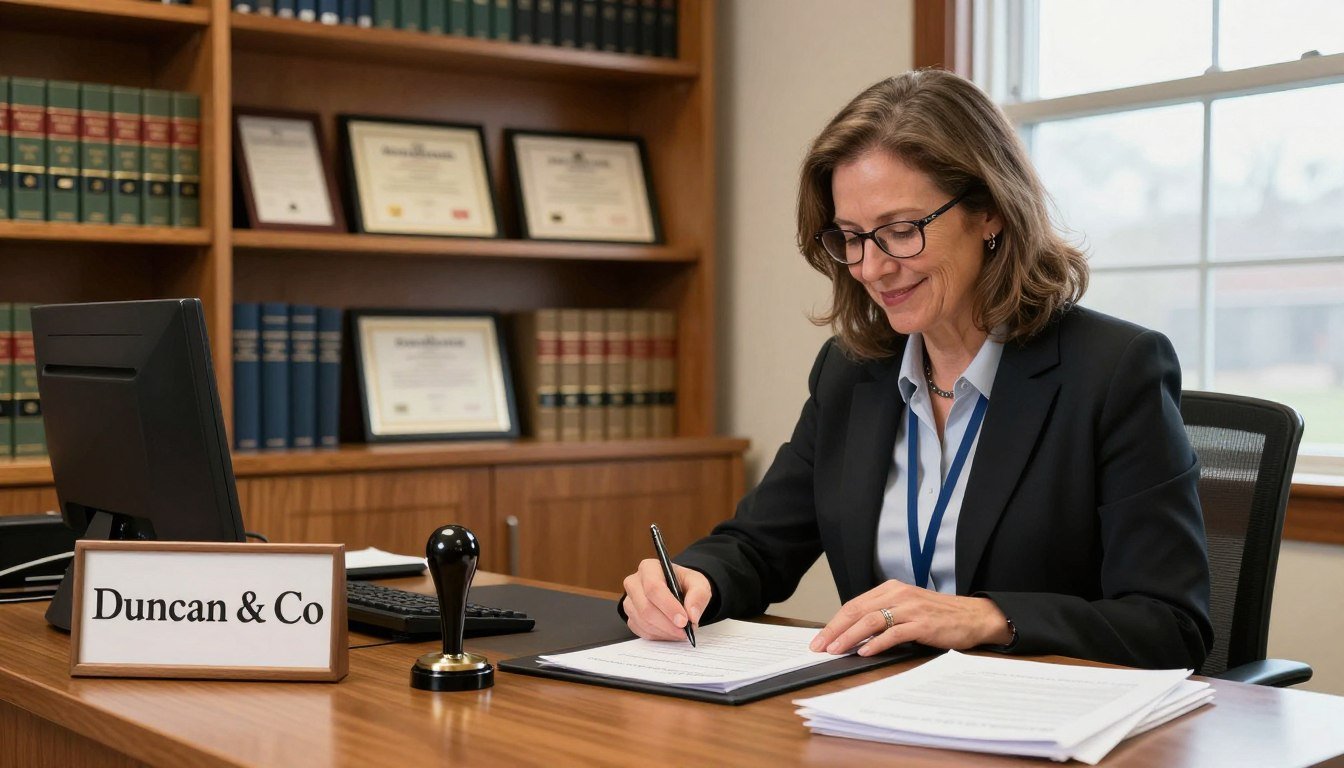
Author: Kyle Duncan

  • What Invalidates a Notarized Document? Top Reasons Notarizations Fail

    What Invalidates a Notarized Document? Top Reasons Notarizations Fail

    What if a single administrative oversight could turn a critical estate plan, loan agreement, or corporate contract into an unenforceable sheet of paper? Understanding what makes a notarized document invalid is essential for signers, executive teams, and legal professionals alike.

    A Notary Public serves as an officially commissioned state officer who authenticates signatures, verifies identities, confirms willingness, and deters fraud. However, even well-intentioned procedural slips, incomplete certificate language, or missing seals can lead to rejected recorder filings, voided real estate transactions, or inadmissible court evidence.

    In this guide, we break down what invalidates a notarized document, state-specific statutory nuances (with a focus on Colorado notary requirements), loose certificate rules, and how to protect your legal documentation from invalidation.

    Key Takeaways

    • Core Causes of Failure: Failure of physical or state-approved personal appearance, incomplete or missing notarial certificates, improper signer identification, and lack of mental capacity/lucidity top the list of what invalidates a notarization.
    • State Specificity: Notary commissions and notary laws are strictly state-specific. Rules regarding record journals, allowable fees, and seal requirements vary significantly between jurisdictions like Colorado, California, Texas, and New York.
    • Missing Certificates: When a document lacks pre-printed notary certificate wording, a notary cannot choose one for the client. The signer, drafting attorney, or issuing agency must specify whether an acknowledgment or jurat/oath is required.
    • Authenticity vs. Legality: A valid notarization authenticates the execution of a document and the identity of the signers; it does not legalize an otherwise defective or illegal contract.

    What Makes a Notarized Document Invalid?

    When courts, county clerks, title companies, or financial institutions evaluate notarized instruments, they require strict statutory compliance. If key legal elements are omitted or flawed, the entire notarization can be voided or ruled inadmissible.

    Below are the primary factors that answer the critical question: Which of the following issues can invalidate a notarization?

    1. Violating the Personal Appearance Rule

    Unless performing an authorized Remote Online Notarization (RON) in strict accordance with state regulations, the signer must physically appear before the notary at the time of execution. Notarizing for an absent family member, business partner, or client—regardless of how well the notary knows them—invalidates the notarial act entirely and violates state law.

    2. Lack of Capacity, Coercion, or Competency (The Lucidity Standard)

    For a notarization to hold legal weight, the signer must be alert, communicative, aware of what they are executing, and signing of their own free will. If a signer is under severe duress, heavily medicated, or lacking cognitive awareness (a frequent challenge during hospital or estate planning signings), the notarization can be challenged and invalidated in court.

    3. Incomplete or Missing Notarial Certificates

    A standalone notary stamp and signature placed directly on a document without proper notarial wording is legally insufficient. A valid notarization requires a complete notarial certificate containing:

    • The Venue (State and County where the notarization physically takes place)
    • The Date of execution
    • The Type of Notarial Act (e.g., Acknowledgment or Jurat)
    • The Signer’s Name(s)
    • The Notary’s Official Signature and readable Stamp / Seal

    4. Confusing Oaths (Jurats) with Acknowledgments

    • Acknowledgment: Certifies that the signer personally appeared, was identified, and declared that they willingly signed the document for its intended purpose.
    • Jurat / Oath: Requires the signer to swear or affirm under penalty of perjury that the statements within the document are true, signed directly in the notary’s presence.

    Executing an acknowledgment when statutory law specifically mandates a sworn oath (such as for affidavits or court testimony) can cause the document to be rejected by judges or recording clerks.

    5. Expired Commissions & Smudged or Defective Seals

    Performing a notarial act after a commission has expired, using unapproved ink colors, or leaving a seal so smudged that the commission details are illegible will cause recording offices (such as County Clerk and Recorders) to reject real estate deeds and legal filings.

    Are Notaries State Specific?

    Yes, notaries are state specific. A Notary Public holds a commission granted by a specific state officer (typically the Secretary of State) and possesses legal authority to act only within designated jurisdictional boundaries.

    Jurisdiction and Venue

    A notary can generally only perform notarizations while physically standing within the borders of the state where they are commissioned. The “Venue” line on the certificate (e.g., State of Colorado, County of Boulder) must strictly state the exact physical location where the notary and signer met at the moment of execution.

    Varying State Rules & Requirements

    State laws vary widely on journal retention, maximum fees, identification standards, and witness mandates:

    StateCommission TermJournal / Record Book RequirementMax Statutory Fee (Per Signature)
    Colorado4 YearsMandatory for all notarial acts$15 (Paper) / $25 (RON)
    California4 YearsMandatory (Thumbprint required for real estate/POA)$15
    Texas4 YearsMandatory for most acts$10
    Florida4 YearsRecommended / Mandatory for specific acts$10
    New York4 YearsMandatory detailed register$2

    Note: Under Colorado law (RULONA), official state identification must be current or expired for less than one year, and notarizing without proper journal records can jeopardize the legal validity of the act.

    What Should a Notary Do When There Is No Pre-Printed Certificate?

    A common situation that leads to document rejection occurs when a document lacks a pre-printed notary certificate block.

    The Rule Against Selection: A Notary Public who is not a licensed attorney cannot select or decide which type of certificate (e.g., Jurat vs. Acknowledgment) to attach. Selecting a notarial act for a client constitutes the unauthorized practice of law.

    Proper Procedure for Unworded Documents

    1. Inform the Signer: The notary explains that the document lacks notarial certificate language.
    2. Obtain Direction: The signer or the issuing agency/attorney must specify whether they require an Acknowledgment, a Sworn Oath (Jurat), or another state-approved act.
    3. Attach a Loose Certificate: Once directed, the notary securely attaches a loose certificate form containing the appropriate state-compliant language, completes the required details, and notes the attached document’s title and page count on the certificate to prevent fraudulent detachment.

    What Happens If a Notary Makes a Mistake?

    When an error occurs during execution—whether an omitted date, an incorrect venue, missing witness signatures, or failure to verify government-issued ID—the consequences can be severe:

    • Immediate Document Rejection: County recorders, title companies, banks, and probate courts will reject the paperwork, requiring complete re-drafting, re-execution, and re-notarization.
    • Loss of Admissibility in Litigation: In estate administration or breach-of-contract disputes, an improperly notarized affidavit or self-proving will affidavit can be struck from evidence.
    • Financial and Civil Liability: If a defective notarization facilitates fraud, invalidates a land conveyance, or delays a loan closing, the notary, their firm, and their Errors & Omissions (E&O) insurance can be held liable for damages.
    • Administrative Discipline: State commissioning authorities (such as the Colorado Secretary of State) can issue warnings, require re-training, or suspend/revoke a notary’s commission for negligence or non-compliance.

    Common Notarization Edge Cases & FAQs

    Can a document be notarized twice?

    Yes. A document can be notarized multiple times if there are multiple signers executing it at different times or in different locations, or if the document requires distinct acknowledgments for different parties. Each notary executes a separate, dedicated certificate for the specific signer appearing before them.

    Is a copy of a notarized document legally valid?

    In most legal contexts, a photocopy or digital copy of a notarized document is treated as an informational copy rather than an original. Recording offices require the original wet-ink signature and original physical seal. Certain non-recordable documents may qualify for state-certified copies if executed under strict statutory copy-certification procedures.

    Does notarizing a document make it legal or legally binding?

    No. Notarization verifies the identity of the signer and the authenticity of the signature. It does not review, endorse, or guarantee the legal fairness, truthfulness, or enforceability of the contract’s internal terms.

    Can notarized documents be double-sided?

    Generally yes, provided the paper and ink meet recording office readability standards. However, the notary certificate must clearly tie into the document, and many county clerks prefer single-sided execution for recorded real estate instruments to ensure clean scanning.

    What is the most common reason a notarization fails?

    The most common cause of failure is an incomplete notarial certificate—specifically missing the venue, leaving the date blank, omitting required notary signature text, or placing an unreadable or incomplete seal impression.

    Can a notarized document be voided after signing?

    A court of law can void or strike down a notarized instrument if evidence proves the notarization was executed fraudulently, under duress, without proper identification, without personal appearance, or by an individual lacking a valid commission.

    Professional Notarial Support & Execution

    When dealing with high-stakes financial transactions, living trusts, real estate conveyances, or sensitive corporate instruments, precision is paramount.

    At Duncan & Co., we uphold rigorous standards for every execution. Operating with meticulous care, fully compliant protocols, and absolute privacy, our firm provides mobile and chambers notary services tailored to attorneys, corporate officers, and private clients.

    To schedule a dedicated notary or witness engagement, visit the Duncan & Co. Appointment Bureau or contact our administrative office today.

  • Get an Apostille in Colorado: Call 303-827-0632 or Visit

    Get an Apostille in Colorado: Call 303-827-0632 or Visit

    How to Get an Apostille in Colorado: The Complete Step-by-Step Guide

    Navigating international law often comes with unexpected administrative hurdles. If you need to present a personal, academic, corporate, or estate document in a foreign country, a standard notarization is rarely enough. Foreign governments, courts, financial institutions, and universities usually require an Apostille—or an official Authentication Certificate—to verify that your document is legally valid.

    Obtaining an apostille in Colorado involves navigating strict state rules set by the Colorado Secretary of State (SOS). A single misstep—such as submitting an uncertified birth certificate or using improper notary certificate language—can lead to immediate rejection, delaying visa applications, corporate closings, dual-citizenship requests, or international real estate transactions.

    In this comprehensive guide, we cover how to get an apostille in Colorado, the step-by-step submission process, common document requirements, Hague vs. Non-Hague distinctions, and how Duncan & Co. expedites hand-carried authentication for private and corporate clients.

    Key Takeaways

    • Issuing Authority: In Colorado, state-level apostilles are issued exclusively by the Colorado Secretary of State (Notary Program / Authentications Division) in Denver.
    • Document Eligibility: Only documents issued by a Colorado public official (e.g., Vital Records, District Court Clerks) or documents properly notarized by a currently commissioned Colorado Notary Public qualify for a state apostille.
    • The Hague Advantage: An Apostille is used for member countries of the Hague Apostille Convention. For non-Hague nations, a multi-step Embassy Legalization chain is required.
    • Federal Exceptions: Federal records (such as FBI background checks or naturalization certificates) cannot be apostilled in Colorado; they must go through the U.S. Department of State in Washington, D.C.
    • Proactive Review: Pre-screening signatures, notary seals, and certification dates before submission prevents expensive government delays.

    What Is an Apostille and When Do You Need One?

    An Apostille is a standardized, numbered certificate attached to a public document by a designated government authority. Created under the Hague Convention of October 5, 1961, it streamlines international document recognition by replacing lengthy consulate legalizations with a single certification.

    The apostille does not evaluate or approve the contents of your document. Instead, it officializes:

    1. The authenticity of the signature on the document.
    2. The capacity in which the signing official or notary acted.
    3. The identity of the official seal or stamp affixed to the record.

    When Is an Apostille Required?

    You will typically need a Colorado apostille if you are:

    • Relocating or Working Abroad: Presenting background checks, birth certificates, or professional licenses.
    • Enrolling in Foreign Universities: Submitting high school or university transcripts, diplomas, and degree certificates.
    • Conducting International Business: Establishing a foreign subsidiary, executing cross-border powers of attorney, or submitting Articles of Incorporation.
    • Managing Estate & Family Matters: Administering international inheritances, foreign real estate conveyances, adoption proceedings, or foreign marriage registrations.

    Step-by-Step: How to Get an Apostille in Colorado

    To ensure your paperwork passes state review on the first attempt, follow these essential steps:

    +-----------------------------------------------------------------------+
    | STEP 1: Determine Destination Country & Authentication Pathway        |
    | (Hague Convention Country = Apostille | Non-Hague = Embassy Chain)   |
    +-----------------------------------------------------------------------+
                                       |
                                       v
    +-----------------------------------------------------------------------+
    | STEP 2: Obtain Proper Certified Copy or Notarize the Document          |
    | (Vital Records / Court Order OR Colorado Notary Public Execution)     |
    +-----------------------------------------------------------------------+
                                       |
                                       v
    +-----------------------------------------------------------------------+
    | STEP 3: Complete Colorado Authentication Request & Pre-Audit          |
    | (Review Venue, Notary Stamp, Signature, and Destination Field)       |
    +-----------------------------------------------------------------------+
                                       |
                                       v
    +-----------------------------------------------------------------------+
    | STEP 4: Submit to Colorado Secretary of State                         |
    | (Hand-Carry Expedited Service OR Mail-In Processing to Denver)       |
    +-----------------------------------------------------------------------+
    

    Step 1: Identify the Destination Country

    First, determine whether the country receiving your document is a member of the Hague Apostille Convention:

    • Hague Member Countries (e.g., Spain, Mexico, Italy, Germany, Japan): Require a single Colorado Apostille.
    • Non-Hague Countries (e.g., UAE, China, Vietnam, Qatar): Require a multi-tiered Authentication & Embassy Legalization process involving the Colorado SOS, the U.S. Department of State, and the foreign embassy or consulate.

    Step 2: Ensure Your Document Qualifies

    Not every document can be immediately submitted to the Secretary of State. Depending on the record type, specific prerequisites apply:

    A. State-Issued Public Records (Vital Records & Court Files)

    • Birth, Death, & Marriage Certificates: Must be official certified copies issued by the Colorado Department of Public Health and Environment (CDPHE) or a local Colorado County Clerk & Recorder. Photocopies or notarized copies of vital records are strictly rejected.
    • Divorce Decrees & Court Orders: Must be certified directly by the Clerk of the issuing Colorado District Court, complete with the court’s official seal.

    B. Private, Academic, & Corporate Documents

    Private documents require execution or certification by a commissioned Colorado Notary Public before they reach the Secretary of State.

    • Corporate Papers: Articles of Incorporation, Operating Agreements, Certificates of Good Standing, Board Resolutions, and Commercial Invoices.
    • Legal Instruments: Powers of Attorney, Affidavits, Deeds, Real Estate Contracts, and Trusts.
    • Academic Records: Diplomas and transcripts must be certified by a school registrar or school administrator before a Colorado notary.

    Critical Compliance Rule: When notarizing a private document for international use, the notary certificate MUST contain complete statutory elements under RULONA (Venue, Date, Act, Notary Signature, and Legible Stamp). Missing venue lines or illegible notary stamps are the #1 cause of apostille rejections in Colorado.

    Step 3: Complete the Authentication Request Form

    Complete the Colorado Secretary of State Authentication Request Form. You must specify:

    • The exact destination country (Apostilles are issued specifically for the destination nation named).
    • Requestor contact details and preferred return shipping (e.g., prepaid FedEx or UPS airbill).
    • Statutory filing fees payable to the Colorado Secretary of State.

    Step 4: Submit to the Secretary of State Office

    Submissions are handled through two primary channels:

    1. Mail-In Processing: Submitted to the Colorado SOS Notary Program in Denver. Standard processing can take several business days plus transit time.
    2. Hand-Carried / Expedited In-Person Filing: For time-sensitive transactions, documents can be hand-delivered directly to the Secretary of State’s office in Denver for rapid turnaround.

    Common Reasons Colorado Apostilles Get Rejected

    Avoid costly delays by being aware of the most frequent errors encountered during state processing:

    Document CategoryCommon Cause of RejectionHow to Correct It
    Vital RecordsSubmitting a plain photocopy or a notarized copy of a birth certificate.Request an original certified copy directly from CDPHE or the County Clerk.
    Notarized PapersMissing the “Venue” (State/County) or using incomplete notary wording.Ensure a skilled notary executes a compliant, complete RULONA certificate.
    Notary StatusNotarized by an individual whose commission has expired or is lapsed.Verify the notary’s active status on the Colorado Secretary of State portal.
    Federal PapersSubmitting an FBI Record or Military Document to the Colorado SOS.Submit federal documents directly to the U.S. Department of State in Washington, D.C.
    Court OrdersLacking the official District Court Clerk certification seal.Obtain a certified copy with the court clerk’s wet-ink signature/seal.

    Apostille vs. Embassy Legalization: What’s the Difference?

    Understanding the distinction between these two pathways is essential for international compliance:

                           DOCUMENT AUTHENTICATION PATHWAYS
    
      [ Colorado Document ]                                [ Colorado Document ]
               |                                                    |
               v                                                    v
     [ CO Secretary of State ]                            [ CO Secretary of State ]
               |                                                    |
               v                                                    v
        (APOSTILLE SEAL)                                 [ US Dept. of State (D.C.) ]
               |                                                    |
               v                                                    v
    [ Destination Country ]                              [ Foreign Embassy/Consulate ]
    (Hague Convention Member)                                       |
                                                                    v
                                                          [ Destination Country ]
                                                           (Non-Hague Member)
    
    • Apostille (Hague Countries): A single-step certification issued by the Colorado Secretary of State that is immediately recognized in over 120 member countries.
    • Embassy Legalization (Non-Hague Countries): A multi-step process that begins with the Colorado Secretary of State, proceeds to the U.S. Department of State Authentications Office in Washington, D.C., and finishes with physical legalization at the destination country’s embassy or consulate.

    Frequently Asked Questions

    Can I get an apostille online in Colorado?

    You can initiate requests and upload digital copies of certain eligible notarized documents through the Colorado Secretary of State’s online portal. However, physical vital records, court orders, and wet-ink notarized instruments usually require physical submission or certified digital authentication.

    How long does it take to get an apostille in Colorado?

    Standard mail-in processing through the Secretary of State generally takes 5 to 10 business days plus shipping time. Urgent corporate, legal, or personal matters can be processed significantly faster using hand-carry or expedited processing services.

    Can a notary public issue an apostille in Colorado?

    No. A notary public cannot issue an apostille. Only the Colorado Secretary of State holds the legal authority to issue an apostille or authentication certificate. The notary’s role is strictly to notarize the underlying signature or document correctly so that it qualifies for state authentication.

    Can an FBI background check be apostilled by Colorado?

    No. Because FBI Identity History Summaries are federal documents issued by the U.S. Department of Justice, the Colorado Secretary of State cannot authenticate them. Federal records must be sent to the U.S. Department of State Authentications Office in Washington, D.C.

    Professional Apostille & Authentication Facilitation

    When dealing with cross-border commercial contracts, high-net-worth estate matters, or strict foreign court deadlines, administrative delays can be costly.

    At Duncan & Co., we manage the complete chain of authentication—from performing compliant local notarizations in our Longmont chambers or at your executive premises, to conducting thorough document pre-audits and managing hand-carried filings with the Colorado Secretary of State in Denver.

    To consult with an authentication specialist or schedule a hand-carried apostille engagement, visit the Duncan & Co. Appointment Bureau or contact our administrative office today.

  • Why Every Adult Needs a Healthcare Directive: (Even if you’re young and healthy)

    Why Every Adult Needs a Healthcare Directive (Even If You’re Young and Healthy)

    When most people hear the phrase “advance healthcare directive” or “living will,” they imagine retired individuals, seniors managing chronic illnesses, or families navigating end-of-life care. Rarely does a 20- or 30-something college graduate, young professional, or newly married individual consider medical directives a priority.

    However, legal and medical realities dictate otherwise: the moment an individual turns 18, their parents no longer have the legal right to view their medical records or make emergency healthcare decisions for them.

    Whether facing a sudden motor vehicle accident, a sports-related injury, severe surgical complications, or an unexpected medical emergency, young adults without executed healthcare directives leave critical decisions in a legal void. In the absence of formal legal documents, families are forced to undergo costly, emotionally distressing court proceedings to secure emergency guardianship or conservatorship.

    In this guide, we break down why every adult needs a healthcare directive, the legal gap created on an individual’s 18th birthday, the key components of an advance care plan (including Colorado statutory rules under C.R.S. § 15-18-104), and how Duncan & Co. assists individuals, families, and young adults with precise document execution and hospital dispatch support.

    Key Takeaways

    • The Age 18 Legal Privacy Wall: Upon turning 18, HIPAA laws strictly prohibit physicians and hospitals from disclosing health information to parents or partners without an executed HIPAA release or Medical Power of Attorney—even in emergencies.
    • Core Difference: A Medical Power of Attorney (MDPOA) designates a trusted agent to make healthcare choices if you are incapacitated, while a Living Will (Declaration As to Medical Treatment) specifies your exact wishes regarding life-sustaining procedures.
    • Avoiding Guardianship Court: Without named healthcare agents, family members cannot legally direct medical care during an emergency without petitioning a judge for emergency guardianship—a process that is both public and expensive.
    • Strict Statutory Execution: In Colorado, advance directives must meet precise execution standards under C.R.S. § 15-18-104, including signature verification by two disinterested witnesses and proper notarization to be self-proving.

    The Legal Reality Shift: What Happens on Your 18th Birthday?

    Under federal and state law, reaching age 18 establishes legal adulthood. While this milestone brings independence, it also fundamentally alters how medical institutions handle personal health information and decision-making authority.

                        THE AGE 18 HEALTHCARE DECISION GAP
    
        UNDER AGE 18                                    AGE 18 & OLDER
    +--------------------+                         +--------------------+
    | Parents hold legal |                         | Individual is legal|
    | authority to view  |  ===> 18th BIRTHDAY ===>| adult. Parents are |
    | records & direct   |                         | legally "strangers"|
    | medical treatment. |                         | under HIPAA laws.  |
    +--------------------+                         +--------------------+
                                                             |
                                                             v
                                                    [ EMERGENCY OCCURS ]
                                                             |
                                         +-------------------+-------------------+
                                         |                                       |
                               (NO ADVANCE DIRECTIVES)                (DIRECTIVES EXECUTED)
                                         |                                       |
                                         v                                       v
                             [ Court Guardianship Needed ]             [ Agent Instantly Steps In ]
                              • $2,000+ in legal costs                  • Immediate physician access
                              • Weeks of court delays                   • Honor personal choices
                              • High family stress                      • Bypasses court entirely
    

    1. The HIPAA Wall Excludes Parents and Partners

    Under the Health Insurance Portability and Accountability Act (HIPAA), medical providers face severe federal penalties for disclosing health information to unauthorized parties. If a 19-year-old college student is admitted to an emergency room, doctors cannot legally update parents on their condition unless a signed HIPAA disclosure or Medical Power of Attorney is produced.

    2. Unmarried Partners Have Zero Legal Standing

    For young adults in long-term relationships who are not legally married, state laws do not automatically grant partners decision-making authority. Without formal advance directives, an unmarried partner cannot speak with doctors, visit in restricted intensive care units, or influence medical treatment plans.

    3. The Costly Alternative: Emergency Guardianship Petitions

    If a young adult becomes incapacitated without naming a medical proxy, family members must file an emergency petition in probate court to be appointed as legal guardian. This process involves court fees, attorney retainer costs, service of process, and potential public court hearings during an already traumatizing time.

    Anatomy of a Complete Advance Healthcare Directive Package

    A comprehensive medical decision plan is not a single generic form. Instead, it consists of distinct legal instruments designed to work together across different medical scenarios:

                      COMPLETE ADVANCE HEALTHCARE PACKAGE
    
    +-------------------------------------------------------------------------+
    | 1. MEDICAL POWER OF ATTORNEY (MDPOA)                                    |
    | • Appoints a trusted person (Healthcare Agent) to make medical decisions|
    |   whenever you are temporarily or permanently unable to speak.          |
    +-------------------------------------------------------------------------+
                                         |
                                         v
    +-------------------------------------------------------------------------+
    | 2. LIVING WILL (DECLARATION AS TO MEDICAL TREATMENT)                    |
    | • Provides explicit, written instructions regarding life support,       |
    |   mechanical ventilation, hydration, and nutrition in end-stage conditions.|
    +-------------------------------------------------------------------------+
                                         |
                                         v
    +-------------------------------------------------------------------------+
    | 3. HIPAA AUTHORIZATION RELEASE                                          |
    | • Grants immediate access to medical records, test results, and status  |
    |   updates to designated family members without transferring decision power.|
    +-------------------------------------------------------------------------+
    

    Medical Power of Attorney vs. Living Will: Key Distinctions

    Understanding the operational differences between these instruments prevents confusion during medical crises:

    FeatureMedical Power of Attorney (MDPOA)Living Will (Declaration)
    Primary FocusWho makes medical decisions for you.What specific treatments you do or do not want.
    Activation PointActivates whenever you lack capacity to communicate.Activates only in terminal conditions or persistent vegetative states.
    Authority ScopeBroad: Surgery, medications, facilities, therapy.Specific: Artificial nutrition, hydration, life support machinery.
    Decision DiscretionAgent uses substituted judgment based on your values.Attending physicians follow direct written instructions.
    State Statutory BasisColorado Power of Attorney Act (C.R.S. Title 15).Colorado Medical Treatment Decision Act (C.R.S. § 15-18-101).

    Statutory Execution Requirements in Colorado (C.R.S. § 15-18-104)

    Executing an advance directive requires strict adherence to state formality. A document downloaded online or signed without statutory witness protocols will be challenged or rejected by hospital legal risk departments.

    Under Colorado Revised Statutes § 15-18-104, a valid Declaration As to Medical Treatment requires:

    1. Signer Execution: The declarant must voluntarily sign the document while possessing full cognitive capacity.
    2. Two Disinterested Witnesses: The declaration must be witnessed by two adults who are not:
      • Related to the declarant by blood, marriage, or adoption.
      • Entitled to any portion of the declarant’s estate under a will or laws of intestacy.
      • Directly financially responsible for the declarant’s medical care.
      • The declarant’s attending physician or an employee of the attending physician.
    3. Notarial Acknowledgment/Jurat: To render the document self-proving in medical facilities and courts, the declaration must be formally notarized by an active Notary Public.

    Key Life Events That Demand Immediate Directive Updates

    An advance directive package is a living set of documents. While establishing directives at age 18 is essential, specific life milestones require immediate review and re-execution:

    • College / Relocation: Moving across state lines for university or career advancements (ensuring documents meet host state requirements or cross-border standards).
    • Marriage or Divorce: Updating named healthcare agents to reflect marital status changes or revoking an ex-spouse’s decision-making authority.
    • New Medical Diagnoses: Refining specific wishes regarding experimental treatments, blood transfusions, or palliative care protocols upon diagnosis.
    • Travel or High-Risk Activities: Preparing updated HIPAA and MDPOA documents prior to overseas travel, military deployment, or solo expeditions.

    Frequently Asked Questions

    Does a Medical Power of Attorney give someone control over my finances?

    No. A Medical Power of Attorney (MDPOA) strictly grants authority over healthcare and medical care choices. Financial, banking, and property management decisions require a separate legal instrument known as a General Financial Power of Attorney.

    Can I revoke or change my healthcare directive after it is signed?

    Yes. You can revoke or alter your advance directive at any time as long as you possess cognitive capacity. Revocation can occur by burning or tearing the original document, executing a written revocation, or creating a new, updated directive that explicitly supersedes all prior versions.

    What happens if my named healthcare agent and my family disagree?

    If your Medical Power of Attorney document is validly executed, your named healthcare agent holds legal decision-making authority over other family members. Physicians must follow the decisions of the appointed agent, provided those choices align with your expressed wishes in your Living Will.

    Does a living will mean “Do Not Resuscitate” (DNR)?

    No. A Living Will addresses long-term life-sustaining measures (like prolonged mechanical ventilators or artificial feeding tubes) when you have a terminal illness or permanent unconsciousness. A CPR/DNR order is a specific medical order signed by a physician addressing immediate cardiopulmonary resuscitation in emergency cardiac arrest scenarios.

    Dedicated Healthcare & Hospital Execution Support

    Establishing advance medical directives provides peace of mind for you and relieves loved ones of burdensome guesswork during medical emergencies.

    At Duncan & Co., we provide expert, dignified execution services for healthcare directives, living wills, and HIPAA authorizations. Whether coordinating an individual execution at our Longmont chambers, providing disinterested witnesses, or facilitating urgent bed-side dispatch to regional medical facilities (including UCHealth MCR, Banner McKee, and Longmont United Hospital), our officers ensure complete statutory compliance and calm professionalism.

    To schedule a dedicated directive execution or hospital room dispatch, visit the Duncan & Co. Appointment Bureau or contact our administrative offices today.

  • How to Notarize a Power of Attorney for Elderly Parents

    How to Notarize a Power of Attorney for Elderly Parents

    Watching a loved one struggle with paperwork can feel overwhelming. You want clear next steps and to protect their wishes. This guide offers a calm, practical path families follow when signing and verifying a POA in the United States.

    This short guide covers the step-by-step process, key documents, and common pitfalls. It explains why notarial acts focus on identity and willingness rather than legal advice. State rules may change ID or witness needs, so plan ahead.

    Seniors and adult children often seek a certified signature to manage care, finances, and medical choices when time matters. When capacity is unclear, waiting can force court guardianship or conservatorship. Simple planning helps avoid that.

    If you are near Longmont, Colorado, call or text 3038270632 or stop by 350 Terry St Ste 229, Longmont CO 80501 for help with signings and calm, efficient appointments.

    Key Takeaways

    • Sign while the principal is clearly mentally competent.
    • Notarial acts verify ID and willingness, not legal advice.
    • Bring complete documents, proper ID, and any required witnesses.
    • Missing items or capacity concerns often derail appointments.
    • Plan special settings—hospital or home signings—so appointments stay calm.
    • Early planning can prevent guardianship or conservatorship.

    Why families should notarize a POA before it’s needed

    Getting documents signed early keeps choices in the hands of the person who matters most. Acting ahead protects autonomy and reduces conflict among siblings. It also makes practical help faster when time is short.

    Mental competence and signing

    Competence at signing means the signer understands they grant another person certain authority and can name who will act. The signer should show clear awareness of what decisions may follow.

    Real-life benefits now

    A valid document lets an agent handle daily tasks without court delays.

    • Paying bills and managing money
    • Dealing with banks and insurance
    • Coordinating long-term care or medical steps

    When guardianship becomes the fallback

    If there is no valid instrument, a court may assign a guardian or conservator. That process is slow, costly, and gives a judge — not the family — final control over one’s affairs.

    Preventing these issues early lowers the chance an organization will challenge acceptance. Choosing the right type and correct execution matters for later use of any power document.

    What a power of attorney is and who the key people are

    A clear definition helps families know who makes which decisions when papers are signed.

    Power attorney is a short way to name a document that lets one person act for another. The main roles are the principal (the person who gives authority), the agent or attorney-in-fact (the person who acts), and the notary (who verifies identity and willingness).

    Principal vs. agent and how authority works

    The principal chooses whether to create the document and selects who will serve. No one can force that choice by desire alone.

    The agent may have narrow or broad powers. The document’s language sets what the agent may do. Authority can start right away or only after a specific event, depending on the terms.

    Fiduciary duty and acting in the principal’s best interests

    An agent has a legal duty to act for the principal’s benefit. That means no self-dealing, keeping finances separate, and following written instructions.

    • Keep records: track transactions and follow the terms.
    • Avoid conflicts: don’t use the role for personal gain.

    Misunderstanding authority often causes delays or second thoughts at signing. Remember: a notary confirms identity and willingness, not legal advice. If the family needs customized wording or legal guidance, consult an attorney before the appointment.

    Common types of POA and how they affect notarization

    The kind of POA you choose shapes what an agent can do and how third parties verify authority. That matters when banks, title companies, or medical providers check access and intent.

    General authority explained

    General POA grants broad powers. An agent may handle finances, bills, and other routine matters depending on state law and the document wording. Third parties often accept this when the paper clearly lists the agent’s power.

    Limited use for a single situation

    A limited POA covers one specific situation. For example, an agent may sign closing documents for property while the principal travels or is in assisted living. Limited forms narrow the agent’s reach and make acceptance clearer for title firms.

    Durable and springing differences

    Durable POA stays in effect if the principal loses capacity and is the most common planning tool for aging families. Springing POA only takes effect on a defined condition. Proving that condition can delay decisions when speed matters.

    State forms and law vary. Regardless of type, the signing must be voluntary and complete, and some states add extra requirements for certain documents.

    How to notarize a Power of Attorney for an elderly parent

    Begin the signing process by confirming every line in the form is filled and the principal is prepared to proceed.

    Confirm the document is complete and ready

    Review the entire document for blanks, inconsistent names, or missing signature blocks. Do not proceed if any field is empty or unclear.

    Make sure the signer chooses this willingly

    The notary must observe clear intent from the principal. Watch for verbal statements of choice and note them in the record.

    Verify identity and follow state ID rules

    Check photo ID and name matches the paperwork. Some states require extra steps, such as a thumbprint or specific certificate wording. Expired IDs or nickname mismatches can delay the appointment.

    Complete the correct notarial act and certificate

    Decide whether the act is an acknowledgment or a jurat. Use the exact certificate wording your state requires so banks and medical offices will accept the document.

    Keep a thorough journal entry and engagement notes

    Record date, time, location (include room number for facilities), IDs shown, and the signer’s short statements of understanding. These notes protect everyone if questions arise later.

    Step What to record Why it matters Common state variations
    Document check Fields complete; names consistent Prevents refusal from third parties Some states need witnesses
    ID verification ID type, number, expiration Confirms identity for the notary CA may require thumbprint
    Journal entry Time, location, signer statements Evidence if capacity is challenged Format varies by state law

    What to bring to the appointment to avoid delays

    Gathering the right items before the appointment keeps the signing smooth and on schedule.

    Bring these core items:

    • Finalized POA documents and any state-required forms or notices.
    • Supporting paperwork such as recent bills, deed copies, or trust paperwork that may be referenced.
    • Written list of questions the family or principal wants an attorney to answer later.

    Acceptable photo ID and name consistency

    Present current government photo ID that matches the name on the document. Nicknames, maiden names, or hyphenations can cause delays. If names differ, bring additional proof like a marriage certificate or prior ID.

    Required witnesses and who can serve

    Some forms need witnesses in addition to the notary. Witnesses must be eligible adults and not named as agents or beneficiaries. Ask in advance which people are disqualified under your state law.

    Supporting information to have nearby

    Keep the signer’s basic facts handy: address, date of birth, and the agent’s full legal name. Offer these for comfort or clarity, but do not coach answers.

    Facility rules and preparation checklists

    Confirm any on-site procedures at assisted living or hospital sites—check-in, quiet room availability, and visitor policies. Many notary providers post a preparation checklist on their site; using it reduces cancellations and rescheduling.

    Item Why it matters Who provides it Recommended action
    Finalized documents Ensures signatures apply to complete forms Family or attorney Review for blanks before arrival
    Photo ID Verifies identity for the notary Signer Bring current government ID
    Witnesses (if required) Meets state or form rules Family or a neutral third party Confirm eligibility ahead of time
    Support information Helps confirm facts and calm signer Family Bring address and DOB; avoid coaching

    Capacity, coercion, and protecting your elderly parent during signing

    Start by checking the person’s ability to answer simple questions about the document and its effects. A short, calm exchange gives the notary a practical view of capacity without medical judgment.

    What a notary can assess, and what is outside their role

    A notary must use a reasonable person standard. Observe whether the signer holds a basic conversation and can name who will act and why.

    Do not expect a medical diagnosis. The notary may note orientation and willingness but should not interpret charts or offer clinical opinions.

    Red flags for undue influence, duress, or confusion

    Watch for clear signs: the signer is heavily sedated, cannot stay awake, or cannot answer a simple question about who will control money or property.

    Other red flags include repeated contradictions, visible surprise about control over money or property, or a caregiver who answers for the signer.

    When to pause and protect the signer

    If the signer cannot identify the agent, seems coerced, or cannot state basic details, stop the signing and decline the act. Document the reason in the journal.

    Better choices: reschedule, request medical clearance, or recommend legal advice rather than proceed in a questionable situation.

    Issue What to watch for Action
    Capacity Confused answers, failure to recall agent Refuse or reschedule
    Undue influence Caregiver answers, rushed process Ask for privacy, document behavior
    Coercion Anger when questioned, pressure Stop and note in log

    When the caller isn’t family or the agent is a new acquaintance

    Appointments set by someone outside the family who will also act as agent increase scrutiny at signing.

    Why notaries grow cautious: real-world notaries report higher perceived risk when a non-relative schedules and is named as agent. This raises concerns about coercion, exploitation, and sudden changes in trusted relationships.

    What a notary may ask — and cannot demand: the notary can speak privately with the principal, confirm identity, and ask simple questions about intent. They must not give legal advice or act as a gatekeeper beyond state rules.

    Ways to reduce perceived risk

    • Have the principal state, in their own words, why they chose this agent and how long they have known them.
    • Allow the notary private time to confirm willingness and understanding without coaching from others.
    • Bring supporting proof that the principal asked for the appointment, such as prior written notes or verified contact from family.

    Keep the focus on the principal’s intent. If the signer seems confused, an appointment should pause. Clarity and voluntary choice protect people and preserve trust among family and all involved.

    Representative signing and “I have power of attorney to sign for them” scenarios

    Representative signing is common when a named agent must act quickly for a principal who is unavailable.

    When the principal must appear and when they need not

    The principal must appear for their own signature on an original power attorney document. For other transactions, an agent may sign if the existing authority covers that act and state law allows it.

    How an attorney-in-fact signs

    Sign plainly for the principal, then add your name and title. Example: Jane Doe, by John Smith, attorney-in-fact. This shows representative capacity and helps acceptance by banks and vendors.

    Certificate names and ID checks

    The notarial certificate names the person who appears and signs — the attorney-in-fact. The notary checks that signer’s ID, not the absent principal’s, and notes who is being represented.

    Oaths, jurats, and limits

    Generally an attorney cannot swear an oath as the principal. If a jurat is required, the agent swears in their own name about the facts they can truthfully attest to.

    • Tip: Confirm whether the recipient needs an acknowledgment or a jurat before the appointment.
    • Record: Journal the acting agent, the principal represented, and the document signed.

    Document wording, certificates, and state law differences across the United States

    Local statutes can change who must sign, what witnesses are needed, and which certificate wording applies. These differences matter because a correctly executed document in one state may be rejected elsewhere if the certificate, witness rules, or journal entries don’t match the receiving party’s expectations.

    States with special requirements for attorney-in-fact scenarios

    Some states require verification that a representative truly holds authority. Hawaii, Idaho, and Montana ask notaries to confirm that status. California and North Carolina do not demand that verification.

    Examples families should know

    • California: a thumbprint in the notary journal for POA signings and clear handbook wording for certifying copies.
    • Florida: statutory forms exist for representative acknowledgments. For a disabled signer, the notary may initial or sign with the signer’s direction, but two disinterested witnesses and the exact statutory statement are required.

    Match the certificate wording to the act performed. If the certificate is wrong, banks or title companies may refuse the document. Confirm the state where signing occurs and where the paper will be used, and consult an attorney for cross-state issues. Bringing correct information and confirming rules ahead of time speeds appointments and reduces stress for the signer.

    Special situations with elderly signers in hospitals, care homes, or at home

    Signing where someone receives care often needs more than showing up. The setting, the hour, and small comforts affect whether the person can follow the form and state their wishes clearly.

    Plan around fatigue and medication timing

    Schedule the appointment at the signer’s best time of day. Ask staff when the person is most alert and pick that window.

    Avoid rounds and busy periods. Keeping the meeting short reduces tiredness and improves focus.

    Create a calm, private space

    Request a quiet room or close the curtain and limit visitors during the service. Good lighting, hearing aids, and glasses help people read and hear.

    Allow breaks and keep the packet organized so nothing is rushed.

    Document location and observations

    Record facility name, room number, and simple notes about alertness. A brief entry about lucidity helps if questions come later.

    Respect dignity: move slowly, speak plainly, and give privacy so the signer can answer without pressure.

    When a parent is physically unable to sign

    Physical limits like stroke or severe arthritis can make placing a signature impossible, even when the mind is clear. That situation is different from mental incapacity and requires specific steps so the document will be valid.

    Alternatives vary by state and must follow exact law and witness rules. Many jurisdictions allow another person to mark or the notary to initial if the principal directs it and witnesses are present.

    Practical steps and the Florida example

    Plan ahead: confirm witness availability and bring photo IDs for everyone required. Make sure the forms include the correct certificate wording your receiving party expects.

    Florida permits a notary to sign or initial on behalf of a physically disabled principal when the principal gives clear direction, two disinterested witnesses are present, and the required statutory statement appears beneath each signature or initial.

    When you should get legal help

    If mobility limits exist, consult an attorney. Legal counsel can adjust documents for accessibility and improve later acceptance by banks or care providers.

    • Verify state requirements and exact wording before the appointment.
    • Confirm who must be identified and bring matching IDs.
    • Do not proceed if the person cannot communicate intent; the notary cannot fill that gap.

    After notarization: storing, sharing, and using the POA

    Once the paperwork is complete, safe storage and clear sharing are the next priorities. Treat the original as the single authoritative document and keep it in a secure place, such as a safe or lawyer’s file.

    Who should get copies: give the primary agent and successor agents clean copies. Share a copy with banks, key healthcare providers, or care facilities only when they need access. Ask each organization how they prefer to receive and record the document.

    What organizations may check

    Banks and hospitals often review the document’s terms and may request additional information or their own forms. They may refuse if they doubt the agents are acting in the principal’s best interests.

    When a POA ends

    POAs end at death. They also end by revocation while the principal is competent, at a written expiration date, or after a limited purpose is complete. Remember: nondurable authority can stop at incapacity, while durable authority usually continues.

    • Plan access: make sure one trusted person can find the original quickly, but limit distribution to reduce misuse.
    • Review periodically: life changes, moves, or shifts in agents and terms mean the document may need updating.

    How to prevent family conflict around POA authority

    Naming who will act and how they will act helps prevent family disputes later.

    Clear roles reduce confusion when big choices about money, health, and property arise. A well-written document can assign duties, but families also need practical rules for daily interaction.

    Clarifying roles and naming multiple agents

    Consider co-agents or successor agents if the principal wants backup or shared oversight. Splitting financial and medical duties can lower risk and keep decisions focused.

    Tradeoffs exist: multiple agents improve oversight but may slow action if signatures must be unanimous. Discuss this before signing and record the chosen terms.

    Setting expectations for communication and decision-making

    Hold a family meeting while the principal understands and can speak. This meeting gives members direct information and reduces later suspicion.

    • Set a schedule for brief updates and name who receives urgent calls.
    • Document major decisions and keep copies of key forms where trusted people can find them.
    • Ask an attorney for advice about options and wording that match the family’s goals.
    Goal Action Benefit
    Clarity Name agents and successors; split duties if needed Faster, clearer decisions
    Communication Agree on update cadence and emergency contacts Less confusion among members
    Transparency Share where originals and key information are stored Reduces distrust and disputes

    When to involve an elder law attorney or lawyer

    Professional counsel tailors documents so they match your family’s needs and hold up under scrutiny.

    Escalate from DIY forms when finances are complex, there are blended-family issues, prior disputes exist, or the principal asks for tight limits and safeguards.

    An elder law attorney guides selection of the right power attorney type and customizes terms. They coordinate financial and medical planning and confirm state compliance. This often takes more than one meeting.

    High-risk scenarios that need legal review

    • Property transfers, large withdrawals, or major gifts.
    • Changes to beneficiaries or transactions where an agent benefits financially.
    • Family disputes, caregiver involvement, or concerns about undue influence.

    If siblings argue or a caregiver is named, a lawyer can add protections — accounting rules, limits on authority, or separate agents. That makes a plan more defensible in court or with banks.

    Remember: notaries verify identity and willingness; lawyers give legal advice about scope and wording. Involving counsel early usually saves time, money, and stress later.

    Get help notarizing POA documents in Longmont, Colorado

    A trusted on-site service speeds correct execution and lowers the risk of later refusal by institutions.

    Call or text 3038270632 to schedule a notarization appointment. You may also stop by our office at 350 Terry St Ste 229, Longmont CO 80501 for walk-in help.

    Bring the completed power attorney documents, valid photo ID, and any required witnesses per Colorado rules. Sharing key information provided up front reduces delays and helps staff plan a calm signing.

    What our service does and does not do

    We perform identity checks, complete the correct certificate, and record the signing. We do not draft legal language or give legal advice—consult an attorney for changes to attorney documents.

    Mention special circumstances when you call: hospital or care site location, mobility needs, best times of day, or if the signer cannot physically sign. These details let our team arrange needed witnesses or devices and reduce the chance a bank or hospital rejects the paperwork.

    What to have ready Who provides it Why it matters Quick action
    Completed power attorney documents Family or attorney Prevents blank fields or mismatches Bring originals
    Valid photo ID Signer Required for ID verification Current government ID
    Witnesses (if required) Family or arranged by our site Meets state witness rules Confirm when scheduling

    Prepared details and clear information provided at booking make the appointment smoother and the documents more likely accepted by banks, medical centers, and title companies.

    Conclusion

    Wrap up with a short review: confirm the signer clearly consented, that ID matched the forms, and the correct certificate language was used.

    Key reminders: execute the POA while the principal is competent and have them start the appointment. Durable documents often preserve authority during incapacity and reduce the need for guardianship or conservatorship.

    Notary checks, representative signing rules, and state certificate wording vary. Ask the right questions about ID, witness needs, and any receiving-organization rules before the appointment.

    If assets, property transfers, or family conflict raise concern, consult an attorney or lawyer for tailored advice.

    Ready locally? Call or text 3038270632 or stop by 350 Terry St Ste 229, Longmont CO 80501 for in-person help with your POA.

    FAQ

    What should families do before arranging a notarization appointment?

    Confirm the document is complete, legible, and uses the correct state form or wording. Discuss options with the principal so the decision is voluntary, and gather required IDs and any witness names the state may require. If the POA involves property or medical decisions, consider consulting an elder law attorney first.

    Why is it important to complete notarization before a crisis?

    Signing while mentally competent avoids guardianship or conservatorship later. A notarized, durable POA lets an appointed agent act immediately on finances, property, and care, preventing court intervention that can be costly and time-consuming.

    Who are the key people named in a POA and what do they do?

    The principal is the person granting authority. The agent, or attorney-in-fact, acts on the principal’s behalf under the powers given. Successor agents step in if the primary agent cannot serve. All agents owe a fiduciary duty to act in the principal’s best interest.

    How do general, limited, durable, and springing documents differ?

    A general document gives broad authority for many tasks. A limited document targets a specific transaction, such as selling property. Durable wording keeps authority after incapacity. A springing document only takes effect when a triggering event, like a doctor’s declaration of incapacity, occurs — which can cause delays if the trigger is unclear.

    What steps does a notary follow during the appointment?

    The notary confirms identity, verifies the principal is willingly signing, checks the document for completeness, completes the proper notarial certificate, and records the act in a journal with details of ID and any witnesses. State laws dictate exact wording and procedures.

    What ID should be brought to avoid delays?

    Bring a current government-issued photo ID such as a U.S. passport or state driver’s license with matching name. If names differ across documents, bring supporting proof like a marriage certificate. Some states permit other forms of ID — check local rules before the appointment.

    When are witnesses required in addition to a notary?

    Several states require one or more witnesses for certain POA functions, especially health care or durable instruments. Witnesses generally must be disinterested adults who can attest to the principal’s capacity and freedom from undue influence.

    What can a notary assess about capacity without diagnosing a medical condition?

    A notary can look for clear signs that the principal understands the purpose of the document, knows the identities of key people named, and comprehends the general effect of granting authority. If confusion, slurred speech, or inconsistent answers appear, the notary may pause and recommend medical or legal evaluation.

    What are red flags of undue influence or coercion during signing?

    Signs include the principal showing fear, hesitation, or lack of understanding, statements that the principal was pressured, the presence of a domineering family member who controls documents or ID, sudden changes in beneficiaries, or conflicting accounts from other relatives. Notaries can refuse to notarize if coercion seems likely.

    Can someone sign on behalf of the principal if the principal cannot be present?

    Some states allow representative signing when a principal is physically unable to sign, using witnessed marks or a notary-approved alternative. Often the principal must direct the process in advance, or the agent needs court authorization. Check state law for allowable methods and witness rules.

    How does an attorney-in-fact sign documents after appointment?

    The agent signs in a way that shows they act for the principal, typically writing the principal’s name followed by “by” and their own name and title, such as: Jane Smith by John Doe, attorney-in-fact. The notarial certificate will indicate whose signature was notarized and whose ID was verified.

    Whose ID does the notary check when an agent signs on behalf of the principal?

    The notary checks the identity of the actual signer at the table. If the agent signs for the principal, the notary confirms the agent’s identity and authority, and follows state rules about whether the principal must appear or if additional documentation or court orders are required.

    Are there state-specific requirements that can affect notarization?

    Yes. Some states require notarization plus witnesses, special statutory forms for health-care decisions, or notarization language for remote online notarization. Verify state rules where the principal lives and where the document will be used, because organizations often enforce local requirements.

    What special planning helps when a signer is in a hospital or care facility?

    Schedule around the signer’s best time of day and medication schedule to reduce fatigue. Arrange a quiet, private room, secure necessary IDs and witnesses in advance, and consider a mobile notary who visits the facility. Confirm facility policies about outside visitors and paperwork.

    What options exist if the parent is physically unable to sign?

    Alternatives may include signing with a thumbprint or mark witnessed by qualified individuals, using an authorized representative under state law, or obtaining a court order. Some states allow remote online notarization or relaxed protocols for in-home or bedside notarizations — check local statutes.

    After notarization, who should receive copies and how should the document be stored?

    Provide notarized copies to the agent, successor agents, primary care physician if health decisions are included, financial institutions that will rely on the document, and the family members you designate. Store the original in a safe but accessible location and keep certified copies for institutions that require them.

    When does a POA end or get revoked?

    A POA ends at the principal’s death, when the principal revokes it in writing, or when a court invalidates it. Some limited documents end after the specific task completes. Agents should keep records of actions and stop acting once a document is revoked or the principal dies.

    How can families reduce conflict around an agent’s authority?

    Communicate roles and expectations early, name successor agents, keep transparent records of decisions, and involve family in planning if appropriate. Mediation or an elder law attorney can help draft clear duties and limits to reduce disputes among siblings or other relatives.

    When should you involve an elder law attorney?

    Consult an attorney for complex assets, real estate transfers, large financial transactions, blended-family situations, or when the principal’s capacity or family dynamics raise risk. An elder law lawyer helps tailor language, ensures compliance with state rules, and can prepare backup plans for disputes.

    Are there special concerns when the agent is a new acquaintance rather than family?

    Notaries and institutions may scrutinize the arrangement more closely. To reduce perceived risk, document the principal’s independent decision, obtain supporting medical or legal letters if needed, and have clear, written instructions and successor agents named in case trust breaks down.

    What practical items should I bring to the notarization appointment?

    Bring the original, fully completed document, government-issued photo IDs for the signer and any required witnesses, copies for the notary’s journal if requested, and contact information for the agent and any witnesses. For remote or mobile notarizations, confirm device and connectivity requirements ahead of time.

    Are remote online notarizations accepted everywhere?

    Acceptance varies by state and by the receiving institution. Many states permit remote notarizations, but banks or hospitals may still require in-person originals. Confirm both state law and the policies of organizations that will rely on the POA.

    What specific services are available in Longmont, Colorado?

    Mobile and office notarization services are available at 350 Terry St Ste 229, Longmont CO 80501. For scheduling, call or text 3038270632. Verify availability for bedside or facility visits if the principal cannot travel.


  • Common Mistakes in Self-Proving Affidavits

    Common Mistakes in Self-Proving Affidavits

    Losing a loved one is hard; finding a lost heirloom of protection in paperwork should not make it worse.

    A self-proving affidavit is an add-on to a last will and testament. Put simply, when signed and notarized correctly, it lets a court accept the will without calling witnesses. That streamlines the probate process and can spare a family extra hearings and expense.

    But small errors on an affidavit often cause big delays. Execution details, witness eligibility, notarization timing, how the document is handled, and state-specific requirements are common risk areas to watch.

    Rules vary by state, so copying a form found online can backfire even if it looks official. An attorney should confirm forms meet local law and execution requirements.

    If you want help reviewing documents or want someone local to call, text 3038270632 or stop by 350 Terry St Ste 229, Longmont, CO 80501.

    Key Takeaways

    • A self-proving affidavit helps prove a will during probate when done right.
    • Small errors can cause delays, extra hearings, and added costs.
    • Watch execution steps, witness rules, notarization timing, and handling.
    • State rules differ — don’t rely on generic online forms.
    • Consult an attorney or call/text 3038270632 for a document review.

    Why Self-Proving Affidavits Matter in Estate Planning and Probate

    A properly prepared self-proving affidavit can prevent your executor from wasting time tracking down witnesses. When probate begins, the executor presents the signed original will to the probate clerk or court for authentication before estate assets can be distributed.

    Without an affidavit, witnesses may need to appear or sign papers so they can witnesses testify to the will’s execution. That requirement can slow a case if witnesses move, change names, or are hard to contact.

    The affidavit serves as a sworn legal document that often substitutes for witness testimony in court. That reduces steps the executor must take and cuts trips back to court.

    This protection also helps deter challenges alleging forgery, coercion, or lack of capacity. It is not a complete shield: validity still depends on correct execution and state law.

    Bottom line: a clear affidavit supports efficient probate, eases burden on your family and loved ones, and helps your estate planning work as intended.

    Common mistakes in self-proving affidavits that can delay probate

    A single mismatch of dates or locations on the affidavit may stall probate for weeks. Treat the self-proving affidavit as a precision document: small inconsistencies invite extra filings, hearings, and delays in the probate process.

    Missing or incorrect execution details

    Execution errors often include a missing date, the wrong county or state, or a mismatch between the will and the affidavit. Clerks will flag these and may ask the court for further proof before admitting the will.

    Affidavit language about witness presence

    The affidavit must state that witnesses saw the testator sign the document and then signed as witnesses themselves. Clear presence language satisfies statutory requirements and reduces the chance a court will demand witness testimony.

    Capacity statements and sound mind

    Include a concise statement that the testator had the mental capacity to understand the will. Addressing the testator’s ability to read and the absence of impairing conditions supports the document’s validity against contest.

    Using the wrong state form or outdated wording

    State laws and required wording differ. An affidavit acceptable in one state may fail in another if it uses outdated statutory phrasing. When uncertain, have an attorney review the form to meet local requirements.

    Signing and Witness Problems That Undermine Validity

    Witness problems at signing can undo the best-laid estate plans. Most states require at least two eligible witnesses to be present at execution. Skipping this rule or cutting corners can put the will’s validity at risk and force a court inquiry.

    At least two eligible witnesses

    Eligible means adults who are mentally competent and able to testify later. Many states prefer disinterested people to reduce challenges from heirs or other parties.

    Hard-to-find witnesses

    If witnesses are not easily located, the executor may spend weeks tracking them down during probate. That delays distribution and adds stress for your family.

    Credibility and presence

    A witness who barely remembers being there or who appears biased can invite objections and a contested court case. Courts expect clear presence at the moment of signing, not later hearsay.

    • Choose stable, local witnesses who will cooperate if the executor needs them.
    • Document full legal names, current addresses, and phone numbers at signing.
    • Have witnesses sign the form when you sign self-proving affidavit paperwork to avoid future disputes.

    Tip: Ask an attorney to review witness choices and execution requirements so your family never has to relive the signing in a later case.

    Notarization and Document Handling Errors to Avoid

    Notarization errors and poor document handling create avoidable roadblocks when opening probate.

    Notarize at signing. If the affidavit is notarized after the signing, the court may question whether execution happened as sworn. Ask the notary to complete the jurat or acknowledgment at the same time the will and affidavit are signed.

    Watch for common notary errors: a missing seal, incomplete jurat wording, or mismatched dates can raise red flags. These issues often cost the executor extra time and filings.

    Keep originals together. Separating the self-proving affidavit from the original wills risks proving they belong together. Many courts expect the signed original will with the attached affidavit, not photocopies.

    Error Probable court effect Practical fix
    Late notarization Questioned validity, extra hearing Notarize at signing; confirm jurat language
    Separated documents Proof delays, affidavits challenged Store original will and affidavit together
    Using copies Additional petitions or evidence required Provide signed originals to probate clerk

    Store originals in a secure, known place and tell the executor where they are. A quick readiness check with your executor and attorney saves time during the probate process and helps the court open the case smoothly.

    Estate Plan Gaps That a Self-Proving Affidavit Cannot Fix

    A sworn statement helps authentication but does not patch holes in an estate plan. The affidavit only confirms signing; it does not fix poor drafting, unclear directions, or outdated choices.

    Trying to “paper over” will defects instead of correcting and re-executing the will

    Do not rely on an affidavit to cure a defective will. If a will has conflicting clauses or missing execution steps, the right fix is to correct the document and re-execute it with witnesses and a notary. That preserves the will’s validity.

    Leaving ambiguous terms that invite disputes among beneficiaries and family

    Vague language about who gets assets or when a beneficiary inherits leads to fights. Even with a notarized page, unclear terms can spark contested probate and cost time and money for your family and clients.

    Forgetting to update documents after major life changes

    Marriage, divorce, births, deaths, moves, or significant asset changes all require a document review. Regular check-ins with an attorney help align your wishes, keep beneficiary designations current, and reduce the burden on the executor.

    • Bottom line: A self-proving page aids authentication but cannot rewrite poor planning. Fix and re-execute when needed.

    Drafting Shortcuts That Create Problems in the Probate Process

    Cutting corners at the drafting stage often creates headaches that show up only after a death. Templates and long boilerplate may seem efficient, but they miss details that matter during probate.

    Why online templates fail

    Many forms omit state-specific execution language or a required jurat. That gap forces the executor to file extra affidavits or ask the court for proof.

    Boilerplate overload and inconsistency

    Heavy generic clauses can conflict with custom terms. These conflicts create ambiguity about asset distribution and invite procedural delays.

    Coordination and hard-to-find parties

    Unaligned beneficiary designations on retirement accounts or life insurance can override what a will says. When heirs live abroad or vanish, notice obligations slow probate and add cost.

    Shortcut Risk Practical fix
    Generic online will Missed execution requirements Use state-approved wording; confirm execution
    Boilerplate-heavy clauses Inconsistent terms; court questions Tailor language; simplify provisions
    Uncoordinated beneficiary designations Assets pass outside will unexpectedly Align beneficiary designations with wills
    No plan for absent parties Lengthy notice and added filings Consider a trust or targeted notice strategy

    Prevention: an estate planning attorney or planning attorney can review documents, spot conflicts, and advise whether a trust, including an inter vivos trust, will reduce probate burdens for clients. Careful drafting today saves time and expense for your executor and your heirs.

    Practical Steps to Prevent Challenges and Save Time for Your Executor

    Small process choices made now can save your executor hours later. Take a few clear steps during signing to keep probate moving and protect your loved ones.

    Execute documents correctly

    Follow state law and formal requirements at every signing. Use consistent dates, full signatures, and the exact jurat language your laws require.

    Choose reliable witnesses

    Pick adults who are easy to locate and likely to cooperate if the court asks. Have witnesses sign the self-proving affidavit at the same event whenever allowed.

    Retire old wills and fix errors

    After you execute a new will, revoke and destroy older wills to avoid competing originals. If you spot a mistake, re-execute rather than leaving known issues unresolved.

    Plan executor logistics

    Tell your executor where originals are kept, who to call, and provide contact details for witnesses. Good logistics save time and spare loved ones extra trips to court.

    Action Why it matters Quick checklist
    Execute per law Prevents probate challenges Dates, jurat, signatures correct
    Witness selection Avoids follow-up subpoenas Local, identifiable, cooperative
    Revoke old wills Stops competing originals Destroy older copies; note revocation
    Fix mistakes Reduces extra filings Re-execute promptly with witnesses

    Conclusion

    A few precise steps at signing make the executor’s job far easier during probate. Most delays come from avoidable execution, witness, notarization, and document-handling errors rather than legal theory.

    A properly prepared self-proving affidavit and attached wills let an executor move through probate with fewer court hurdles. It helps when the testator shows a sound mind, signs correctly, and the notary completes the jurat at once.

    Remember: an affidavit cannot fix an outdated or unclear will. Review your estate, beneficiaries, and assets now so your wishes match state law and your planning goals.

    Need help? Call or text 3038270632 or stop by 350 Terry St Ste 229, Longmont, CO 80501 to discuss your estate and get a quick review with an attorney.

    FAQ

    What is a self-proving affidavit and why does it matter in estate planning?

    A self-proving affidavit is a sworn statement, signed by the testator and witnesses, that verifies the will was executed properly. When attached to the original will, it can spare witnesses from testifying at probate. That speeds administration, reduces court costs, and lowers the risk that witness availability will delay distribution to beneficiaries.

    Can a self-proving affidavit fully replace witness testimony in court?

    In most states, a properly executed affidavit functions as evidence equivalent to live testimony about the will’s execution. Courts still retain authority to require testimony if fraud or undue influence is alleged, but a compliant affidavit often removes routine need for witnesses to appear.

    What execution details commonly cause probate delays?

    Common execution errors include missing or incorrect dates, absent location information, incomplete signatures, and failure to use the state’s required wording. Any of these can prompt a court to demand witness testimony or to question the will’s validity, prolonging probate.

    How should capacity be addressed in the affidavit to avoid challenges?

    The affidavit should state that the testator was of sound mind and understood the nature and effect of the will when signing. Clear wording about the testator’s capacity and intent helps reduce later claims of incompetence or lack of understanding.

    Is it risky to use an out-of-state or outdated form for a self-proving affidavit?

    Yes. States have specific statutory language or formal requirements. Using the wrong form or obsolete wording can make the affidavit ineffective, forcing witnesses to testify or leading to objections during probate. Always use current, state-specific forms or get attorney review.

    How many witnesses are required, and who should they be?

    Most states require at least two competent, disinterested witnesses who sign in the presence of the testator. Choose witnesses who are easy to locate later and unlikely to be challenged as beneficiaries or interested parties to reduce credibility disputes.

    What problems arise when witnesses are hard to identify or locate later?

    If witnesses cannot be found or cannot remember details, the court may demand additional proof of valid execution. That can delay probate and increase costs. Pick witnesses with stable contact information and good recollection of events.

    What notarization and handling errors should executors watch for?

    Avoid separate or detached documents, improper notarization, and reliance on copies when the original will and attached affidavit are required. The affidavit should be notarized at signing, kept with the original will, and filed promptly with the probate court.

    Can a self-proving affidavit fix defects in the will’s terms or intent?

    No. An affidavit attests to execution and capacity; it does not cure substantive defects like ambiguous clauses, conflicting beneficiary designations, or outdated provisions. Those issues must be corrected by re-drafting and re-executing the will.

    Are online templates safe to use for self-proving affidavits?

    Generic templates may omit state-specific language or execution steps. That creates risk. Use templates created for your state and reviewed by an estate planning attorney, especially when assets are significant or family situations are complex.

    How should someone fix a known problem with a will or affidavit?

    The best fix is to re-execute the will and a new self-proving affidavit following state law. Revoking older wills and destroying superseded copies prevents confusion. Don’t rely on informal corrections; formal re-execution ensures enforceability.

    What coordination is needed between wills, beneficiary designations, and non-probate assets?

    Ensure that beneficiary forms on retirement accounts, life insurance, and payable-on-death accounts match the will’s plan. Inconsistencies can bypass the will and create disputes. Coordinate all documents and review them after major life events.

    How can executors reduce repeated court trips and delays?

    Keep the original will and attached affidavit safe and accessible, retain clear contact details for witnesses, maintain records of where documents were signed, and consult an estate planning attorney to confirm compliance. These steps limit the need for additional evidence or court hearings.

    When should an attorney be involved in preparing a self-proving affidavit?

    Involve an estate planning attorney when assets are substantial, family situations are complicated, parties live in different states, or there is potential for contest. Attorneys ensure forms meet state law, reduce drafting shortcuts, and help anticipate probate hurdles.

  • Do I Need a Notary for a Handwritten Will in Colorado?

    Do I Need a Notary for a Handwritten Will in Colorado?

    Facing the end of life choices can feel heavy and personal. Many people sit down with pen and paper to capture wishes for loved ones. That honesty matters. It also raises a clear legal question about validity under Colorado law.

    In plain terms, notarization usually helps, but it is not strictly required for a holographic last testament to be valid. State execution requirements — like handwriting, signature, and witness rules — tend to matter more when a probate court reviews a document.

    This article will explain how notarization and a self-proving affidavit differ, how to avoid common DIY mistakes, and what steps reduce delays for your estate. If help is wanted to get documents signed or to lower risk, call or text 3038270632 or visit 350 Terry St Ste 229, Longmont, CO 80501.

    Key Takeaways

    • Notarization can ease probate but is often optional under Colorado law.
    • Proper handwriting, signatures, and witnesses make a will more likely to be accepted.
    • A self-proving affidavit often streamlines court acceptance more than a simple notarization.
    • Small DIY errors can cause delays, disputes, and extra estate costs.
    • Professional help or local verification reduces risk and speeds processing.

    What a handwritten will is under Colorado law

    Colorado law accepts written wills whether typed or penned, as long as they meet basic execution rules. A handwritten or “holographic” testament is simply a document the testator wrote in their own script. Courts often use handwriting as one piece of evidence to confirm authenticity.

    When handwriting matters — it becomes crucial if heirs dispute authorship or argue the testator lacked capacity. Clear, personal handwriting can reduce doubt and speed court review.

    Even though the note is in the testator’s handwriting, it must function as a will. That means it should state final instructions about property and name beneficiaries. Missing formal requirements can leave wishes unenforceable.

    Colorado generally does not recognize oral wills. Spoken promises typically give way to the state’s default distribution rules unless a written, executed document controls.

    Keep statements clear and complete. The more precise the document, the less room there is for later contests by ones who disagree with the outcomes for people named in the estate.

    Do I need a notary for a handwritten will in Colorado?

    Short legal answer: A handwritten testament can be valid without notarization required, as long as the document meets Colorado’s execution rules.

    What makes a will valid versus easy to accept

    Valid status depends on handwriting, the testator’s signature, and required witness steps. Courts look first at those elements when deciding if a document counts as a final instrument.

    How notarization still helps

    Even though notarization is not a substitute for witness signatures, a notarized signature can support an estate plan by strengthening proof of identity and voluntariness. It can cut the time and conflict in the probate process when heirs challenge authenticity.

    Practical scenarios

    • When heirs allege fraud or undue influence, notarized pages help show the signer appeared and presented ID.
    • A notary acknowledgment creates a clearer paper trail that judges and clerks trust during probate.

    Bottom line: Meet every statutory requirement, add solid witness practice, and consider self-proving steps next to reduce delays and disputes.

    Colorado legal requirements for a valid will

    State rules set baseline requirements that determine whether a document will be honored in court. Follow these core points to reduce uncertainty and potential probate delays.

    Age and sound mind standards

    Baseline requirement: The will-maker must be at least 18 years old and of sound mind when signing.

    Sound mind means the person understands the nature of their actions, the extent of their property, and who might inherit. Questions about capacity often arise later, so pick calm timing and clear wording to reduce disputes.

    Written document requirements and clear “last will and testament” language

    The writing should identify itself as the last testament or final wishes and clearly name the person who created it. That explicit language helps clerks and judges confirm intent.

    Whether typed or penned, the document must show clear intent to distribute assets and name beneficiaries.

    Signature requirements and signing in the proper presence

    The will-maker must sign the document and two witnesses, each at least 18 and not named beneficiaries, must sign while in the testator’s presence. Proper presence reduces claims that signing was coerced or irregular.

    Choosing an executor and identifying beneficiaries clearly

    Name an executor who will file papers and meet court deadlines. Pick someone reliable and state their full name to avoid confusion.

    Identify beneficiaries with full names and relationships when helpful. Clear identification of persons limits ambiguity, especially in blended families.

    Witnesses in Colorado: the two-witness rule and common pitfalls

    Having the right people present at signing can prevent costly delays during probate. Colorado requires two witnesses who are adults and who watch the testator sign to confirm capacity and voluntariness.

    Who can serve: Any person 18 or older may act as a witness, as long as they are not named as beneficiaries. Using interested witnesses can create conflicts and may invite challenges in court.

    Common mistakes to avoid:

    • Only one witness signs, or people sign on different days and places.
    • A beneficiary signs as a witness, opening grounds for dispute.
    • Witnesses are vague about what they observed or later cannot be located.

    Best practices to reduce disputes

    Gather the will-maker and both witnesses in the same room. Have everyone watch the signature, then sign in sequence on the same page.

    Explain each person’s role so witnesses know they are confirming capacity and voluntary action. These steps cut the chance that a court will question the process and lower estate planning risks for loved ones.

    Notarization vs. self-proving affidavit: what speeds up probate

    A self-proving affidavit can shorten probate by letting the court accept signatures without calling witnesses. It is a notarized form signed by the testator and the two witnesses in front of a notary public. When filed, it gives the probate court written proof of proper execution.

    How this helps: The affidavit reduces the need to locate witnesses years later. That saves time when witnesses have moved, are ill, or cannot be found. Probate proceedings then focus on distributing assets, not verifying signatures.

    Why notarizing the will alone isn’t the same

    Notarizing the will pages creates evidence of identity but does not replace the affidavit. A separate, signed affidavit is required to make the signature self-proving.

    Notary public role and deterrence

    The notary public verifies identity and confirms voluntary signing. That extra formality strengthens documents presented to the court.

    “An affidavit signed in front of a notary often prevents the need for in-person witness testimony during probate.”

    Practical signing instructions

    Coordinate one ceremony: the testator, two witnesses, and the notary complete the will, the affidavit, and acknowledgments in one session. This single-step approach reduces court delays and limits grounds for claims of fraud or undue influence.

    Action What it proves Effect on probate
    Notarize will ID verification and acknowledgment Helps, but court may still call witnesses
    Self-proving affidavit Witness signatures sworn before notary Often lets probate court accept the will without witness testimony
    No formalities Handwriting and signature only Higher risk of delays and disputes in probate

    How notarization can affect the probate process in Colorado

    Probate judges and clerks focus first on whether the original document was properly executed and clearly expresses final intent. This threshold review shapes the entire probate process.

    What the probate court typically needs to accept a will

    The probate court looks for the original paper, the testator’s signature, and two qualified witnesses who signed in the testator’s presence.

    Practical steps: after a will is submitted, court staff file it, verify execution under state law, and schedule probate to oversee distribution of assets.

    How notarization can support authenticity if the will is contested

    Notarization can strengthen evidence by confirming identity and voluntary signing. In contested probate, that extra formality helps back claims of authenticity.

    However, notarization cannot cure missing witness signatures or other core execution failures. If the document lacks required signatures, the court may still reject it.

    Takeaway: when family relations are strained, adding formal steps reduces litigation risk and speeds the probate process. Good execution and clear records protect final wishes.

    How to execute and file a will in Colorado after death

    The moment of loss starts a legal process: locate the original document and submit it to the probate court that serves the decedent’s residence.

    Where the will goes and what loved ones should expect

    After death, the original will is filed with the county probate office. The probate court verifies execution and then oversees distribution of property and assets.

    Tell loved ones that probate is a formal court process. Timelines depend on how organized the estate is and whether anyone contests the document.

    What to bring to early probate steps

    • Original will.
    • Certified copies of the death certificate.
    • Basic list of assets, account statements, and deeds showing property.

    The court may also ask for ID for the executor, contact details for heirs and beneficiaries, and recent valuation or account statements to confirm asset totals.

    Why organized instructions help

    Clear written instructions and a simple estate packet reduce stress for loved ones and help the executor avoid repeated filings and delays. Keep the packet accessible so survivors can move through probate with fewer complications.

    “An organized estate packet saves time and lowers conflict when the court begins administration.”

      Action Why it matters File original will Starts probate and protects the testator’s instructions Provide death certificate copies Needed to access accounts and prove death to institutions Gather asset records Speeds distribution and reduces disputes over property

    How to write a stronger DIY will that holds up in court

    Clear, specific drafting makes a homemade will far more likely to survive court review. Focus on precise descriptions and simple structure so an executor can follow directions without guesswork.

    Clarity in asset and property descriptions

    List each asset with identifying details. Include account numbers, full addresses, and any title information for real property.

    Example: name the bank, the last four digits of an account, and the exact street address for real estate. This helps the executor locate each item quickly.

    Backup beneficiaries and what happens if someone predeceases you

    Name alternate beneficiaries for every gift. Spell out whether an alternate takes all or only a share if the first beneficiary dies.

    Explicit alternates prevent partial intestacy and cut family disputes over who inherits what.

    Guardianship and family considerations for minor children

    State your guardian preference clearly, but remember the court will decide based on the child’s best interests.

    Include short reasons and contact info for chosen guardians to help the court and your family understand your wishes.

    Reducing ambiguity with plain, specific language

    Avoid vague terms like “my estate” without listing what that includes. Use simple words and separate specific gifts from the residuary estate.

    “Specific, plain language prevents common contests and makes probate smoother.”

    Drafting Focus What to include Why it helps in court
    Assets Account numbers, titles, addresses Makes items identifiable and reduces disputes
    Beneficiaries Full names, relationships, alternates Prevents confusion and partial intestacy
    Guardianship Preferred guardian, backups, contact details Guides court decision and supports family planning

    Practical estate planning tips: use consistent names, separate specific gifts from the residuary estate, and check that your document meets basic execution requirements. Good DIY planning is about clarity—not complex phrasing—and it protects your family and estate when matters reach court.

    Storing your will safely and making it accessible

    The single original document usually decides whether probate moves smoothly.

    Why the original matters: The original signed paper carries legal weight in probate. Missing originals can slow the process and raise the chance of challenges from others.

    Where to keep it

    Practical storage options include a fireproof, waterproof home safe, secure files held by an attorney, or a bank safe deposit box. Each choice has trade-offs about access and security.

    Key storage tips

    • Tell the executor exactly where the original is stored so it can be produced quickly.
    • Note that bank boxes may require court papers or permission after death, which can add time before family can retrieve items.
    • Create a companion list of important documents—deeds, insurance, account summaries—kept separately but clearly referenced.
    • Check the condition of the original periodically to make sure it remains readable and intact.
    Option Pros Cons
    Home safe Immediate access by trusted persons Risk if safe is stolen or damaged
    Attorney file Professional custody and records May incur fees; confirm retrieval steps
    Bank safe deposit High security Possible access delays after death

    Final note: Good estate planning includes both secure storage and clear notice to the ones who will act. That coordination reduces delays and stress when the time comes.

    Updating or revoking a will when life changes

    Life changes often require revisiting estate plans to keep wishes current and clear.

    When to review: Check your plan after marriage, divorce, birth of a child, relocation, or major asset purchases or sales. Also revisit after significant changes in health or household living situations.

    To revoke prior documents, prepare a new will that includes clear revocation language and sign it following the same execution requirements. This replaces earlier papers and avoids confusion at probate.

    Practical cautions

    Physical destruction of an old will can revoke it, but do this carefully. Keep records so heirs know which paper controls.

    Avoid piecemeal edits or handwritten cross-outs. Those changes often create ambiguity and invite contesting. Re-signing a new, properly executed will is the cleanest approach.

    • Set regular reviews every few years or after major life events.
    • Confirm beneficiaries and executors remain appropriate.
    • Retain older documents for context, but remember only the most recent validly executed will governs distribution.
    Trigger Action Result
    Marriage or birth Draft new will with revocation clause Updates beneficiaries and guardians
    Major assets or move Review planning and execution requirements Reduces probate delays and confusion
    Divorce or health change Replace prior documents; destroy old if safe Clarifies intent and shortens court time

    When to contact a notary or estate planning attorney in Colorado

    Professional review matters most when estate details could invite disputes or delay probate.

    Certain situations benefit greatly from an early call to counsel. If your family is blended, gifts are unequal, you own a business, or real property sits in multiple states, get help. An estate planning attorney can assess risk and suggest solutions like trusts that limit probate exposure.

    Situations where professional planning is especially valuable

    • Blended families — clarify distributions and reduce contests.
    • Complex assets — businesses, multi-state real estate, or retirement accounts.
    • Special needs beneficiaries — trusts can protect benefits and provide oversight.

    Get notarization help: call or text 3038270632

    Coordinate witness signing, a self-proving affidavit, and a notary in one session to cut probate friction. Call or text 3038270632 to schedule notarization assistance and execution support with an estate planning attorney.

    Visit our office at 350 Terry St Ste 229, Longmont, CO 80501

    Stop by for in-person help. The goal is a document that holds up in court and reduces stress for loved ones.

    Issue Recommended help Benefit
    Blended family attorney Clear, enforceable gifts
    Business or multi-state property estate planning attorney Reduced delays
    Special needs beneficiary planning attorney Trusts and protection

    Conclusion

    Short answer: Meeting execution requirements matters most; notarization helps but is not the legal cornerstone of validity. strong,

    Follow clear steps: write legible instructions, sign the document, and secure two qualified witnesses. Add a self-proving affidavit to cut probate time and reduce the chance witnesses must testify later.

    Notarization can still strengthen evidence if a probate contest arises. Store the original safely and tell the executor where it is kept so loved ones can find it quickly when needed.

    For help with signing, notarization logistics, or execution planning, call or text 3038270632 or visit 350 Terry St Ste 229, Longmont, CO 80501.

    FAQ

    What is a holographic will under Colorado law?

    A holographic will is a handwritten testament that is signed and dated by the creator. Colorado recognizes holographic wills as valid when the handwriting and signature are proven to belong to the decedent and the document shows clear testamentary intent.

    Does Colorado accept oral wills?

    No. Colorado does not recognize oral wills. A valid will must be in writing and meet statutory requirements for signature and witness presence, except when a handwritten document qualifies as a holographic will under state rules.

    Is notarization required to make a handwritten will valid in Colorado?

    Notarization is not required to establish a valid holographic or typewritten will under Colorado law. The critical elements are testamentary intent, the decedent’s signature, and meeting witness rules unless the handwriting exception applies.

    When can notarizing a will still help my estate plan?

    Notarizing a will can help by creating a self-proving affidavit or by lending credibility to signatures. A notarized self-proving affidavit lets the probate court accept the will without calling witnesses, which can speed administration and reduce family disputes.

    What age and mental capacity are required to execute a will in Colorado?

    The testator must be at least 18 years old and of sound mind. “Sound mind” means the person understands the nature of the act, knows the property they own, and can identify likely beneficiaries and the effect of signing the will.

    What specific language and signing rules make a written will valid?

    The will should express clear “last will and testament” intent, identify beneficiaries, and include the testator’s signature. For typewritten wills, two competent witnesses must watch the signing and attest to it by signing themselves. For holographic wills, handwriting and signature authenticity are key.

    How should I choose an executor and name beneficiaries?

    Choose a trusted, competent executor and identify them by full name and contact details. Name primary and backup beneficiaries clearly, describe assets specifically, and include alternate executors or contingent beneficiaries to avoid gaps if someone predeceases you.

    Who can serve as a witness in Colorado and why avoid beneficiaries as witnesses?

    Witnesses must be competent adults who observe the signing. Beneficiaries should avoid witnessing because their testimony may be challenged and their inheritance could be reduced or voided if a court finds an interested witness improperly influenced the testator.

    What are best practices for witnesses signing together?

    Have both witnesses present at the same time when the testator signs and have them sign immediately afterward. Use clear witness statements on the document to confirm they observed the signing and that the testator appeared of sound mind.

    What is a self-proving affidavit and how does it speed up probate?

    A self-proving affidavit is a notarized statement signed by the testator and witnesses that certifies the will’s execution. It lets probate courts accept the will without contacting witnesses, shortening delays and administrative burdens during probate.

    Is notarizing the will the same as making it self-proving?

    No. Notarizing the will only authenticates signatures. To make the will self-proving, attach a notarized affidavit signed by the testator and witnesses that meets statutory language. Without that affidavit, the court may still require witness testimony.

    How does notarization deter fraud or undue influence claims?

    Notarization adds a formal layer of verification and may be paired with a self-proving affidavit. While not foolproof, these steps make it harder to contest authenticity and can strengthen the estate’s defense against undue influence claims.

    What does probate court typically require to accept a will?

    Probate court usually requires the original will, death certificate, petition for probate, and proof of authenticity (witnesses or a self-proving affidavit). If the will is handwritten, courts may ask for evidence that the handwriting and signature belong to the decedent.

    How can notarization support authenticity if the will is contested?

    Notarization and a self-proving affidavit provide sworn statements and official acknowledgments that support the document’s legitimacy. They reduce the need for witness testimony and provide documentary evidence that can help resolve challenges more quickly.

    Where should the original will go after death and what should loved ones expect?

    The original will should be delivered to the probate court in the county where the decedent lived, usually by the named executor or an attorney. Loved ones should expect an initial filing, notice to heirs, and a probate calendar setting for asset administration.

    What documents are commonly requested during probate?

    Courts often request the original will, death certificate, identification for the executor, asset inventories, creditor notices, and tax filings. Having clear records and the original testament speeds the process and reduces disputes.

    How can I make a stronger DIY will that holds up in court?

    Use clear, specific descriptions of assets and beneficiaries. Include alternate beneficiaries, name guardians for minors, and avoid ambiguous language. Have competent witnesses and consider a self-proving affidavit or review by an estate planning attorney.

    How should assets and property be described to avoid confusion?

    Describe assets by type, location, account numbers or legal descriptions where possible. For real estate, use the deed description. For financial accounts, include institution names and account numbers to prevent identification issues during probate.

    What if a beneficiary predeceases the testator?

    Include backup beneficiaries or a residuary clause specifying where remaining assets go. Without contingencies, assets may pass by intestacy rules, which could produce outcomes different from your intent.

    How should guardianship for minor children be addressed?

    Name primary and alternate guardians clearly and include any specific care instructions. Make sure guardians consent where appropriate and discuss arrangements with them beforehand to ensure smooth transitions if needed.

    How can plain language reduce ambiguity in a will?

    Use short, direct sentences and avoid legalese. State who gets what in clear terms, define key phrases, and limit conditional clauses that create uncertainty. Clarity reduces court interpretation and family disputes.

    Where is it safest to store the original will?

    Keep the original in a secure location such as a safe deposit box, home safe, or with your attorney. Ensure the executor knows how to access it and provide copies to trusted advisors. The original document is required for probate in most cases.

    How often should I review or update my will?

    Review your will after major life changes: marriage, divorce, births, deaths, significant asset changes, or moves to a new state. Updating prevents unintended consequences and ensures your estate plan reflects current wishes.

    How do I properly revoke a prior will in Colorado?

    Revoke a prior will by executing a new valid will that states revocation of earlier documents, by physically destroying the earlier will with the intent to revoke, or by executing a written revocation signed with required formalities.

    When should I contact an estate planning attorney in Colorado?

    Consult an attorney when you have complex assets, blended families, business ownership, concerns about incapacity, or if you want to avoid probate. An attorney can draft durable powers, trusts, and properly execute wills to reduce future disputes.

    When might it be useful to contact a notary public in Colorado?

    Use a notary to execute a self-proving affidavit, notarize signatures on estate documents, or confirm identity during execution. Notarization can simplify probate and provide stronger evidence of proper signing.

    How can I get notarization help quickly?

    Call or text 3038270632 to schedule notarization assistance. Staff can advise on executing a self-proving affidavit and arranging witness availability to meet Colorado requirements.

    Where can I visit for in-person estate planning or notarization services?

    Visit our office at 350 Terry St Ste 229, Longmont, CO 80501 for in-person help with wills, affidavits, and notarization. Staff can review documents, explain probate implications, and assist with proper execution.

  • How Much Does a Notary Cost in Longmont Colorado?

    How Much Does a Notary Cost in Longmont Colorado?

    You arrive with papers in hand and a deadline on your mind. That moment can feel heavy, but getting a signature sealed should not add stress.

    This service page exists to help local residents get clear answers fast. We explain typical fees, when to choose office, mobile, or online options, and what factors can change a final quote.

    Online notarizations start at $25 per meeting plus $10 for each extra seal, and are available 24/7 from phone or computer. For immediate help, call or text 3038270632 to confirm pricing and availability.

    If you prefer an in-person visit, stop by 350 Terry St Ste 229 Longmont CO 80501. Travel, urgency, number of seals, and witness needs can affect totals, so a quick quote is often the fastest way to know what to expect.

    Read on for section-by-section guidance so you can estimate fees and book the right service without wasted time.

    Key Takeaways

    • Get a quick quote by calling or texting 3038270632.
    • Online meetings start at $25 + $10 per additional seal and run 24/7.
    • Choose office, mobile, or online based on convenience and budget.
    • Travel, urgency, and signer needs can raise the final price.
    • Visit the office at 350 Terry St Ste 229 Longmont CO 80501 for in-person service.

    Notary pricing in Longmont: what you can expect today

    Expect different fee structures depending on whether you visit an office, request travel, or connect online.

    Common local models:

    • In-office fees — often charged per notarization and ideal for single, quick signatures.
    • Mobile service — travel-based pricing that can start from $80 due to travel time and scheduling windows.
    • Online meetings — typically charged per meeting, with sessions starting at $25 and an extra $10 for each additional seal.

    Think in ranges rather than exact numbers. A mobile visit adds driving and wait time, so totals rise even when the base fee looks reasonable.

    Per-signature pricing bills each seal; per-meeting pricing covers one session and can include multiple pages or signers. For many documents, a per-meeting online option may be simpler and more predictable.

    Online sessions connect quickly once you finish document upload and identity checks, saving time for straightforward signings. Mobile visits depend on travel and appointment windows, so confirm arrival windows and any rush fees up front.

    Next: Below we list today’s concrete price points for online and mobile options and what each fee usually includes.

    How much does a notary cost in Longmont Colorado?

    Here are today’s standard rates and common extras so you can estimate your final total quickly.

    Online sessions: $25 per meeting plus $10 for each additional seal. Many transactions need just one seal, so most simple online signings stay near the base rate.

    Mobile visits and baseline pricing

    Mobile visits typically start from $80. Final totals depend on distance, timing, and how many signers or seals are required.

    What fees usually cover vs billed separately

    • Usually included: the notarization itself, a scheduled appointment window, and completing the notarial certificate.
    • Often billed separately: travel, after-hours or rush fees, extra seals, printing, and complex witness coordination.
    Service Base Price Common Extras Typical Use
    Online meeting $25/meeting $10 per extra seal, ID verification Single document, remote signer
    Mobile visit From $80 Travel, after-hours, multiple signers Home, office, or group signings
    In-office Variable Printing, witnesses if requested Quick walk-ins and simple signings

    Example: one document with one seal online = $25. Multiple documents needing extra seals will add $10 per seal and can raise totals quickly.

    To confirm exact pricing and availability, call or text 3038270632. For walk-in help, stop by 350 Terry St Ste 229 Longmont CO 80501.

    What impacts the total cost of notarization

    A few key items usually explain most of the final bill. Knowing these lets you estimate fees before you call for a quote.

    Primary cost drivers

    • Number of seals: Each additional seal or certificate can add a per-seal fee, especially online or per-signature billing.
    • Travel and time: Mobile visits bill for distance and the time it takes to arrive, park, and complete a signing at your home or office.
    • Urgency: Same-day or late-night requests often include premium charges to cover compressed scheduling.
    • Document complexity: Multiple pages, edits, or reprints add minutes and can raise the total.
    • Signer and witness logistics: Extra people, identity checks, or witness coordination extend the appointment.

    Multiple notarizations within one packet may each need separate seals. That increases totals even if the visit time is unchanged.

    Save money tip: Gather all documents, valid IDs, and any witnesses before booking. Being prepared shortens the session and lowers travel-based charges.

    In-office notary services in Longmont

    If you can come to the office, an in-person visit often saves time and keeps fees predictable.

    When an office visit is the fastest, most cost-effective option

    In-office service removes travel charges and usually follows a steady, quick process. This makes it ideal for straightforward signings with one signer and complete paperwork. Stop by 350 Terry St Ste 229 Longmont CO 80501 for walk-in help or scheduled service.

    What to bring to avoid repeat trips

    Before your appointment, gather the right items so the session finishes fast and cleanly.

    • Valid government-issued photo ID (passport or driver’s license).
    • All documents to be signed, printed or electronic as instructed.
    • Do not sign the document in advance if the notary must witness the signature.

    The notary public will verify identity and witness signatures but cannot prepare forms or offer legal advice. Call or text 3038270632 before you arrive to confirm hours and avoid waiting.

    Mobile notary services at your home, office, or preferred location

    For busy days or limited mobility, having a notary arrive at your location removes the hassle.

    What this service does: A mobile professional travels to your home, workplace, hospital, or another agreed spot to complete the signing. This saves travel time and keeps the meeting on your schedule.

    Who benefits most

    Busy professionals, caregivers, and people with limited mobility gain the most from on-site visits. Groups or multiple signers at one location also find this efficient.

    Booking a visit

    Typical scheduling uses a “Book a Visit” flow. You pick a date, a preferred time window, and the location. The service confirms the appointment and assigns a mobile pro.

    • Expect base pricing from $80, rising with distance, after-hours needs, or complex signings.
    • Appointments finish faster when documents are ready, valid IDs are available, and all signers are present.
    • A platform-based booking form often gathers document details upfront and cuts back-and-forth.

    Tip: If travel is difficult or you want a faster remote option, remote notarization is a convenient alternative.

    Online notarization in Colorado: legal, accepted, and convenient

    Online notarization brings secure signature services to your phone or laptop at any hour. Residents can rely on authorized digital processes that follow state rules and many national standards.

    Colorado authorization: The state permits remote signings under Colo. Rev. Stat. §§ 24-21-506 and 24-21-514.5. These laws let a commissioned public official perform electronic notarizations with identity verification and a recorded video session.

    Interstate recognition and acceptance

    Properly performed digital notarizations are widely accepted across the United States. Colorado recognizes notarizations from other jurisdictions under Colo. Rev. Stat. §§ 24-21-511, 38-30-126, and 38-35-105.

    In practical terms, many recipients accept documents notarized remotely when the signing follows the correct protocols. Still, final acceptance depends on the receiving agency or counterparty, so confirming requirements for sensitive filings is wise.

    Why this matters for business and urgent filings

    On-demand access to an online notary helps meet tight deadlines and reduces scheduling friction. The remote flow is simple: upload your document, verify identity, join a video session, and receive completed files ready to share.

    How online notarization works from your phone or computer

    Start your remote signing from any device and finish with certified documents in minutes.

    Begin by choosing the online option on the platform. Upload the full document file — not just the signature page — as .pdf or .docx. If you only have paper, use your phone to scan and save the complete file before you upload.

    Upload the full document and start a secure session

    Select the correct file and confirm pages are complete. Then launch the secure meeting and wait for the notary to join. Sessions often connect quickly after upload and checks finish.

    Identity verification steps and required information

    You will verify identity with knowledge-based questions and by taking a photo of a government-issued ID. The platform may ask for a U.S. Social Security number where required for verification.

    Video meeting requirements: camera, audio, and reliable Wi‑Fi

    Use a Wi‑Fi enabled device with working camera and audio. Poor connections can interrupt the session, so choose a stable network and quiet spot.

    Access signed documents, storage, and easy sharing

    After signing, completed files and transaction details are stored securely in your account. You can view or share them directly from the platform at any time.

    Step What to prepare File type Outcome
    Start session Create account on the platform .pdf, .docx Secure meeting link
    Upload Full document scan or file .pdf or .docx Ready for review
    Verify identity ID photo and KBA questions Photo of government ID ID confirmed
    Video signing Camera, mic, Wi‑Fi Live video Signed, notarized document
    Access & share Account login Downloaded PDF Stored and shareable

    What you need for a smooth notarization appointment

    A short checklist before your session will save time and prevent rescheduling. Use this for office, mobile, or online bookings so you don’t waste a trip or meeting slot.

    Bring a valid, government-issued photo ID

    Bring one current government-issued photo ID. Ensure it is not expired and matches the name on your paperwork.

    Bring complete documents ready for signature

    Have all documents that need notarization assembled and complete. Check that every page is present and blanks are handled as required by the requesting party.

    Do not sign in advance if the notary must witness your signature

    Do not sign beforehand when the notary must witness the signature. Signing during the appointment prevents failed notarizations and rebooking.

    “The notary public verifies identity and witnesses signatures but does not provide legal advice.”

    • Confirm every signer has an acceptable ID and can attend the same appointment.
    • Prepare any witness instructions or special-case notes before arrival to avoid delays.
    • If using online services, have your document file and ID photos ready for upload.

    Next: Check witness rules and special signing situations to ensure your meeting completes without hold-ups.

    Witnesses and special signing situations

    When paperwork calls for both a witness and a notarial seal, plan ahead.

    Notarization and witnessing are separate requirements. Some forms need a notary public to certify the signature and also require independent witnesses to watch the signing.

    Common examples include estate planning and medical directives. Other sensitive forms may ask for witnesses or specify that they be disinterested. Always check the form or the receiving agency before you schedule.

    Ask these questions before your visit

    • How many witnesses are required?
    • Must witnesses be disinterested or related?
    • Can the notary also act as a witness where allowed?
    • Will witness coordination add extra time to the appointment?

    Confirm witness availability before arriving, especially for in-office signings. Coordination can add time and may require rescheduling if not planned.

    Mobile visits often help when witnesses are present at the signing location. That reduces the burden of finding extra people elsewhere and lets the appointment finish in one trip.

    Next: a quick list of commonly notarized documents to help you identify your category and prepare accordingly.

    Common documents notarized in Longmont

    Residents and businesses frequently bring these types of paperwork for notarization.

    Real estate and mortgage:

    Real estate and mortgage paperwork

    Deeds of trust, closing disclosures, HELOC packages, loan agreements, and loan modifications commonly require signatures and seals.

    These often need multiple signers and extra certificates.

    Estate planning and healthcare

    Wills, trusts, living wills, medical directives, release of records, and DNR orders are frequently signed with formal witnesses.

    Confirm witness requirements before your appointment.

    Legal and court-related documents

    Affidavits, durable power of attorney forms, releases, and divorce agreements are standard items a notary public handles.

    The notary cannot give legal advice about the document content.

    Vehicles, insurance, and travel

    Titles, title transfers, bill of sale, insurance claims (including total loss), travel consent forms, and passport-related paperwork are common.

    Business and commercial documents

    Contracts, easements, permits, lien waivers, and operational documents for business use often require a seal.

    Category Typical documents Notes
    Real estate Deeds of trust, closings, HELOCs, loan mods May require multiple signers and extra seals
    Estate & healthcare Wills, trusts, DNRs, medical directives Witness rules vary; prepare witnesses if needed
    Legal & court Affidavits, POA, releases, divorce papers Notary public verifies identity only; no legal counsel
    Vehicles & travel Titles, bill of sale, travel consent, passport forms Bring ID and any required supporting forms
    Business Contracts, permits, lien waivers, easements Volume needs may benefit from scheduled services

    Note: Many of these documents can be handled via online notarization when the recipient accepts remote seals. Confirm acceptance and have your files and ID ready before booking.

    How long notarization takes and how to plan your time

    Plan your signing around realistic windows so the appointment finishes without surprises.

    In-person timelines and mobile visit windows

    Office visits are usually quick if you arrive prepared. Expect travel, possible waiting, and the signing itself.

    Mobile visits add drive time and a scheduled arrival range. Allow for the pro’s travel window and brief setup when planning your day.

    Online sessions and on-demand access

    Remote sessions are available 24/7. After you upload documents and verify identity, connection is often near-instant.

    Most notarizations take just a few minutes once the video meeting begins. The main delay is the platform flow: upload → identity checks → video meeting.

    • Tip: Have IDs and all signers ready to reduce delays.
    • Tip: Confirm witnesses ahead of time to avoid rebooking.
    • Decision cue: Need the fastest turnaround and reliable internet? Choose online access. Complex packets may be better handled in person or via mobile.

    Option Typical wait Main time driver
    In-office 15–30 minutes Arrival and any lobby wait
    Mobile 30–90 minutes Travel and arrival window
    Online 5–20 minutes Upload and identity verification

    Next:security and privacy standards to look for on the platform you choose.

    Security and privacy standards to look for in a notary platform

    Protecting sensitive papers and identity should be non-negotiable for any remote signing platform. Legal documents and personal data demand strong, auditable controls so signatures remain valid and defensible.

    Why security matters: platforms handle identity details and legal records. Weak controls raise fraud risk and can jeopardize document acceptance under relevant laws.

    SOC 2 Type II, NIST, and WebTrust explained

    SOC 2 Type II shows a provider follows tested security and privacy processes over time. NIST-aligned controls indicate the platform maps to recognized cybersecurity practices. WebTrust signals trustworthiness in online practices and certificates.

    Other frameworks and practical protections

    Look for providers that also reference ISO 27001:2022 or MISMO for mortgage workflows. These add rigor for storage and data handling when high-value transactions are involved.

    • Encrypted storage for files at rest and in transit.
    • Secure video sessions with recorded audit trails.
    • Controlled access and role-based permissions.
    • Clear data-handling and deletion policies, plus CCPA-aware practices.

    Identity verification reduces fraud by confirming signer identity quickly and reliably. Robust checks support the integrity of each online notarization and the public record it creates.

    For businesses, these protections matter more at scale. Secure storage, workflow controls, and compliant handling make repeat workflows reliable and defensible.

    Business notarization services for high-volume or repeat needs

    Businesses that handle repeat signatures and regulated workflows benefit from bundled signing tools and predictable pricing.

    When a platform helps with eSign, storage, and workflow

    Use a unified system to route files to customers, combine eSign with notarization, and keep centralized, audit-ready records.

    That setup reduces back-and-forth and prevents lost pages. It also standardizes identity checks and creates an easy audit trail.

    Volume pricing and operational benefits for businesses

    Companies from real estate and lending to property management, HR, and legal ops gain faster turnaround and fewer delays.

    • Lower per-transaction rates or packaged plans for repeat volume.
    • Tools for routing, tracking, and secure archival of important documents.
    • Reduced scheduling friction and consistent identity verification across signings.

    Common high-volume uses include onboarding packets, lease agreements, loan modifications, and recurring affidavits.

    Security and compliance remain essential. Choose providers with encrypted storage, audit logs, and clear data policies to protect personal data and regulated workflows.

    Next: important limitations that explain what a public official can and cannot do during a signing.

    Important limitations: what a notary public can and can’t do

    Notarization confirms identity and witness presence, but it does not replace legal counsel.

    What the official will do:

    • Verify signer identity and acceptable ID.
    • Confirm willingness and awareness when required.
    • Witness signatures and complete the notarial certificate.

    What the official cannot do:

    • Provide legal advice or interpret documents for you.
    • Choose forms, draft clauses, or tell you how to fill legal text.
    • Act as an attorney or give opinions about how the laws apply to your case.

    If you have questions about which form to use, unclear instructions from a court or lender, or complex estate or family matters, consult an attorney. Examples that usually require legal help include complex estate planning, contested divorce agreements, and documents with ambiguous court directions.

    Tip: Arrive with correctly completed paperwork and required IDs. Being prepared speeds the session and avoids extra trips or fees.

    Role Can do Cannot do
    Public official Verify identity; witness signature; complete certificate Give legal advice; prepare documents; draft language
    Signer Bring ID; sign in presence; confirm willingness Rely on notary for legal guidance
    When to consult an attorney Complex estates; contested agreements; unclear court or lender instructions Use notary in place of legal counsel

    Next step: Once documents are ready and you know whether legal advice is needed, getting a quote and scheduling is straightforward.

    Call, text, or visit our Longmont office to get a quote

    Get a fast, precise quote by contacting our team with the details of your signing.

    Call or text 3038270632 to confirm pricing and availability

    Call or text 3038270632 to get an exact quote based on your document set and timing needs. Tell us the number of documents, number of seals needed, how many signers, and your preferred timing.

    Stop by 350 Terry St Ste 229 Longmont CO 80501

    Walk-ins are welcome, but please confirm availability first to save time. An appointment makes visits quicker and keeps fees predictable.

    • Share these details when you contact us: document count, notarizations/seals, number of signers, desired date/time.
    • Ask these questions before booking: are witnesses required, can this be completed online, and which ID is acceptable?
    • We can coordinate an in-office or mobile appointment depending on your schedule and location.
    Action Result
    Call or text 3038270632 Exact quote & quick booking
    Visit 350 Terry St Ste 229 Walk-in or scheduled service

    Confidence statement: Clear pricing, clear requirements, and fast next steps make it simple to finalize your notary or notary public needs from this page.

    Conclusion

    One last quick guide to pricing, preparation, and how to reach our team.

    Quick pricing recap: online notarization usually runs $25 per meeting plus $10 per extra seal; mobile visits often start near $80; office visits are usually the most cost-effective when you can travel.

    What changes the final total: number of seals or notarizations, travel distance, urgency, and witness or multi-signer complexity. Proper planning cuts time and fees.

    Online notary services are legitimate, widely accepted across states when done on a compliant platform, and can be completed from home with secure identity checks and storage.

    Bring valid ID, have your documents ready, and sign only with the public official present.

    Call or text 3038270632 to confirm pricing and availability, or visit 350 Terry St Ste 229 Longmont CO 80501. Our team is the straightforward choice for fast, compliant service.

    FAQ

    What pricing should I expect for in-person, mobile, and online notarization?

    Typical in-person visits at an office are often the most affordable option, while mobile visits include travel fees and start higher. Online sessions usually charge a flat meeting fee with small per-seal or per-document increments. Exact amounts vary by provider and time of day.

    Why choose per-signature pricing versus per-meeting pricing?

    Per-signature pricing helps when only one or two notarizations are needed, so you pay only for each seal. Per-meeting pricing can be better for multiple documents or signers since it covers the entire appointment and avoids repeated per-signature charges.

    What are standard published rates for online notarization and additional seals?

    Many online platforms list a base meeting fee plus an added charge for each extra electronic seal or notarial act. Providers commonly use a base and around per additional seal, though rates differ by vendor and platform features.

    How much does a mobile visit typically start at?

    Mobile visits often start around and increase with travel distance, time, and after-hours service. Weekend or late-night bookings generally carry higher premiums due to availability and convenience factors.

    What might be included in the fee and what gets billed separately?

    Standard inclusions often cover the notarial act, electronic record keeping, and basic document handling. Separate charges may apply for travel, additional copies, expedited requests, witness fees, or courier services.

    How does the number of notarizations and seals affect total price?

    Each notarial act or seal can add to the final bill. If multiple signatures or document pages require notarization, confirm whether the provider charges per signature, per document, or per session to avoid surprises.

    How do travel distance and time impact charges for a mobile visit?

    Many mobile notaries add mileage or a flat travel fee based on drive time. Longer trips, heavy traffic, or parking costs can raise the total, so ask for an itemized travel estimate when booking.

    Are after-hours and urgent requests priced differently?

    Yes. After-hours, weekend, and same-day appointments usually incur premium rates. If you need expedited service, request a clear breakdown of rush fees before confirming the appointment.

    How do document complexity, multiple signers, or witness needs change costs?

    Complex documents, multiple parties, or required witnesses increase time on site or in session, which often raises the fee. Verify whether witnesses are provided or if you must supply them to avoid extra charges.

    When is an in-office visit the fastest and most cost-effective option?

    Office visits are best for straightforward signings during business hours when travel is unnecessary. They usually have lower fees, immediate availability, and reduced scheduling complexity compared with mobile service.

    What should I bring to an in-person appointment to avoid repeat trips?

    Bring a valid government-issued photo ID, all original documents unsigned if the notary must witness the signature, and any required supporting paperwork. Confirm document copies, witness needs, and acceptable IDs before you arrive.

    Who benefits most from mobile notarization at home, office, or other locations?

    Mobile service suits people with limited mobility, busy schedules, or those managing signings at multiple sites, such as real estate closings or estate matters. It provides convenience at an added fee for travel and time.

    How does scheduling a mobile visit typically work?

    You book a time window, provide location details, and share document and signer information. The notary confirms arrival time and any travel fees. Clear communication reduces delays and unexpected charges.

    Is online notarization legal and accepted under Colorado law?

    Colorado authorizes remote electronic notarization under state statute, and many platforms comply with identity verification and secure session requirements. Always confirm acceptance with the receiving party, especially for out-of-state uses.

    Are online notarizations recognized across other states?

    Recognition varies. Interstate acceptance often depends on the receiving party and type of document. Many states accept remote notarial acts, but check with banks, courts, or agencies before relying solely on online notarization.

    How does an online notarization session work on phone or computer?

    You upload the full document, verify identity with ID scans and knowledge-based checks, and join a secure live video session. The notary witnesses your signature electronically, applies a digital seal, and provides access to the notarized file.

    What identity verification steps and information are required for remote sessions?

    Expect to present a valid government photo ID, answer knowledge-based authentication questions, and sometimes provide additional identity documents. Accurate personal details and a stable connection speed help the process go smoothly.

    What technical needs exist for video meetings: camera, audio, and Wi‑Fi?

    You need a working camera and microphone, reliable high‑speed internet, and a private, well-lit area. Poor connectivity can cause delays or session rescheduling, so test equipment ahead of time.

    How do I access signed documents and what storage options are typical?

    After notarization, you usually receive a secure link or encrypted email with the notarized file. Many platforms offer cloud storage, download options, and audit trails for long-term access and compliance.

    What should I bring for a smooth appointment at any notarization type?

    Bring a valid government-issued photo ID, complete unsigned documents, and any required supporting forms. Do not sign documents in advance if the notary must witness your signature.

    When are witnesses required in addition to the notarial act?

    Certain documents, such as some wills, deeds, or health directives, may require witnesses by statute or recipient policy. Confirm witness needs with the notary or the document recipient before the appointment.

    How can I confirm witness availability before arriving?

    Ask the notary whether they provide witnesses or if you must bring them. If witnesses are required, schedule in advance and provide full names and contact details to avoid last-minute delays.

    What common documents are frequently notarized locally?

    Typical items include real estate and mortgage paperwork (deeds, closings), estate planning documents (wills, trusts, medical directives), affidavits, releases, vehicle titles, insurance forms, and travel consent statements.

    How long does a notarization appointment usually take?

    In-person signings can take 10–30 minutes depending on document length and number of signers. Mobile visits include travel windows and may require 30–60 minutes. Online sessions are often quicker if tech and IDs are ready.

    What security and privacy controls should I look for in a notarization platform?

    Look for SOC 2 Type II or equivalent compliance, NIST-aligned encryption, secure video sessions, and clear data-handling policies. These controls protect personal information and the integrity of the notarized record.

    When should a business use a notary platform for high-volume needs?

    Businesses with repeated signings, eSign workflows, or storage needs benefit from a platform that offers volume pricing, API integrations, and audit trails to streamline operations and reduce per-transaction overhead.

    What important limitations should I know about the role of a notary public?

    A notary public cannot provide legal advice or prepare legal documents. For legal interpretation, drafting, or complex estate and tax questions, consult a qualified attorney such as one licensed in Colorado.

    How can I get a quote or confirm availability for local service?

    Call or text 3038270632 to confirm pricing and booking details, or visit 350 Terry St Ste 229, Longmont, CO 80501 for in-office scheduling and immediate assistance.

  • Apostille vs Authentication: What’s the Difference?

    Apostille vs Authentication: What’s the Difference?

    You may feel a knot in your stomach when a foreign office asks for a specific seal on your U.S. documents. I have seen people miss flights, lose job offers, and delay adoptions because they chose the wrong path.

    In plain terms, one process lets papers move quickly between countries in the Hague network, while the other adds steps for nations outside that group. Many confuse the two because both prove a document is real.

    This guide shows which route fits your destination, what seals or certificates matter, and why mixing them up can cause rejection and wasted time. For quick help, call or text 3038270632 or stop by 350 Terry St Ste 229, Longmont CO 80501.

    Key Takeaways

    • Choose the right certificate based on whether your destination follows the Hague Convention.
    • Using the wrong seal can lead to rejection, rework, and delays.
    • Common U.S. documents need either a streamlined certificate or added consular steps.
    • This guide will cover step-by-step flows, timing, and frequent mistakes.
    • Contact our office by phone or visit for help verifying requirements.
    • Knowing which option to use first saves time and stress.

    Why document certification matters for international use

    Many foreign offices demand extra certification before they will accept a U.S. document for official use.

    International recipients — banks, registries, courts, universities, and immigration offices — often ask for certified papers because a domestic seal is not enough proof abroad. They need a clear link from a local authority to the original signature or stamp.

    Common situations that trigger certification needs

    • Opening a foreign bank account for your business.
    • Registering a subsidiary or filing articles of incorporation overseas.
    • Proving corporate authority with governance documents and minutes.
    • Submitting school records, court papers, or immigration paperwork to a foreign office.

    What can happen if your papers are rejected abroad

    Rejection has real costs. Missed closings, delayed onboarding, postponed visas, and extra courier fees add up fast.

    “A single wrong seal can render a document unusable and force a full resubmission.”

    Rules vary by country and can change without notice. Some requests take one step and a few days; others take weeks with multi-step reviews and embassy appointments. Careful prep up front reduces total time and prevents rework.

    What is an apostille in the United States?

    For documents bound for Hague-member countries, a single attached certificate can replace long legalization chains.

    How the Hague Apostille Convention simplifies the process

    An apostille is a standardized certificate that confirms a signature, seal, or stamp on a public document. It lets many foreign authorities accept U.S. papers without extra embassy steps.

    Who issues apostilles: Secretary of State office vs. federal authorities

    Most state-level apostilles come from a secretary state office or state office that handles public records. Certain federal documents use federal routes, such as U.S. court clerks or the U.S. Department of State.

    When an apostilled document typically does not need embassy or consulate legalization

    Apostilled documents generally do not need consular legalization when the destination follows the hague convention. In practice, that means one certificate often suffices.

    • Look for a readable certificate attached to the paper.
    • Confirm destination rules—exceptions exist.
    • If the country is a Hague member, an apostille is often the fastest route.
    Document Type Typical Issuer Need for Consular Steps
    State birth or marriage records Secretary of State office No, if destination is Hague member
    Federal court orders Federal court clerk or Dept. of State Usually no for Hague members; check specifics
    Notarized business papers State office or secretary state No for many Hague destinations; verify format

    What is document authentication (and how legalization fits in)?

    For non-member destinations, U.S. papers usually need a federal chain of checks and a foreign office stamp.

    Document authentication in the U.S. is the certification chain used when a country will not accept a standardized apostille. It begins with a notary or issuing authority, moves through state or county review when required, and often ends with federal certification.

    Why this process is not interchangeable with an apostille

    Which route you use depends on the destination’s status, not your preference. Using the wrong method can lead to rejection and rework.

    Legalization: the embassy or consulate final step

    After U.S. steps finish, many countries require legalization at an embassy or consulate. That foreign office adds a stamp or sticker that allows the document to be used inside its borders.

    Where the U.S. Department of State Office of Authentications fits in

    The Department State office provides federal-level certification that many embassies require before they will legalize papers. Some consulates insist on that federal check first.

    Step Typical U.S. Authority Purpose
    Notarization Notary public Confirm signature and identity
    State/County certification County clerk or state office Verify notary authority and record
    Federal authentication Department State Office Certify state action for foreign use
    Legalization Foreign embassy or consulate Final acceptance stamp for use in that country

    Note: Each embassy consulate sets its own rules, fees, and timing. Confirm requirements before you begin to avoid delays.

    Next, we compare apostille vs. authentication by countries involved, steps, timing, and final acceptance.

    Apostille vs Authentication: What’s the difference?

    Your first move is to confirm the recipient country’s rules—this single check directs every next step.

    Countries involved

    Some countries belong to a convention that accepts a single standardized certificate. Other countries do not. If the destination is a member, you often need only that certificate. If not, you follow a longer path that ends at an embassy or consulate.

    Steps and authorities

    State office or secretary state handles many state-issued papers. Federal items go through the Department State for a national check. For non-member countries, a foreign embassy or consulate adds final legalization.

    Timing expectations

    A one-step certificate is usually faster. Multi-step authentication plus consular legalization can take weeks. Processing time varies by state office, federal queues, and embassy schedules.

    End result and decision filter

    You will receive a readable certificate or a consular seal that the receiving authority recognizes. To decide, confirm country rules first, then classify your document as state-issued, notarized private, or federal.

    “Confirm the destination’s requirement before you start — it saves time and prevents rework.”

    Scenario Typical Authority Expected Timeframe
    Hague-member country Secretary of State or federal office Few days to 2 weeks
    Non-member country Department State + embassy/consulate 2–8+ weeks
    Federal document for member Federal clerk or Dept. State 1–3 weeks

    Which documents can be apostilled or authenticated?

    Start by sorting your paperwork into three clear groups so you can follow the right certification path.

    Public documents and state-issued certificates

    Public documents include vital records, court orders, and certificates of good standing. These are official from a government office and usually go straight to state certification.

    Non-governmental business paperwork

    Business papers — powers of attorney, corporate resolutions, bylaws, and bank letters — often may require notarization first. A notary links the signer to the document before any further certification.

    Federal documents and special paths

    Federal documents such as FBI checks, IRS forms, and federal court records follow different federal certification steps. They may need a national office review before any foreign acceptance.

    Copies versus originals: Many countries reject plain photocopies. Certified copies or originals are usually required.

    Quick checklist to classify your document:

    • Was it issued by a government office? Treat it as public.
    • Is it a company or bank paper? Confirm notarization needs.
    • Is it federal? Prepare for federal certification routes.
    Type Typical Requirement Why it matters
    Public documents State certification Already official; fewer steps
    Business documents Notarization then certification Proves signer identity
    Federal documents Federal certification Different office, different rules

    How the apostille process works step by step

    Confirm destination rules first, then gather originals and any annexes before you file.

    Prepare originals and complete attachments

    All documents must be originals or certified copies. If an annex or referenced page exists, attach it. Missing pages cause immediate rejection.

    Notarization rules that cause delays

    For private or business papers, the notary block must show clear wording and the signer’s name. Inconsistent names or missing jurat language often stop the process.

    Tip: Use consistent signer names across all pages and avoid handwritten alterations that change meaning.

    Submit to the correct state or federal office

    File with the secretary state office where the document was issued or notarized. Federal documents route through federal authority channels instead of state offices.

    Common delay points and logistics

    • Incomplete packets, mismatched names, or missing pages.
    • Improper notary wording that the state will not certify.
    • Unclear return shipping or unpaid fees that stall return.

    Plan ahead: Confirm submission method, fees, and turnaround times with the issuing office. Correct routing to the right authority speeds approval and reduces rework.

    Step What to include Who to file with
    Check destination Hague membership and rules Receiving country authority
    Assemble packet Originals or certified copies, all annexes Local office where issued
    Notarize Correct notary block and jurat language Notary public
    Submit Completed packet, fees, return shipping Secretary state or federal office

    How the authentication and consular legalization process works step by step

    Begin by mapping each required signature and seal to a single chain of reviews so you avoid missing steps. A clear map prevents lost time at later stages.

    Notarize, then county or state certification

    First, notarize when required. For many business or private papers, a notary ties the signer to the document.

    Some states ask a county clerk or a state official to certify the notary’s authority before any federal step.

    Authenticate through state or federal authorities

    After local checks, state or federal offices review and certify the document so it is eligible for consular review.

    Federal authentication often comes from a national office when a state link is not sufficient for a foreign embassy or consulate.

    Legalization at the foreign embassy or consulate

    The final act is legalization at the destination embassy or consulate in the U.S. Consular officials add a seal or sticker that lets the file be used abroad.

    Consulates may refuse packets that skip a required link in the chain. Always match the order they expect.

    Country-specific requirements and planning

    Many countries require sworn translations, passport IDs, authorization letters, or extra forms. These requirements change and vary by country and document type.

    Plan for longer timelines: consular appointments and workloads cause delays. Verify requirements before you send originals because some offices keep documents while processing.

    Stage Who signs or certifies Why it matters
    Notarization Notary public Links signer to document
    County/State certification County clerk or state official Verifies notary authority
    Federal authentication Department or federal authority Makes documents eligible for consular review
    Consular legalization Embassy or consulate officials Final stamp for use in that country

    “Verify each office’s current requirements before you begin to avoid costly rework.”

    Gold seal certification and other special requirements to watch

    Some countries ask for a formal gold seal on corporate filings instead of an international certificate.

    What a gold seal means in practice: A gold seal is an embossed or foil stamp that confirms a document was validated by an issuing state office or registrar. It often appears on articles of incorporation or organization when a foreign registry requires added proof.

    When a gold seal may be requested

    A non-Hague destination might request a gold seal for company formation papers or proof-of-company documents. For example, an overseas registry may insist on gold-foil validation on articles before accepting a foreign business registration.

    Why additional steps may still apply

    Do not assume the seal ends the process. Even with a gold seal, you may need further federal checks, translations, or embassy legalization to meet final recognition rules.

    • Warning: A gold seal is not interchangeable with apostilles and is not a universal substitute for authentication.
    • Confirm whether the destination wants a gold seal, federal authentication, consular legalization, or a mix.
    • Verify specific requirements with the receiving authority before you submit documents.
    Document Why gold seal is used Possible extra steps
    Articles of incorporation To prove company origin and state validation Federal certification, translation, consular legalization
    Certificates of good standing To show current business status with an official mark Notarization, embassy review, additional endorsements
    Corporate resolutions To confirm authority for signing or transfers Notary, state validation, destination-specific checks

    “Special seal rules are driven by destination requirements—confirm early to avoid delays.”

    How to avoid common mistakes and prevent processing delays

    Confirm current membership and rules

    Check whether your destination is a hague convention member before you start. Countries join or change status, so verify the list today.

    Watch jurisdiction and filing pitfalls

    Submit to the correct secretary state office and to the consulate or embassy that serves your state. Sending papers to the wrong state or wrong consulate causes immediate rejection.

    Fix document defects before you ship

    Assemble full packets: originals or certified copies, all annexes, and required IDs. Unacceptable copies and missing pages are the most common reasons for delays.

    Notarization and chain checks

    Confirm notary wording, signatory names, and local state requirements. A single mismatch can stop processing at the first authority.

    • Prevention checklist: confirm hague convention status, pick correct office, verify notary language, include annexes, and use acceptable copies.
    • Plan for state backlogs, federal queues, consulate closures, holidays, and courier disruptions.
    • Validate each step against the destination country’s current rules before sending originals.

    “Validate requirements early to avoid rework and lost time.”

    Get help with apostille and authentication services in Longmont, CO

    Before you ship papers overseas, get a quick review so you avoid extra trips and long embassy waits. Local help can verify country requirements, route packets correctly, and catch common defects that cause rejections.

    Our services focus on confirming destination rules, routing business packets to the right authority, and handling notarizations or federal checks when needed. We streamline multi-step filings so you meet each requirement on the first try.

    Call or text 3038270632 for document requirements and next steps

    Call or text 3038270632 to review your documents and confirm the correct steps. A short consultation clarifies whether you need a state seal, a federal check, or consular legalization.

    Visit our office at 350 Terry St Ste 229, Longmont CO 80501

    Stop by our office to drop off packets, discuss timelines, and plan shipping. We help business clients assemble notarizations, attachments, and formatted pages to avoid delays abroad.

    Service Typical benefit Local action
    Document review Catch defects before filing Consultation and checklist
    Routing & filing Correct authority handling Submit to state, federal, or consulate
    Packet assembly Reduce rejections Notarize, attach annexes, format pages

    “Our goal is to get your papers accepted abroad the first time.”

    Conclusion

    , Wrap up your checklist with one clear rule: if the destination accepts a Hague apostille, follow that streamlined path; if not, use authentication plus consular legalization.

    Goal: get your business documents accepted abroad with a matching certificate that the receiving office expects.

    Remember that involved authorities and timelines differ. When an embassy step is required, plan extra time and confirm any translation or seal needs.

    Final check: verify destination rules, confirm document type, and file with the correct issuing authority before you ship originals.

    Need help now? Call or text 3038270632 or stop by 350 Terry St Ste 229, Longmont CO 80501 for a quick review and hands-on support.

    FAQ

    Why does document certification matter for international use?

    Certified documents prove authenticity to foreign authorities. Many countries require a verified signature, seal, or certificate so birth records, diplomas, powers of attorney, and business papers will be accepted for legal, immigration, education, or commercial purposes.

    What common situations trigger apostille or authentication requirements for U.S. documents?

    Typical triggers include marriage or adoption abroad, foreign university enrollment, international business contracts, obtaining professional licenses, and immigration petitions. Governments and institutions abroad often list specific certification rules for each document type.

    What can happen if a document is rejected abroad?

    Rejection can delay transactions, cause visa denials, or invalidate legal acts overseas. Fixing a rejected document may require returning it to the U.S. for proper certification, adding time and cost.

    How does an apostille work in the United States?

    An apostille is a standardized certificate issued under the Hague Apostille Convention that attaches to public documents. It verifies the issuing official’s signature and, when present, the seal or stamp so member countries accept the document without further consular legalization.

    How does the Hague Apostille Convention simplify the process?

    The convention replaces multi-step embassy legalization with a single certificate recognized by all member states. That removes the need for separate consular checks, speeding acceptance for international use among signatory countries.

    Who issues apostilles in the U.S.?

    State-level offices, typically the Secretary of State, issue apostilles for documents they control, like birth certificates or notarized affidavits. Federal documents may require a federal authentication from the U.S. Department of State instead.

    When does an apostilled document not need embassy or consulate legalization?

    If the destination country is a Hague member, an apostilled document usually requires no further consular legalization. Always confirm specific agency or institution rules in that country before sending documents.

    What is document authentication and how does legalization fit in?

    Document authentication confirms a U.S. signature or seal for use in countries that are not Hague members. Legalization is often the final consular step where the destination country’s embassy or consulate attaches its stamp to accept the certified document.

    Why isn’t authentication interchangeable with an apostille?

    Authentication follows different rules and may require extra steps, including federal certification and embassy legalization. Non-Hague countries typically demand this layered process, so an apostille alone won’t meet their requirements.

    Where does the U.S. Department of State Office of Authentications come in?

    That office authenticates federal documents and verifies state official signatures when documents must be legalized for non-Hague countries. It provides a national-level certificate recognized by many foreign embassies.

    Which countries require an apostille and which require authentication?

    Hague Convention members accept apostilles. Non-member countries generally require authentication followed by consular legalization. Check the destination country’s current membership status before beginning the process.

    What are the typical steps and authorities involved?

    For Hague cases, state authority issues an apostille. For non-Hague cases, you may need notarization, county or state certification, Department of State authentication, then consular legalization at the destination country’s embassy.

    How long do these processes usually take?

    Processing time varies: a single-step apostille can take days, while multi-step authentication and consular legalization may take several weeks. Expect longer times during holidays or agency backlogs.

    What is the end result of certification — seals and acceptance?

    The end result is an attached certificate or stamp that verifies the document’s legitimacy. That certificate, seal, or stamped page is what foreign officials accept in place of re-verifying the underlying record.

    Which documents can be apostilled or authenticated?

    Public records like birth, marriage, death, and court documents are commonly certified. Business records, corporate certificates, powers of attorney, and notarized private documents may also need notarization before certification.

    How are federal documents handled differently?

    Federal documents—such as FBI background checks or federal agency letters—often require authentication by the U.S. Department of State rather than a state office. Some federal items also need extra steps before the department will certify them.

    How should I prepare originals, certified copies, and attachments?

    Provide original or certified copies as requested by the issuing office. Include any required attachments, identification, and clear filing instructions. Missing or improper copies cause delays and possible rejection.

    What notarization rules or wording cause common delays?

    Delays arise when notary wording is incomplete, jurat language is missing, or the notary’s commissioning details are absent. Use standard notary certificates and ensure the notary is commissioned in the correct state.

    How do I submit documents to the correct authority?

    Send state-level items to the issuing state’s Secretary of State or equivalent office. Federal items go to the U.S. Department of State Office of Authentications. For consular legalization, submit to the destination country’s embassy listed for the U.S.

    What are the authentication and consular legalization steps?

    Generally: notarize as needed, obtain county or state certification if required, have the Department of State authenticate federal or state signatures when directed, then present the certified document to the foreign embassy for legalization.

    What country-specific requirements should I expect?

    Some countries require sworn translations, ID copies, special declaration forms, or additional apostille-like certificates. Embassy websites provide the exact checklist for their legalization process.

    When might a gold seal or special certification be requested?

    Certain agencies or countries request embossed or gold-sealed certifications for higher-security acceptance. These requests typically come from foreign ministries or specific institutional requirements and replace or supplement standard certificates.

    Why might additional steps still apply after a seal is issued?

    Even with a special seal, some countries require translations, notarized translations, or separate consular checks. Always confirm all downstream requirements before final submission.

    How can I avoid common mistakes and delays?

    Confirm the destination country’s Hague status, verify embassy instructions, use correct notary wording, and submit to the proper state or federal office. Include required IDs, translations, and return shipping to prevent hold-ups.

    What jurisdiction pitfalls should I watch for?

    Avoid sending documents to the wrong Secretary of State office or the wrong consulate. Some states handle certifications only for documents they issued; read office rules carefully before mailing.

    What document defects most often cause rejections?

    Incomplete packets, unacceptable copies, missing annexes, wrong-sized pages, or unsigned documents commonly cause rejections. Follow each authority’s checklist to reduce the risk of returns.

    How should I plan for backlogs, holidays, and courier issues?

    Allow extra time for agency backlogs and embassy closures. Use tracked courier services and avoid last-minute scheduling when possible. Build buffer time into immigration or enrollment deadlines.

    How can I get help with apostille and authentication services in Longmont, CO?

    Call or text 303-827-0632 for guidance on document requirements, timing, and next steps. Staff can confirm the checklist and explain whether you need a state apostille, federal authentication, or consular legalization.

    Where is the Longmont service office located?

    Visit the office at 350 Terry St Ste 229, Longmont, CO 80501 for in-person support, drop-off options, and courier coordination to state or federal offices and embassies.

  • Hospital Notary Services in Longmont (UCHealth/Longmont United)

    Hospital Notary Services in Longmont (UCHealth/Longmont United)

    I remember sitting at a bedside while my family rushed through papers, hearts racing and time slipping away. That urgent mix of care plans, medical choices, and legal forms can feel overwhelming.

    Get My Legal Path sends bonded, insured mobile notaries to a patient’s bedside for on-demand hospital notarization during emergencies and hospice transitions.

    The difference between a routine signing and bedside notarization is clear: schedules change fast, privacy matters, and every decision carries weight.

    If you need prompt help, call or text 3038270632 or stop by 350 Terry St Ste 229, Longmont CO 80501. We coordinate calmly and professionally to reduce friction when health and timing are the priorities.

    On this page we will explain bedside logistics, capacity requirements, common healthcare documents, fees and timing, and the risk-management steps we take to protect patients and families.

    Key Takeaways

    • On-demand bedside notarization for time-sensitive medical and legal needs.
    • Mobile professionals are bonded, insured, and trained for high-stakes settings.
    • Ideal for families, caregivers, and those protecting a loved one’s wishes.
    • Clear call-to-action: call or text 3038270632 or visit 350 Terry St Ste 229.
    • Page will cover logistics, required capacity, common documents, fees, and protections.

    Mobile hospital notary in Longmont for urgent patient document signings

    When minutes matter, we bring the signing to the bedside so families can focus on care.

    Call or text 3038270632 for bedside notarization support and immediate scheduling guidance.

    We travel to the patient’s room so people do not face transport or mobility limits. This cuts time, reduces stress, and respects visiting rules.

    For planned or non-urgent needs, visit our office at 350 Terry St Ste 229, Longmont CO 80501 for in-person assistance.

    “We coordinate around treatment schedules and nursing workflows so signings cause minimal disruption.”

    Our team verifies identity and willingness, then completes the document signing. Families should have the papers ready; we cannot draft forms or give legal advice.

    • We handle emergency and hospice transitions with care and fast coordination.
    • We work with facility limitations and plan document return if relatives cannot be present.
    • Serving patients and the wider community of northern colorado with local, timely support.
    Option Where Best for
    Mobile bedside Patient room Emergencies, limited mobility
    Office visit 350 Terry St Ste 229 Planned signings, non-urgent documents
    Document return Coordinated pickup/mail When family cannot attend

    Call or text 3038270632 for bedside notarization support

    Visit our office at 350 Terry St Ste 229, Longmont CO 80501

    Helping families during medical emergencies, hospice transitions, and time-sensitive care decisions

    Hospital Notary Services in Longmont (UCHealth/Longmont United)

    Many urgent signings take place inside critical care areas such as the ICU, PACU, and inpatient wards.

    Where notarization happens most often

    Families most commonly request bedside signings in the ICU, the post-anesthesia care unit (PACU), hospice suites, and general inpatient rooms.

    These areas require sensitivity and fast coordination due to medical equipment and treatment schedules.

    Coordinating with hospital staff for the right timing

    We work with social workers, patient advocates, and nursing teams to find a safe window for signing.

    Check-in rules, unit access, and staff workflows often require preclearance and precise timing.

    Privacy-first approach

    “We keep the footprint small, speak softly, and protect patient dignity during every signing.”

    Privacy matters: low voice, minimal items at the bedside, and respectful handling of sensitive health information.

    Location Typical Access Best Timing
    ICU Restricted, requires staff escort Avoid rounds and procedures
    PACU Controlled recovery area After stabilization and nurse approval
    Hospice & Inpatient Standard unit check-in When patient is comfortable and alert

    Why healthcare notarization requires a specialized notary team

    When treatment plans shift by the hour, a specialized team keeps paperwork accurate and timely.

    Understanding facility protocols, patient comfort, and changing treatment schedules

    Working in clinical areas often require strict check-in, staff coordination, and quiet handling of personal items.

    That means the signing team must move with the care flow and respect visiting rules and equipment around the bedside.

    Patient capacity standards and willingness to sign

    Capacity is simple: the person must be alert, aware, able to communicate, and willing to sign at that point.

    If any of those elements are missing, the team pauses and documents why the signing cannot proceed.

    Reducing risk for all parties involved

    “A neutral, procedural approach protects patients, families, clinicians, and outside counsel when high-stakes decisions are at risk of being contested.”

    Following clear steps lowers future challenges to end-of-life or treatment preferences.

    • Neutral role: the team does not advise — it verifies identity and willingness.
    • Speed with care: rapid coordination helps during an emergency without cutting corners.
    Challenge How we address it Benefit
    Rapid treatment changes Flexible scheduling and staff coordination Faster completion, less delay
    Questioned capacity Documented observations and pauses Reduced legal risk
    Multiple parties involved Clear records and neutral process Stronger evidence of voluntary decisions

    Common hospital documents we notarize for patients and families

    When treatment choices must be clear and actionable, a handful of documents appears most often at the bedside.

    Advance directives and living wills

    Advance directives and living wills record a person’s life-sustaining treatment preferences.
    They guide clinicians and loved ones when the patient cannot speak for themselves.

    Healthcare power of attorney

    A healthcare power of attorney names a trusted decision-maker to act on behalf of the patient.
    This document simplifies choices during fast-moving medical events.

    DNR and POLST forms

    DNR and POLST are time-sensitive instructions used during emergencies and end-of-life care.
    They help first responders and clinical teams follow the patient’s stated wishes immediately.

    HIPAA and medical records releases

    HIPAA releases and medical records release forms let families access vital health information.
    These authorizations keep care coordination moving without unnecessary delay.

    Affidavits of incapacity and sworn statements

    Affidavits of incapacity and other sworn statements support legal actions tied to treatment and decision-making.
    Accurate notarization ensures these records hold weight if challenged later.

    “Clear, properly executed documents protect patient wishes and reduce confusion during stressful moments.”

    Document Purpose Typical urgency
    Advance directives / Living will Record life-sustaining treatment preferences High — when prognosis changes
    Healthcare power of attorney Appoint medical decision-maker High — if patient lacks capacity
    DNR / POLST Emergency and end-of-life instructions Immediate — during rapid decline
    HIPAA / Medical records release Authorize information sharing Medium — for coordination

    Compliance reminder: we verify identity and witnessing, but we do not draft documents or give legal advice about what someone should sign.

    What to prepare before the notary arrives at the hospital

    Before the team arrives, a short checklist prevents delays and protects the patient’s wishes.

    Confirm capacity: make sure the patient is alert, aware, able to communicate, and willing to sign at the scheduled point.

    Have documents ready: notaries cannot draft forms or provide legal advice. Bring the completed paperwork and any required attachments so the visit is efficient.

    Witness and facility rules: many facilities limit staff from acting as witnesses. Arrange independent witnesses ahead of time and check unit policies to avoid last-minute refusals.

    Day-of checklist

    • Valid ID for the signer at the signing point.
    • Unsigned document ready to be signed.
    • Two witnesses if facility policy requires them.
    • Coordination with the nurse’s station to pick a low‑conflict time.

    If family cannot attend

    Decide how the document will be returned (UPS, FedEx, or mail) and who will receive it. Expect possible extra fees for shipping or holding. Clear plans reduce repeated trips and help staff provide timely support.

    “Preparation protects patients, families, clinicians, and the team by minimizing delays during urgent moments.”

    Fees, timing, and the medical convenience factor in hospital settings

    Complex medical facility layouts and security checkpoints add steps that affect arrival and completion time.

    Why hospital notarizations can require extra coordination, navigation, and clearance

    Transparent fee structure: a standardized medical convenience fee covers parking, security clearance, and extra walking or waiting inside a large medical facility.

    This fee reflects real costs and helps keep final charges predictable for families and referring professionals in the community.

    How we minimize delays when time is critical for treatment and care decisions

    Timing often depends on medication effects, procedures, therapy schedules, or visiting rules. Those factors can change at a moment’s notice.

    To reduce delay we confirm unit access before arrival, coordinate with staff, and go straight to the exact signing point. That saves time while keeping checks thorough.

    • Clear coordination: precheck access and expected windows with clinical teams.
    • Efficient movement: targeted routing inside the facility to reach the bedside fast.
    • Safety first: speed never replaces capacity checks, identity verification, or privacy protections during notarization.
    Reason What it covers Benefit
    Security & access Clearance, escorts Faster, authorized entry
    Parking & navigation Transport time inside campus Predictable arrival windows
    Coordination with staff Aligning with treatment timing Minimized interruptions to care

    “Fees reflect logistics, not surprises—so families can focus on care and timely decisions.”

    Risk management and insurance protections for hospital notarizations

    High-risk healthcare signings demand more than a stamp—they require documented protection and accountability.

    The $6,000,000 professional liability policy advantage

    Get My Legal Path maintains a $6,000,000 professional liability policy to cover complex medical notarization events. Many independent practitioners carry as little as $10,000 in Errors & Omissions insurance.

    The difference matters. Documents executed during urgent care or end-of-life decisions can be reviewed later by courts or counsel. Higher coverage reduces financial exposure and supports clearer remedies if a claim arises.

    Peace of mind for families, law firms, and medical facilities

    Robust insurance helps medical facilities and law firms approve outside signers with confidence. It signals process discipline and accountability when records affect treatment or estate outcomes.

    • Reduces risk by backing professional actions with significant coverage.
    • Supports faster institutional approval for bedside signings and facility access.
    • Offers families measurable reassurance during stressful decisions.
    Coverage Typical independent Get My Legal Path
    Errors & omissions $10,000 $6,000,000 professional liability
    Institutional confidence Limited High
    Support for contested signings Low Strong

    “Insurance and clear procedures protect patients and families while giving facilities the assurance they need.”

    Beyond coverage, the team follows strict capacity checks and facility protocols to lower preventable risk. That combination—insurance plus disciplined process—delivers real peace of mind when health decisions matter most.

    Options for isolation units and language access in Northern Colorado

    In modern care settings, safety protocols often limit who can enter certain rooms.

    Remote Online Notarization for restricted-access, quarantine, or isolation rooms

    Remote Online Notarization (RON) lets patients complete required documents via secure video when physical entry is blocked.

    Colorado RON uses a tablet or laptop and follows state identity and recording rules. Staff can hold the device while the signer participates from an isolation room.

    Expectations: confirm device availability, test connectivity, and schedule a short window so care is not disrupted.

    Bilingual Spanish support to ensure clear understanding

    Clear language access reduces mistakes and stress. Bilingual Spanish staff provide live interpretation and plain-language guidance during the session.

    This support protects dignity and helps people make informed choices while keeping the process compliant and professional.

    Option How it works Best when
    Restricted‑access on site Facility escort with PPE Staff permits bedside entry
    Remote Online Notarization Secure video on tablet/laptop Quarantine or visitation limits
    Bilingual Spanish support Live interpretation during session Non‑English speakers or stressed families

    Local coverage: we offer RON and language support across northern colorado to help families and clinical teams when time and access matter.

    Conclusion</h2>

    When medical choices move fast, having a trained team ready to complete paperwork at the bedside brings relief.

    Core benefit: specialized support that helps families finalize critical decisions with a privacy-first, protocol-aware approach. This protects patient dignity and speeds needed action during sudden changes in health or hospice transitions.

    Next steps: call or text 3038270632 to schedule bedside assistance, or stop by 350 Terry St Ste 229, Longmont CO 80501 for an office visit.

    Before arrival, confirm the signer is alert and willing, have completed papers ready, and check witness rules with the facility. Typical forms include advance directives, healthcare power of attorney, DNR/POLST, HIPAA/medical records releases, and affidavits of incapacity.

    We serve the local community with calm, professional help designed to reduce stress, protect comfort, and ensure critical paperwork is completed correctly and on time for the broader community’s peace of mind.

    FAQ

    What types of patient documents can your team notarize at bedside?

    We notarize advance directives, living wills, healthcare power of attorney forms, DNR and POLST orders, HIPAA and medical records releases, affidavits of incapacity, and other sworn statements needed for care decisions.

    How do I request bedside notarization for a patient who needs urgent signatures?

    Call or text 3038270632 to arrange bedside notarization. We coordinate with facility staff to reach the patient quickly and complete required identity and witness checks.

    Where can I find your office if I prefer an in-person appointment off the clinical floor?

    Our office is located at 350 Terry St Ste 229, Longmont CO 80501. We also provide on-site support at medical facilities across northern Colorado.

    Which clinical areas do you most often visit for document signings?

    We commonly work in ICU, PACU, hospice, and inpatient rooms. We follow facility protocols to avoid disrupting care while ensuring documents are properly executed.

    Do you work with hospital social workers, patient advocates, and nursing staff?

    Yes. We coordinate with social workers, patient advocates, and nursing staff to find the right timing and meet privacy and clinical requirements for signing.

    What should I prepare before the notary arrives at the bedside?

    Confirm the patient is alert, aware, able to communicate, and willing to sign. Have original documents and valid photo ID ready. Note that our team cannot draft legal forms or give legal advice.

    Are witnesses required for medical document signings, and can facility staff serve as witnesses?

    Witness requirements vary by document and facility. Some hospitals restrict staff from acting as witnesses. We will explain witness rules ahead of the visit and arrange independent witnesses when needed.

    Can you notarize for patients in isolation, quarantine, or restricted-access units?

    Yes. We offer Remote Online Notarization where allowed and follow facility infection-control protocols for on-site visits to isolation or quarantine rooms.

    Do you provide language support for Spanish-speaking patients?

    We offer bilingual Spanish assistance to ensure patients understand documents and consent clearly. We can also coordinate interpreters if necessary.

    What does the fee structure look like for urgent hospital signings?

    Fees vary based on travel, timing, and any facility access requirements. Time-sensitive requests and after-hours visits may incur additional charges. Call 3038270632 for an estimate tailored to your situation.

    How do you manage risk and liability for notarizations performed in clinical settings?

    Our team carries substantial professional liability coverage to protect patients, families, medical facilities, and law firms. We follow strict identity checks, capacity assessment practices, and documentation protocols to reduce risk.

    What happens if a patient’s capacity to sign is in question?

    We follow capacity standards and will not notarize if a patient lacks the ability to understand or communicate consent. In such cases, we advise involving the appropriate legal or clinical representatives, such as a durable power of attorney or the facility’s legal counsel.

    Can you return completed documents to family members or the medical record after notarization?

    Yes. We can arrange document return or delivery options, including hand-delivery to family, return to the medical record department, or secure pickup from our office at 350 Terry St Ste 229.

    Do you accept requests from law firms and patient advocates?

    Absolutely. We work with law firms, patient advocates, and healthcare teams to support time-sensitive signings and ensure documents meet legal and facility standards.

    How do you minimize delays when signatures affect urgent treatment decisions?

    We prioritize coordination with clinical staff, use fast clearance processes, and offer rapid response appointments. Clear communication and having IDs and documents ready help us reduce turnaround time.

  • Mobile notary vs UPS store: Which is better for complex documents?

    Mobile notary vs UPS store: Which is better for complex documents?

    I still remember the night I realized a single missed signature could delay a closing by weeks. That stress is why this comparison matters. When paperwork carries high stakes, your choice about who witnesses the signing affects outcomes.

    This intro sets expectations: we compare a traveling notary who comes to your chosen location and an in-store option that depends on local staffing. The focus is on long, high-stakes forms and multi-signer signings.

    You will learn how each option fares on accuracy, process control, privacy, scheduling, and the risk or cost of rework. Rules and fees can change by state and by franchise, so confirm details before booking or traveling.

    If you want help now, call or text 3038270632 or stop by 350 Terry St Ste 229 Longmont CO 80501 to discuss your form and signing scenario before you book.

    Key Takeaways

    • We weigh a visiting option against an in-store option for long, high-risk paperwork.
    • Look for fewer mistakes, smoother signing, and better scheduling control.
    • Privacy and process control often differ between options; check local policies.
    • State and franchise rules affect price and availability; confirm before you go.
    • Need help now? Call/text 3038270632 or visit 350 Terry St Ste 229 Longmont CO 80501.

    Understanding notary services and why complex documents raise the stakes

    When a packet carries legal or financial weight, every signature and date matters.

    What a notary public does during notarization

    A notary public verifies identity, usually by checking a valid government-issued photo ID. They confirm willingness and absence of coercion and then complete the proper notarial certificate.

    Typical steps include checking ID, choosing the correct acknowledgement or jurat, administering oaths when needed, and applying a stamp and signature to deter fraud.

    When error risks climb

    More pages, more signers, and multiple certificates increase the chance of missed initials, wrong dates, or omitted blocks. That raises the likelihood that documents notarized today get rejected tomorrow.

    Common high-risk examples: affidavits with jurats, powers of attorney needing exact certificate wording, and lender packages that must match strict instructions.

    • Notaries do not give legal advice; they must follow state rules closely.
    • Process control and experience cut the chance of rework and delay.
    Issue What happens Typical impact
    Missing initial or signature Re-signing or redraw required Delay of days to weeks
    Wrong certificate type Document rejected by recipient Cost to correct and refile
    Improper ID check Fraud risk; may void notarization Legal and financial exposure

    What counts as a “complex document” in the United States today

    High-stakes signings often mean many pages, multiple witnesses, and tight deadlines that leave no margin for error.

    Complex in practice covers packets with high page counts, several signers, repeated notarizations, sensitive data, or strict acceptance rules from lenders, courts, or hospitals.

    Real estate and loan signing packages

    Real estate loan packs can reach roughly 250 pages. They often include multiple acknowledgements and jurats that must match lender instructions.

    That volume plus hard funding cutoffs creates pressure on the notary and everyone at signing.

    Estate and family legal paperwork

    Estate forms such as powers of attorney and affidavits demand careful identity checks and exact certificate wording.

    Capacity questions and sensitive beneficiary details raise scrutiny and the risk of rework.

    Medical documents and hospital or nursing home signings

    Medical documents in hospitals or nursing homes add mobility and privacy concerns.

    Urgent timing, limited visitor windows, and patient condition often require a flexible signing at the home or bedside.

    • Coordination complexity: multiple parties, remote signers, or short timelines.
    • Key evaluation points: where the signing occurs, who must attend, and how quickly it must be done.

    How mobile notary services work

    For lengthy or multi-party signings, a service that meets you at your place can cut wait time and coordination errors.

    Appointment-based notarizations at your home, office, or chosen location

    Book an appointment and confirm signer names and document type. The mobile notary service then travels to the agreed location—home, office, hospital, or another private setting.

    At the appointment the notary checks IDs, explains where to sign, and completes certificates in sequence. This model reduces waiting and helps ensure all signers and witnesses arrive with proper government-issued photo ID.

    Flexible scheduling beyond standard business hours

    Many mobile notaries offer evening and weekend hours. That flexibility lets families, busy professionals, and healthcare cases schedule signings without missing work or appointments.

    Step What happens Why it matters
    Schedule appointment Confirm signer details and packet Prevents missing pages or wrong certificates
    Travel to location Signing at home, office, or facility Reduces disruption and protects privacy
    Execute and stamp Notary guides signatures and IDs Limits redraw risk and delays

    How UPS Store notary service works

    In many communities the local franchise serves as the default signing point, but its offerings can vary widely.

    Typical process: Bring your packet and a valid ID, sign in front of the witness, and leave with the completed notarization—assuming a qualified person is on duty.

    The difference between a walk-in and an appointment matters. Some branches accept drop-ins, but others require scheduled visits. Calling ahead prevents a wasted trip when the on-duty professional is off shift.

    Hours, availability, and rules

    Many locations keep regular business hours and often close by early evening. That means their notary coverage may not match posted hours. Ask about exact coverage times before you travel or wait in line.

    Franchise differences and document limits

    Policies, pricing, and acceptable forms vary by franchise. Common restrictions include refusals to handle wills or I-9 forms. Confirm whether witnesses are available and whether the branch accepts your form type.

    • Call the branch to confirm notary coverage times and witness availability.
    • Ask if the branch handles your document type before you join the line.
    • Make an appointment when possible to reduce risk of delay.

    Mobile notary vs UPS store: Which is better for complex documents?

    When a packet carries heavy legal or financial weight, process matters more than convenience alone.

    Accuracy and process control

    Appointment-based signings let the signing professional manage the order of signatures and check each certificate in sequence. That reduces missed initials and wrong certificate types.

    Multi-signer logistics

    Coordinating several people is easier when a traveling pro meets parties at one place. It cuts coordination time and avoids everyone converging on a single retail counter.

    Privacy and security

    Real estate and estate packets often include SSNs and account numbers. Handling these outside a busy counter protects sensitive data and lowers exposure risk.

    Convenience and time

    Factor in travel, waiting in line, parking, and lost work minutes. A visit-based service reduces travel and schedule disruption, often saving more than the fee difference.

    When a signing goes sideways

    Missing dates, absent signers, or wrong certificates force redraws or second appointments. Those errors can delay closings and trigger rate-lock problems.

    Bottom line: for lengthy, multi-party, or sensitive packets, a mobile notary appointment usually cuts variables that cause rework and delay.

    Convenience and accessibility for busy clients

    When deadlines loom, the ease of how and where you sign can determine whether a deal closes on time.

    When a mobile option can come to you and why that matters

    Appointments at your home or office remove commute and lost hours from tight schedules. A traveling professional often offers evenings and weekends, which helps teams meet urgent cutoffs.

    That convenience reduces the chance someone says, “We’ll do it tomorrow,” and creates fewer follow-up appointments. It also keeps sensitive data off public counters and in a private setting.

    When a nearby branch is close enough to be faster

    If you are one signer with a short form, a confirmed local branch can save time. Calling ahead to confirm coverage and expected wait removes uncertainty.

    • Single signer and small packet: use the nearest branch.
    • Multiple signers or tight deadlines: send the professional to the location.
    • Consider travel, parking, and lost work when choosing services.
    Scenario Best quick choice Why it fits
    One-page affidavit Nearby branch Low travel impact and fast turnaround
    Multi-signer real estate packet On-site appointment Reduces redraw risk and schedule gaps
    After-hours emergency signing On-site appointment Evening availability prevents missed deadlines

    Service quality and experience for specialized signings

    Specialized signings demand more than a basic stamp—they require deep familiarity with workflows and a steady hand under pressure.

    Why many traveling professionals pursue extra training and stronger E&O coverage

    Specialized signing covers loan packages, structured settlements, multi-act estate forms, and packets that need repeated notarizations. These jobs repeat the same complex steps and reward practiced workflows.

    Many mobile notaries treat notarization as a primary service line. That focus often means added training, templates to track each certificate, and practical experience with high-volume closing packs.

    Errors & Omissions (E&O) insurance acts as a quality signal. Some providers carry coverage up to $1,000,000 because they handle high-value real estate and business transactions. Higher limits often correlate with firms that regularly manage tight funding windows and multi-signer logistics.

    What can happen when an in-store signer gets in over their head

    “A missed jurat or the wrong certificate can turn a same-day closing into a costly redraw.”

    Notaries at general retail counters may seldom see large loan bundles. When they do, the chance to miss an initial, select the wrong certificate type, or confuse jurat and acknowledgement rises.

    Those mistakes create real costs: redraws, missed funding windows, extra appointments, and frustrated clients. At the same time, many branch-based professionals handle routine notarizations well. For high-value real estate or estate signings, though, a specialist often lowers downstream risk.

    Issue Likely cause Downstream impact
    Wrong certificate selected Inexperienced handling of loan/estate form Document rejected; redraw required
    Missing initials or pages No checklist or packet walkthrough Delays; extra trips; lost funding slot
    Insufficient ID verification Unfamiliarity with complex signer scenarios Fraud risk; notarization voided

    Cost comparison: fees, travel, and the real cost of your time

    Pricing often hides trade-offs between a low per-signature fee and the real cost of getting everyone to the same place.

    Typical pricing ranges and what they cover

    A local ups store notary commonly charges about $5–$25 per notarization, depending on state rules and the branch. That makes single-signature needs affordable during business hours.

    By contrast, mobile notary services usually bill for travel and appointment time. Typical ranges run roughly $50–$150 or more, especially after hours or for long packets.

    When the cheapest option becomes costly

    Complex packets with many signatures or multiple signers change the math quickly. If you must make extra trips because a required signer missed the branch, the small per-stamp fee no longer saves you money.

    • Hidden costs: lost work time, driving, parking, and waiting.
    • Rework risk: redraws or second appointments can exceed original savings.
    • After-hours needs: urgent signings often require higher fees but avoid costly deadline misses.
    Pricing model Typical range When it makes sense
    Branch per-signature (ups notary service) $5–$25 per act Single signer, short form, during business hours
    On-site with travel (mobile notary services) $50–$150+ Multi-signer, long packets, after-hours, hospital or home signings
    Hidden/rework costs Varies; often $50–$200+ When redraws, missed rate locks, or second trips occur

    Practical rule: compare total out-of-pocket fees plus travel time and schedule disruption. For high-value transactions, paying more for a controlled appointment often lowers the chance of a costly delay.

    Choosing the right option by document type and scenario

    Match your signing method to packet size, signer count, and timing pressure to reduce delays.

    Best fit for UPS Store notarizations

    Use a branch-based visit when you have one or two straightforward forms and a confirmed in-store professional on duty.

    This path suits short affidavits, simple acknowledgements, and when you can visit during posted hours.

    Best fit for mobile notaries and visit-based services

    Choose a visit-based appointment for real estate packages, estate filings, or any signing with many pages or signers.

    On-site help reduces redraw risk, protects privacy, and handles tight deadlines or after-hours needs.

    Special cases: hospitals, mobility limits, and multi-party scheduling

    Medical documents, nursing-home signings, and clients with limited travel ability strongly favor an on-site appointment.

    When bringing everyone to a branch is impractical, a visiting professional keeps the process controlled and timely.

    • Decision matrix: single short form = ups store; multi-signer/long packet = mobile notary service.
    • Scheduling tip: book an appointment early when multiple parties or witnesses are required.
    • Local help: call/text 3038270632 or stop by 350 Terry St Ste 229 Longmont CO 80501 to describe your needs and set a schedule.

    Conclusion

    Treat the signing as a workflow: the right approach prevents avoidable delays and extra trips.

    Core takeaway: long packets and multiple signers usually benefit from on-site appointment-style notary help because controlled steps cut mistakes and rework.

    That said, a local branch can be a cost-effective option for short, low-risk forms when staff and hours match your needs.

    Decide by complexity, privacy needs, scheduling, signer count, and the true cost of a redo. Notarization is a process, not just a stamp.

    Ready to schedule or ask about your packet? Call or text 3038270632, or stop by 350 Terry St Ste 229 Longmont CO 80501 to coordinate the fastest plan.

    FAQ

    What does a notary public actually do during a notarization?

    A notary public verifies identities, confirms signers understand the document, witnesses signatures, and adds an official stamp and journal entry. For complex packets, the notary also follows signing order, verifies complete document sets, and fills out notarial certificates precisely to meet state rules.

    What types of paperwork are considered complex today?

    Complex paperwork includes multi-page real estate and loan signing packages, estate planning documents like powers of attorney and trusts, affidavits with legal implications, and medical authorizations for hospitals or long-term care facilities. Complexity rises with multiple signers, witnesses, and state-specific certificate language.

    How do an on-the-go notary service and a staffed retail location differ in scheduling?

    An on-the-go professional schedules appointments to meet you at home, office, or a facility and often works outside standard hours. A staffed retail location typically offers walk-in or scheduled visits during store hours, so availability depends on local business times and staff presence.

    Are there document restrictions at retail franchise locations?

    Yes. Some retail locations limit certain documents, like loan closings, or require specific forms of ID. Franchise policies and individual store staff training vary, so calling ahead to confirm acceptance and any required appointments is essential.

    Which option reduces the chance of errors on multi-signer loan or deed packets?

    A dedicated appointment-based professional usually lowers error risk. They control the signing sequence, review each signature block, and know how to complete certificates for complex real estate and closing packages, reducing redraws and lender rejections.

    How is privacy handled when signing sensitive estate or medical forms?

    On-site services provide private locations and one-on-one attention, which improves confidentiality for wills, powers of attorney, and medical directives. Retail counters may offer less privacy unless a private conference room is available and staff prioritize discretion.

    When does a local staffed location make more sense than an appointment visit?

    A nearby retail location is often faster for single-sheet acknowledgments, simple affidavits, or when you can visit during business hours. It’s a cost-effective choice if travel, time, and scheduling are convenient and the document isn’t time-sensitive or multi-party.

    What training or insurance differences affect specialized signings?

    Professionals who travel for signings frequently carry higher errors-and-omissions insurance and pursue additional training for loan closings, estate documents, and hospital signings. Inexperienced retail clerks may lack specific signing knowledge, raising the risk of mistakes on complex packets.

    How do fees compare and what hidden costs should I expect?

    Retail pricing often caps per signature and can be lower for simple items. Appointment-based services add travel and hourly fees. Hidden costs include time lost returning for corrections, lender redraw fees, and expedited courier charges if a packet is rejected.

    Which option is best for hospital or mobility-limited signings?

    An appointment-based professional who will come to the facility is usually the only practical choice. They can meet at bedside or in a private room, accommodate mobility limits, and handle required witness or jurat procedures on site.

    What should I ask when I call to schedule a signing?

    Confirm the signer’s ID requirements, whether witnesses are needed, total page count, signing order, anticipated duration, fees (including travel), and whether the provider carries industry E&O insurance. Also verify availability outside normal business hours if the matter is urgent.

    Can a retail location refuse to notarize documents for legal or policy reasons?

    Yes. A location may decline due to unclear signer identity, incomplete forms, perceived coercion, or items outside store policy such as certain loan closings. Asking ahead prevents wasted trips and delays.

    How do I minimize the chance of redraws or rejections on high-stakes packets?

    Use a signer who is experienced or hire a provider familiar with your document type, confirm all IDs and witness needs in advance, proofread every page before the meeting, and allow extra time for review and certificate completion to avoid errors that trigger redraws.

    Are emergency or after-hours signings widely available?

    Some appointment-based providers offer evenings and weekends, which helps with deadlines and out-of-hours hospital needs. Retail locations rarely provide reliable after-hours service without prior arrangement, so plan accordingly.

    How should I choose between an on-site appointment and visiting a store?

    Match the choice to the document and circumstances. Choose a quick retail visit for single, simple forms when time and travel are easy. Choose an on-site appointment when dealing with multi-signer real estate closings, estate instruments, medical releases, or any time privacy, scheduling flexibility, and accuracy matter most.