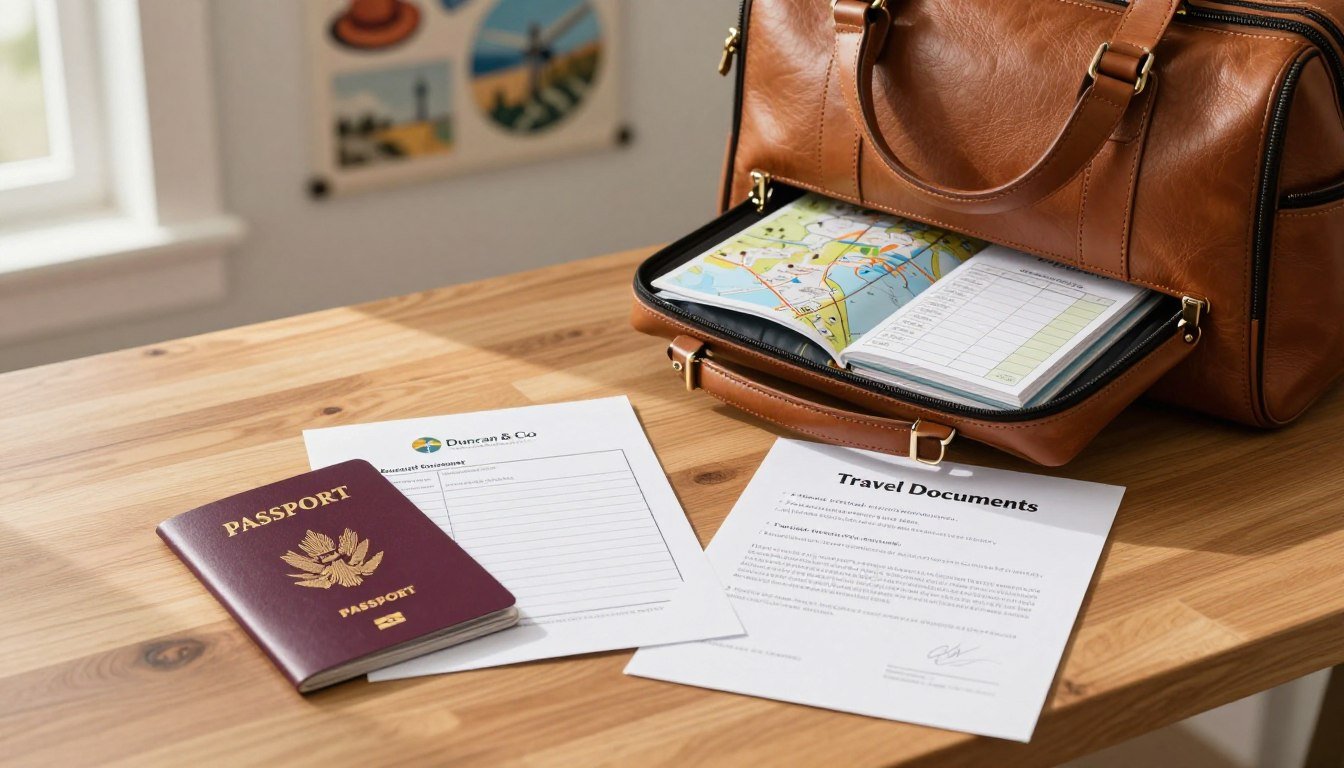
You may be holding a small hand and a big worry at the airport gate. That knot in your chest is normal. This guide was written for U.S. parents and guardians who want clear, calm information about moving through security and borders without surprise delays.
Rules change based on the child’s age, who is traveling, and whether the trip is domestic or international. Expect airlines and border officers to ask for paperwork even when the law is not strict. Carrying the right files helps prevent interruptions and supports safety checks meant to stop abduction or trafficking.
Later sections list passports, consent letters, birth certificates, proof of relationship, and custody papers. If you face unique custody issues or an urgent itinerary, call or text 3038270632 or stop by 350 Terry St Ste 229, Longmont, CO 80501 for help preparing paperwork.
What you’ll get: practical checklists for domestic and international trips and sample consent letter content to lower the chance of extra screening.
Key Takeaways
- Documentation needs vary by age, companion, and destination.
- Airlines and officials may request paperwork even if not legally required.
- Bring proof of relationship and permission to avoid delays.
- Checklists cover passports, consent letters, birth certificates, and custody papers.
- For urgent or complex cases, call or text 3038270632 or visit the Longmont office.
How to confirm which travel rules apply to your child’s trip
Start by deciding whether the itinerary stays within the United States or crosses an international border. That choice changes the baseline paperwork and the level of scrutiny at check-in.
Domestic vs. international
For domestic flights, TSA generally does not require ID for minors under 18, though some airlines ask for proof of age for lap infants. For international trips, every minor needs a passport and possibly visas or entry permits from the destination country.
Who is traveling
Traveling with one parent, with other parents or guardians, or by a non-parent (like a grandparent) can trigger different consent needs. A minor traveling without both parents often prompts extra verification at the airline counter and border control.
How age affects requirements
Age matters: lap infants under two may need proof of age, children under 16 often use a birth certificate for land or sea re-entry, and teens still face airline-specific rules.
Where to verify
Always check two places: the operating airline’s policy pages and the destination country’s embassy or consulate website. When in doubt, carry extra paperwork; having it can prevent questions and delays.
Quick tip: Keep a travel folder with paper and digital backups so an adult can answer queries fast at check-in, security, or the border.
What documents do I need to travel alone with my child?
Organize a concise packet that proves identity, relationship, and permission. A small, labeled folder can speed check-in and ease questions at borders.
Core kit
Bring three essentials:
- Passport (when leaving the United States)
- Signed consent or a child travel form showing permission
- Proof of relationship such as a birth certificate or adoption decree
Consent and notarized letters
A parent traveling solo should carry a signed consent form. For many international routes, a notarized consent letter in English strengthens entry checks. Notarization and clear permission language reduce delays in strict countries.
Passports, passport cards, IDs, and custody
Air travel requires a passport book for each minor. A passport card works only for land or sea trips to Canada, Mexico, Bermuda, and some Caribbean islands.
Carry custody orders if applicable and optional identification for older kids. These papers provide extra proof and help agents confirm rights quickly.
Domestic travel checklist for a parent traveling with a minor
A smooth airport visit starts with a short checklist kept in a labeled folder.
Flying domestically: typical requirements
For most U.S. flights, TSA does not require ID for children under 18 when accompanied by an adult. Still, individual airlines sometimes ask questions and may request documents.
Typically required vs. smart to carry
- Typically required: adult identification, the child’s passport or birth certificate when requested, and carrier boarding passes.
- Smart to carry: signed permission note, custody orders if applicable, and a printed copy of the child’s birth certificate for quick proof.
Proof of age for infants and toddlers
Airlines commonly verify that a lap infant is under two. Bring proof of age such as a birth certificate or passport.
Delta and American Airlines frequently request age verification for lap infants; check your airline’s current policy before travel.
REAL ID and adult identification
Starting May 7, 2025, the adult must present a REAL ID-compliant driver’s license or an accepted alternative, such as a passport. If a state ID is not REAL ID-compliant, bring another acceptable form to avoid delays.
| Item | Why | When to show | Notes |
|---|---|---|---|
| Adult REAL ID or passport | Required at security | Every domestic flight from 5/7/2025 | Bring an alternative if not compliant |
| Birth certificate | Proves child’s age and relationship | Lap infant verification or land re-entry | Keep a certified copy in folder |
| Signed permission note | Reduces carrier questions | If traveling without both parents | Notarize for added weight |
| Digital backups | Replace lost originals | At check-in or if asked | Store in secure cloud folder |
Avoid delays: keep documents accessible, know the child’s full legal name as shown on records, and arrive early when a parent traveling with young ones.
International travel documentation for children and parents guardians
Each child must carry their own travel identity when the itinerary includes another country.
Passports and age rules:
Passport and application rules for children under 16 vs. ages 16–17
For overseas entry, every child needs a passport. Children under 16 generally require both parents guardians to appear and a completed Form DS-11 when applying.
Teens aged 16–17 usually must show that at least one parent or guardian knows about the application. Renewals or first-time issuance follow different steps; check the State Department guidance early.
When one parent cannot appear
If one parent is absent, provide the correct permission paperwork. Use Form DS-3053 as the formal consent affidavit so the applying parent can proceed without delay.
Visas, entry permits, and re-entry proof
Visa and entry rules vary by destination country. Many nations require separate visas or permits for minors. Research the destination well before trips.
For U.S. land or sea re-entry, children under 16 may present a certified birth certificate, Consular Report of Birth Abroad, or Certificate of Naturalization as acceptable proof.
Health records and medical consent
Carry vaccination and basic health records when required by airlines or the destination. A signed medical consent form empowers an accompanying adult to authorize emergency care if a parent is not present.
| Topic | Who | Required form | When to use |
|---|---|---|---|
| Passport | All minors | DS-11 (under 16) | International flights, airports, border crossing |
| Absent parent consent | One parent not present | DS-3053 | Submit with DS-11 to avoid delay |
| U.S. land/sea re-entry | Children <16 | Birth certificate/CRBA | Re-entry by car, ferry, or cruise |
| Health authorization | Guardian or group leader | Medical consent form | Medical care away from parent |
Consent, custody, and safety considerations that can trigger extra screening
Screening steps aim to protect minors; that means even legitimate trips may draw scrutiny. Airlines and border officers look for signs of child abduction and trafficking. Staff must confirm permission, relationship, and custody quickly.
Why checks focus on prevention
Officials use screening to spot risk patterns and protect vulnerable travelers. Programs like the Blue Lightning Initiative can prompt closer review when a routing or passenger match raises flags.
Common triggers for extra questions
- An adult traveling with a child who has a different last name.
- A child who travels without both parents listed on records.
- Guardians or non-parent adults accompanying a minor.
- Sole custody situations or unusual itinerary changes.
What to include in a permission letter
Prepare a concise consent letter with full names, the nature of the relationship, travel dates, destinations, and flight or cruise details when available.
Also add contact information for the non-traveling parent or guardian and a clear statement of permission for the specified time and route.
Best practice: have the letter notarized for international trips and keep an English translation if the original is in another language.
When to carry custody paperwork
Bring sole custody orders, parenting time schedules, or clauses limiting travel when applicable. These papers serve as proof that travel follows legal arrangements.
Failure to follow custody provisions can create legal issues beyond delays. Stay calm, present documents promptly, and provide any requested information to speed resolution.
| Situation | Recommended document | Why | When to show |
|---|---|---|---|
| One parent traveling | Signed consent or notarized letter | Shows permission from non-traveling parent | Airline check-in, border control |
| Different surnames | Birth certificate or proof of relationship | Confirms biological or legal link | At ticket counter or port of entry |
| Sole custody | Court orders or parenting time schedule | Proves legal authority for travel | Whenever questioned by staff or officials |
| Medical consent needed | Signed medical authorization | Allows emergency care if parent unavailable | During trip and at healthcare visits |
Conclusion
A quick final check of forms and IDs avoids last-minute holds at check-in or customs.
Snapshot checklist: passport for international trips; proof of age for lap infants; a notarized travel consent letter when one parent is absent; custody or court orders if relevant; airline unaccompanied-minor forms when the family uses that service; and secure digital copies of all documentation.
Confirm airline and destination requirements close to departure. Small preparation saves time and keeps the trip calm for both parent and child.
If you want help reviewing travel consent forms, notarized letters, or custody-related paperwork before travel time, call or text 3038270632 or visit 350 Terry St Ste 229, Longmont, CO 80501.
Leave a Reply