I once watched a small business owner stand outside a county office, heart racing, because a document had been rejected for the wrong notarial certificate. That stress is real. Many people face delays or extra costs when a form needs a distinct type of notarial act.
This short guide will define the two most common acts used in U.S. notarizations and show how choosing the right one affects acceptance of your document. You will learn what each notary action certifies, what the signer must say, and when the signature must occur.
Whether you are a signer, a family member, or a business owner, the choice depends on the document’s purpose. Standards updated in December 2024 shape current practice for notary public work.
For local help, call or text 3038270632 or stop by 350 Terry St Ste 229 Longmont CO 80501 for quick guidance on document readiness.
Key Takeaways
- Learn how each notary act verifies signature intent or sworn truth.
- See practical steps: verbal ceremony, timing, and certification scope.
- Find who should use which act: signers, businesses, families.
- Avoid refusals by matching the certificate to the document’s goal.
- Contact local notary public help at 3038270632 or visit the office for guidance.
Why This Notarial Act Choice Matters for Your Document and Signer
Choosing the proper notarial certificate affects whether your paperwork clears a recorder’s office or a lender. The correct notarial act helps the receiving party treat the form as valid and enforceable.
How different notarial acts support distinct purposes
Some documents record consent to a contract, while others record sworn statements of fact. For that reason, common notarial acts were created to match each purpose.
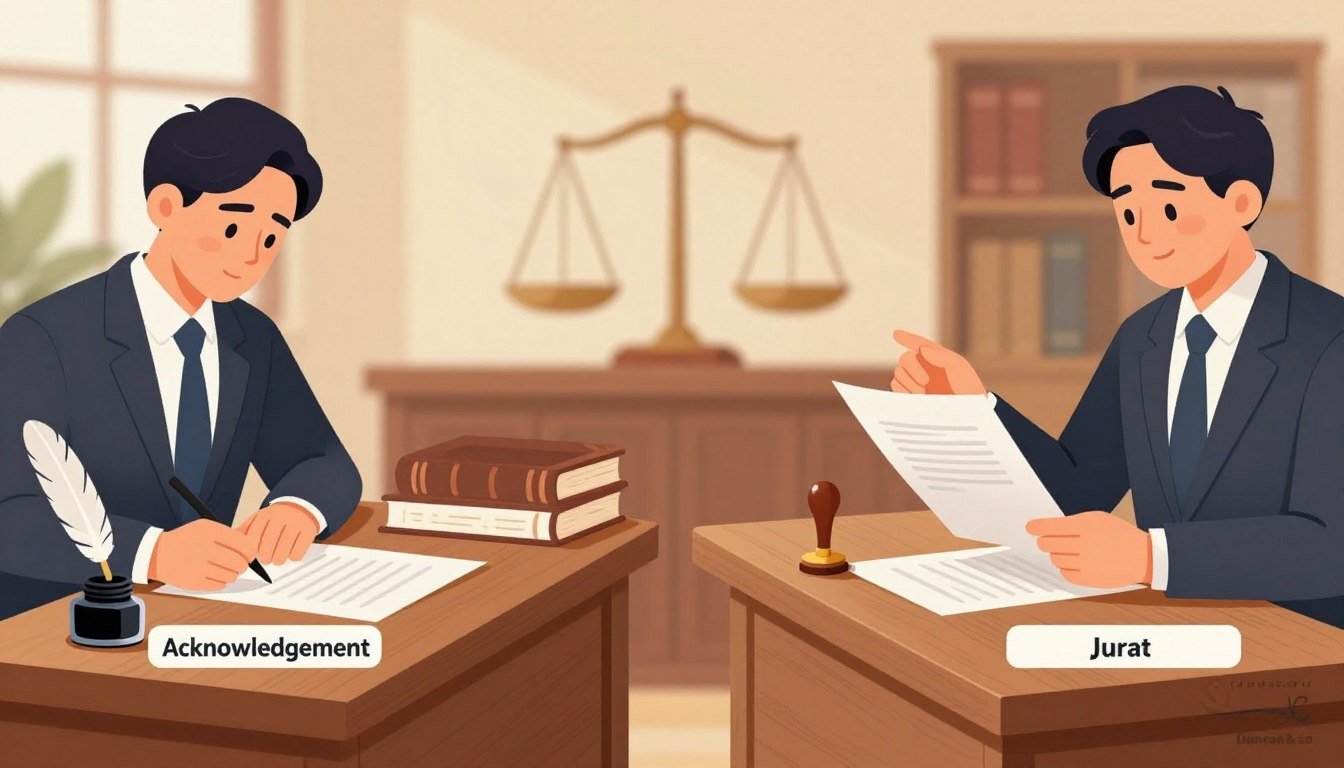
An acknowledgment focuses on confirming the signer’s identity and willingness to sign. A jurat focuses on oath or affirmation about the truthfulness of statements in the document.
What can go wrong if the wrong certificate is used
Institutions such as courts, recorders, lenders, and agencies review the notary certificate. If the certificate does not match the document’s intent, they often reject the filing.
Consequences include processing delays, re-signing, re-notarization, extra fees, and missed deadlines. Remember: the notary does not change the document content — the role is to perform the correct notarial act and complete the certificate properly.
Quick example: a deed or contract commonly needs an acknowledgment; an affidavit or application commonly needs a jurat. For questions about which act your signer needs for a specific document, call or text 3038270632 or stop by 350 Terry St Ste 229 Longmont CO 80501 for help with notary services.
Difference between an Acknowledgement and a Jurat
What the notary signs off on affects whether a document proves intent or sworn truth.
Acknowledgment defined
An acknowledgment tells the notary public that the signer made the signature willingly and knew the document’s effects. The notary confirms identity, appearance, and the proper ceremony. The notary does not attest to the truth of the document’s content.
Jurat defined
A jurat is a verification on oath or affirmation. The signer swears or affirms to the notary public that the document’s contents are true. This act requires the signer to take an oath or affirmation in the notary’s presence.
Verbal ceremony and timing
An acknowledgment uses a confirmation statement to the notary public; it may cover a signature made before or during the appointment. A jurat requires the actual oath or affirmation and the signature must occur in the notary’s presence.
What the notary certifies
The notary certifies identity, proper ceremony, and that the required oath or acknowledgement took place. The notary does not verify factual accuracy unless the act specifically involves an oath. Jurats commonly appear on affidavits, court filings, and applications because they deal with sworn information.
How to Choose the Right Notarial Certificate Without Crossing Legal Lines
Read the paperwork first. Many forms include notarial wording that tells which certificate to use. If that wording is clear, follow it.
Who decides: the signer, an attorney, an escrow or loan officer, or written document instructions make the call—not the notary. Letting a notary pick the certificate can look like legal advice and risk unlicensed practice of law.
Document clues
Look for contract language, deeds, or acceptance terms when the paper shows agreement content. Those often need a certificate for signature verification.
If the file contains sworn statements, affidavits, court filings, or applications, it usually requires a jurat-style act that verifies statements under oath.
Practical workflow
- Check the notarial wording on the document.
- If wording is missing, ask the signer to contact the issuer (attorney, lender, or agency).
- When a signed document arrives, have the person appear, state the signature is theirs, and compare the mark to ID.
“Do not add or swap certificates unless the issuer or law allows it; follow instructions and state rules.”
| Scenario | Likely certificate | Action for notary |
|---|---|---|
| Deed or contract | Signature verification certificate | Confirm issuer wording; verify signer identity |
| Affidavit or court filing | Oath/affirmation certificate | Administer oath; witness signing in person |
| Loan package with mixed papers | Multiple certificate types | Verify each document; follow lender instructions |
How the Notarization Process Works for Each Type of Notarial Act
Prepare before the appointment. Bring the signing document, valid ID, and be ready to appear in person. The notary public must see the person and confirm identity before any notarial act.
Acknowledgment workflow
For an acknowledgment: the notary confirms the signer is the person named and that the signature was made willingly. The signer may have signed earlier or sign in the notary’s presence. The notary completes the certificate, signs, and applies the seal.
Jurat workflow (jurat definition)
For a jurat: the signer must appear, swear or affirm an oath, and sign in the notary’s presence. The notary records the oath affirmation, completes the jurat certificate, signs, and stamps the record.
Seals, missing wording, and split signings
Typical seals list Notary Public, state, name, commission number, and expiration. Never guess missing certificate wording; ask the document issuer. Split signings or adding certificates can change the intended act and cause rejection. Using the wrong certificate or stamp can invalidate the notarization and create costly delays.
Conclusion
Confirm the correct notarial certificate before your appointment. A quick check of the certificate block helps your document clear recorders and lenders. Remember: acknowledgment = willing signature and awareness; jurat = oath or affirmation that confirms truthfulness and must be signed in person.
Who decides the certificate? The signer or the document issuer directs which notarial certificate to use, often via an attorney, escrow officer, or lender. The notary public verifies identity and performs the proper ceremony; the notary does not rewrite or give legal advice.
Review certificates, confirm requirements with the receiving agency, and prevent delays. For local help with notary certificates and document readiness, call or text 3038270632 or visit 350 Terry St Ste 229 Longmont CO 80501 to move your signer and paperwork forward smoothly.
Leave a Reply