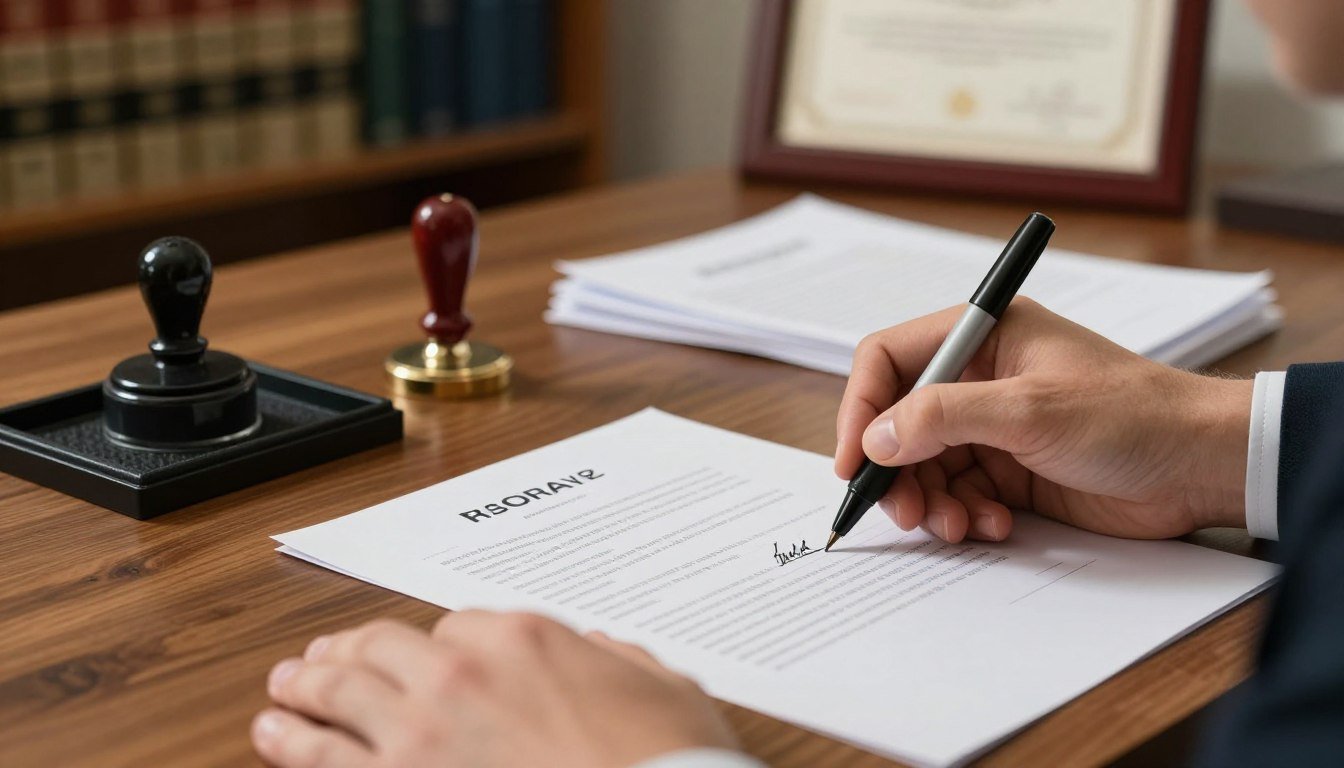
Tag: Notary Public

  • Common Mistakes in Self-Proving Affidavits

    Common Mistakes in Self-Proving Affidavits

    Losing a loved one is hard; finding a lost heirloom of protection in paperwork should not make it worse.

    A self-proving affidavit is an add-on to a last will and testament. Put simply, when signed and notarized correctly, it lets a court accept the will without calling witnesses. That streamlines the probate process and can spare a family extra hearings and expense.

    But small errors on an affidavit often cause big delays. Execution details, witness eligibility, notarization timing, how the document is handled, and state-specific requirements are common risk areas to watch.

    Rules vary by state, so copying a form found online can backfire even if it looks official. An attorney should confirm forms meet local law and execution requirements.

    If you want help reviewing documents or want someone local to call, text 3038270632 or stop by 350 Terry St Ste 229, Longmont, CO 80501.

    Key Takeaways

    • A self-proving affidavit helps prove a will during probate when done right.
    • Small errors can cause delays, extra hearings, and added costs.
    • Watch execution steps, witness rules, notarization timing, and handling.
    • State rules differ — don’t rely on generic online forms.
    • Consult an attorney or call/text 3038270632 for a document review.

    Why Self-Proving Affidavits Matter in Estate Planning and Probate

    A properly prepared self-proving affidavit can prevent your executor from wasting time tracking down witnesses. When probate begins, the executor presents the signed original will to the probate clerk or court for authentication before estate assets can be distributed.

    Without an affidavit, witnesses may need to appear or sign papers so they can witnesses testify to the will’s execution. That requirement can slow a case if witnesses move, change names, or are hard to contact.

    The affidavit serves as a sworn legal document that often substitutes for witness testimony in court. That reduces steps the executor must take and cuts trips back to court.

    This protection also helps deter challenges alleging forgery, coercion, or lack of capacity. It is not a complete shield: validity still depends on correct execution and state law.

    Bottom line: a clear affidavit supports efficient probate, eases burden on your family and loved ones, and helps your estate planning work as intended.

    Common mistakes in self-proving affidavits that can delay probate

    A single mismatch of dates or locations on the affidavit may stall probate for weeks. Treat the self-proving affidavit as a precision document: small inconsistencies invite extra filings, hearings, and delays in the probate process.

    Missing or incorrect execution details

    Execution errors often include a missing date, the wrong county or state, or a mismatch between the will and the affidavit. Clerks will flag these and may ask the court for further proof before admitting the will.

    Affidavit language about witness presence

    The affidavit must state that witnesses saw the testator sign the document and then signed as witnesses themselves. Clear presence language satisfies statutory requirements and reduces the chance a court will demand witness testimony.

    Capacity statements and sound mind

    Include a concise statement that the testator had the mental capacity to understand the will. Addressing the testator’s ability to read and the absence of impairing conditions supports the document’s validity against contest.

    Using the wrong state form or outdated wording

    State laws and required wording differ. An affidavit acceptable in one state may fail in another if it uses outdated statutory phrasing. When uncertain, have an attorney review the form to meet local requirements.

    Signing and Witness Problems That Undermine Validity

    Witness problems at signing can undo the best-laid estate plans. Most states require at least two eligible witnesses to be present at execution. Skipping this rule or cutting corners can put the will’s validity at risk and force a court inquiry.

    At least two eligible witnesses

    Eligible means adults who are mentally competent and able to testify later. Many states prefer disinterested people to reduce challenges from heirs or other parties.

    Hard-to-find witnesses

    If witnesses are not easily located, the executor may spend weeks tracking them down during probate. That delays distribution and adds stress for your family.

    Credibility and presence

    A witness who barely remembers being there or who appears biased can invite objections and a contested court case. Courts expect clear presence at the moment of signing, not later hearsay.

    • Choose stable, local witnesses who will cooperate if the executor needs them.
    • Document full legal names, current addresses, and phone numbers at signing.
    • Have witnesses sign the form when you sign self-proving affidavit paperwork to avoid future disputes.

    Tip: Ask an attorney to review witness choices and execution requirements so your family never has to relive the signing in a later case.

    Notarization and Document Handling Errors to Avoid

    Notarization errors and poor document handling create avoidable roadblocks when opening probate.

    Notarize at signing. If the affidavit is notarized after the signing, the court may question whether execution happened as sworn. Ask the notary to complete the jurat or acknowledgment at the same time the will and affidavit are signed.

    Watch for common notary errors: a missing seal, incomplete jurat wording, or mismatched dates can raise red flags. These issues often cost the executor extra time and filings.

    Keep originals together. Separating the self-proving affidavit from the original wills risks proving they belong together. Many courts expect the signed original will with the attached affidavit, not photocopies.

    Error Probable court effect Practical fix
    Late notarization Questioned validity, extra hearing Notarize at signing; confirm jurat language
    Separated documents Proof delays, affidavits challenged Store original will and affidavit together
    Using copies Additional petitions or evidence required Provide signed originals to probate clerk

    Store originals in a secure, known place and tell the executor where they are. A quick readiness check with your executor and attorney saves time during the probate process and helps the court open the case smoothly.

    Estate Plan Gaps That a Self-Proving Affidavit Cannot Fix

    A sworn statement helps authentication but does not patch holes in an estate plan. The affidavit only confirms signing; it does not fix poor drafting, unclear directions, or outdated choices.

    Trying to “paper over” will defects instead of correcting and re-executing the will

    Do not rely on an affidavit to cure a defective will. If a will has conflicting clauses or missing execution steps, the right fix is to correct the document and re-execute it with witnesses and a notary. That preserves the will’s validity.

    Leaving ambiguous terms that invite disputes among beneficiaries and family

    Vague language about who gets assets or when a beneficiary inherits leads to fights. Even with a notarized page, unclear terms can spark contested probate and cost time and money for your family and clients.

    Forgetting to update documents after major life changes

    Marriage, divorce, births, deaths, moves, or significant asset changes all require a document review. Regular check-ins with an attorney help align your wishes, keep beneficiary designations current, and reduce the burden on the executor.

    • Bottom line: A self-proving page aids authentication but cannot rewrite poor planning. Fix and re-execute when needed.

    Drafting Shortcuts That Create Problems in the Probate Process

    Cutting corners at the drafting stage often creates headaches that show up only after a death. Templates and long boilerplate may seem efficient, but they miss details that matter during probate.

    Why online templates fail

    Many forms omit state-specific execution language or a required jurat. That gap forces the executor to file extra affidavits or ask the court for proof.

    Boilerplate overload and inconsistency

    Heavy generic clauses can conflict with custom terms. These conflicts create ambiguity about asset distribution and invite procedural delays.

    Coordination and hard-to-find parties

    Unaligned beneficiary designations on retirement accounts or life insurance can override what a will says. When heirs live abroad or vanish, notice obligations slow probate and add cost.

    Shortcut Risk Practical fix
    Generic online will Missed execution requirements Use state-approved wording; confirm execution
    Boilerplate-heavy clauses Inconsistent terms; court questions Tailor language; simplify provisions
    Uncoordinated beneficiary designations Assets pass outside will unexpectedly Align beneficiary designations with wills
    No plan for absent parties Lengthy notice and added filings Consider a trust or targeted notice strategy

    Prevention: an estate planning attorney or planning attorney can review documents, spot conflicts, and advise whether a trust, including an inter vivos trust, will reduce probate burdens for clients. Careful drafting today saves time and expense for your executor and your heirs.

    Practical Steps to Prevent Challenges and Save Time for Your Executor

    Small process choices made now can save your executor hours later. Take a few clear steps during signing to keep probate moving and protect your loved ones.

    Execute documents correctly

    Follow state law and formal requirements at every signing. Use consistent dates, full signatures, and the exact jurat language your laws require.

    Choose reliable witnesses

    Pick adults who are easy to locate and likely to cooperate if the court asks. Have witnesses sign the self-proving affidavit at the same event whenever allowed.

    Retire old wills and fix errors

    After you execute a new will, revoke and destroy older wills to avoid competing originals. If you spot a mistake, re-execute rather than leaving known issues unresolved.

    Plan executor logistics

    Tell your executor where originals are kept, who to call, and provide contact details for witnesses. Good logistics save time and spare loved ones extra trips to court.

    Action Why it matters Quick checklist
    Execute per law Prevents probate challenges Dates, jurat, signatures correct
    Witness selection Avoids follow-up subpoenas Local, identifiable, cooperative
    Revoke old wills Stops competing originals Destroy older copies; note revocation
    Fix mistakes Reduces extra filings Re-execute promptly with witnesses

    Conclusion

    A few precise steps at signing make the executor’s job far easier during probate. Most delays come from avoidable execution, witness, notarization, and document-handling errors rather than legal theory.

    A properly prepared self-proving affidavit and attached wills let an executor move through probate with fewer court hurdles. It helps when the testator shows a sound mind, signs correctly, and the notary completes the jurat at once.

    Remember: an affidavit cannot fix an outdated or unclear will. Review your estate, beneficiaries, and assets now so your wishes match state law and your planning goals.

    Need help? Call or text 3038270632 or stop by 350 Terry St Ste 229, Longmont, CO 80501 to discuss your estate and get a quick review with an attorney.

    FAQ

    What is a self-proving affidavit and why does it matter in estate planning?

    A self-proving affidavit is a sworn statement, signed by the testator and witnesses, that verifies the will was executed properly. When attached to the original will, it can spare witnesses from testifying at probate. That speeds administration, reduces court costs, and lowers the risk that witness availability will delay distribution to beneficiaries.

    Can a self-proving affidavit fully replace witness testimony in court?

    In most states, a properly executed affidavit functions as evidence equivalent to live testimony about the will’s execution. Courts still retain authority to require testimony if fraud or undue influence is alleged, but a compliant affidavit often removes routine need for witnesses to appear.

    What execution details commonly cause probate delays?

    Common execution errors include missing or incorrect dates, absent location information, incomplete signatures, and failure to use the state’s required wording. Any of these can prompt a court to demand witness testimony or to question the will’s validity, prolonging probate.

    How should capacity be addressed in the affidavit to avoid challenges?

    The affidavit should state that the testator was of sound mind and understood the nature and effect of the will when signing. Clear wording about the testator’s capacity and intent helps reduce later claims of incompetence or lack of understanding.

    Is it risky to use an out-of-state or outdated form for a self-proving affidavit?

    Yes. States have specific statutory language or formal requirements. Using the wrong form or obsolete wording can make the affidavit ineffective, forcing witnesses to testify or leading to objections during probate. Always use current, state-specific forms or get attorney review.

    How many witnesses are required, and who should they be?

    Most states require at least two competent, disinterested witnesses who sign in the presence of the testator. Choose witnesses who are easy to locate later and unlikely to be challenged as beneficiaries or interested parties to reduce credibility disputes.

    What problems arise when witnesses are hard to identify or locate later?

    If witnesses cannot be found or cannot remember details, the court may demand additional proof of valid execution. That can delay probate and increase costs. Pick witnesses with stable contact information and good recollection of events.

    What notarization and handling errors should executors watch for?

    Avoid separate or detached documents, improper notarization, and reliance on copies when the original will and attached affidavit are required. The affidavit should be notarized at signing, kept with the original will, and filed promptly with the probate court.

    Can a self-proving affidavit fix defects in the will’s terms or intent?

    No. An affidavit attests to execution and capacity; it does not cure substantive defects like ambiguous clauses, conflicting beneficiary designations, or outdated provisions. Those issues must be corrected by re-drafting and re-executing the will.

    Are online templates safe to use for self-proving affidavits?

    Generic templates may omit state-specific language or execution steps. That creates risk. Use templates created for your state and reviewed by an estate planning attorney, especially when assets are significant or family situations are complex.

    How should someone fix a known problem with a will or affidavit?

    The best fix is to re-execute the will and a new self-proving affidavit following state law. Revoking older wills and destroying superseded copies prevents confusion. Don’t rely on informal corrections; formal re-execution ensures enforceability.

    What coordination is needed between wills, beneficiary designations, and non-probate assets?

    Ensure that beneficiary forms on retirement accounts, life insurance, and payable-on-death accounts match the will’s plan. Inconsistencies can bypass the will and create disputes. Coordinate all documents and review them after major life events.

    How can executors reduce repeated court trips and delays?

    Keep the original will and attached affidavit safe and accessible, retain clear contact details for witnesses, maintain records of where documents were signed, and consult an estate planning attorney to confirm compliance. These steps limit the need for additional evidence or court hearings.

    When should an attorney be involved in preparing a self-proving affidavit?

    Involve an estate planning attorney when assets are substantial, family situations are complicated, parties live in different states, or there is potential for contest. Attorneys ensure forms meet state law, reduce drafting shortcuts, and help anticipate probate hurdles.
  • How Much Does a Notary Cost in Longmont Colorado?

    How Much Does a Notary Cost in Longmont Colorado?

    You arrive with papers in hand and a deadline on your mind. That moment can feel heavy, but getting a signature sealed should not add stress.

    This service page exists to help local residents get clear answers fast. We explain typical fees, when to choose office, mobile, or online options, and what factors can change a final quote.

    Online notarizations start at $25 per meeting plus $10 for each extra seal, and are available 24/7 from phone or computer. For immediate help, call or text 3038270632 to confirm pricing and availability.

    If you prefer an in-person visit, stop by 350 Terry St Ste 229 Longmont CO 80501. Travel, urgency, number of seals, and witness needs can affect totals, so a quick quote is often the fastest way to know what to expect.

    Read on for section-by-section guidance so you can estimate fees and book the right service without wasted time.

    Key Takeaways

    • Get a quick quote by calling or texting 3038270632.
    • Online meetings start at $25 + $10 per additional seal and run 24/7.
    • Choose office, mobile, or online based on convenience and budget.
    • Travel, urgency, and signer needs can raise the final price.
    • Visit the office at 350 Terry St Ste 229 Longmont CO 80501 for in-person service.

    Notary pricing in Longmont: what you can expect today

    Expect different fee structures depending on whether you visit an office, request travel, or connect online.

    Common local models:

    • In-office fees — often charged per notarization and ideal for single, quick signatures.
    • Mobile service — travel-based pricing that can start from $80 due to travel time and scheduling windows.
    • Online meetings — typically charged per meeting, with sessions starting at $25 and an extra $10 for each additional seal.

    Think in ranges rather than exact numbers. A mobile visit adds driving and wait time, so totals rise even when the base fee looks reasonable.

    Per-signature pricing bills each seal; per-meeting pricing covers one session and can include multiple pages or signers. For many documents, a per-meeting online option may be simpler and more predictable.

    Online sessions connect quickly once you finish document upload and identity checks, saving time for straightforward signings. Mobile visits depend on travel and appointment windows, so confirm arrival windows and any rush fees up front.

    Next: Below we list today’s concrete price points for online and mobile options and what each fee usually includes.

    How much does a notary cost in Longmont Colorado?

    Here are today’s standard rates and common extras so you can estimate your final total quickly.

    Online sessions: $25 per meeting plus $10 for each additional seal. Many transactions need just one seal, so most simple online signings stay near the base rate.

    Mobile visits and baseline pricing

    Mobile visits typically start from $80. Final totals depend on distance, timing, and how many signers or seals are required.

    What fees usually cover vs billed separately

    • Usually included: the notarization itself, a scheduled appointment window, and completing the notarial certificate.
    • Often billed separately: travel, after-hours or rush fees, extra seals, printing, and complex witness coordination.
    Service Base Price Common Extras Typical Use
    Online meeting $25/meeting $10 per extra seal, ID verification Single document, remote signer
    Mobile visit From $80 Travel, after-hours, multiple signers Home, office, or group signings
    In-office Variable Printing, witnesses if requested Quick walk-ins and simple signings

    Example: one document with one seal online = $25. Multiple documents needing extra seals will add $10 per seal and can raise totals quickly.

    To confirm exact pricing and availability, call or text 3038270632. For walk-in help, stop by 350 Terry St Ste 229 Longmont CO 80501.

    What impacts the total cost of notarization

    A few key items usually explain most of the final bill. Knowing these lets you estimate fees before you call for a quote.

    Primary cost drivers

    • Number of seals: Each additional seal or certificate can add a per-seal fee, especially online or per-signature billing.
    • Travel and time: Mobile visits bill for distance and the time it takes to arrive, park, and complete a signing at your home or office.
    • Urgency: Same-day or late-night requests often include premium charges to cover compressed scheduling.
    • Document complexity: Multiple pages, edits, or reprints add minutes and can raise the total.
    • Signer and witness logistics: Extra people, identity checks, or witness coordination extend the appointment.

    Multiple notarizations within one packet may each need separate seals. That increases totals even if the visit time is unchanged.

    Save money tip: Gather all documents, valid IDs, and any witnesses before booking. Being prepared shortens the session and lowers travel-based charges.

    In-office notary services in Longmont

    If you can come to the office, an in-person visit often saves time and keeps fees predictable.

    When an office visit is the fastest, most cost-effective option

    In-office service removes travel charges and usually follows a steady, quick process. This makes it ideal for straightforward signings with one signer and complete paperwork. Stop by 350 Terry St Ste 229 Longmont CO 80501 for walk-in help or scheduled service.

    What to bring to avoid repeat trips

    Before your appointment, gather the right items so the session finishes fast and cleanly.

    • Valid government-issued photo ID (passport or driver’s license).
    • All documents to be signed, printed or electronic as instructed.
    • Do not sign the document in advance if the notary must witness the signature.

    The notary public will verify identity and witness signatures but cannot prepare forms or offer legal advice. Call or text 3038270632 before you arrive to confirm hours and avoid waiting.

    Mobile notary services at your home, office, or preferred location

    For busy days or limited mobility, having a notary arrive at your location removes the hassle.

    What this service does: A mobile professional travels to your home, workplace, hospital, or another agreed spot to complete the signing. This saves travel time and keeps the meeting on your schedule.

    Who benefits most

    Busy professionals, caregivers, and people with limited mobility gain the most from on-site visits. Groups or multiple signers at one location also find this efficient.

    Booking a visit

    Typical scheduling uses a “Book a Visit” flow. You pick a date, a preferred time window, and the location. The service confirms the appointment and assigns a mobile pro.

    • Expect base pricing from $80, rising with distance, after-hours needs, or complex signings.
    • Appointments finish faster when documents are ready, valid IDs are available, and all signers are present.
    • A platform-based booking form often gathers document details upfront and cuts back-and-forth.

    Tip: If travel is difficult or you want a faster remote option, remote notarization is a convenient alternative.

    Online notarization in Colorado: legal, accepted, and convenient

    Online notarization brings secure signature services to your phone or laptop at any hour. Residents can rely on authorized digital processes that follow state rules and many national standards.

    Colorado authorization: The state permits remote signings under Colo. Rev. Stat. §§ 24-21-506 and 24-21-514.5. These laws let a commissioned public official perform electronic notarizations with identity verification and a recorded video session.

    Interstate recognition and acceptance

    Properly performed digital notarizations are widely accepted across the United States. Colorado recognizes notarizations from other jurisdictions under Colo. Rev. Stat. §§ 24-21-511, 38-30-126, and 38-35-105.

    In practical terms, many recipients accept documents notarized remotely when the signing follows the correct protocols. Still, final acceptance depends on the receiving agency or counterparty, so confirming requirements for sensitive filings is wise.

    Why this matters for business and urgent filings

    On-demand access to an online notary helps meet tight deadlines and reduces scheduling friction. The remote flow is simple: upload your document, verify identity, join a video session, and receive completed files ready to share.

    How online notarization works from your phone or computer

    Start your remote signing from any device and finish with certified documents in minutes.

    Begin by choosing the online option on the platform. Upload the full document file — not just the signature page — as .pdf or .docx. If you only have paper, use your phone to scan and save the complete file before you upload.

    Upload the full document and start a secure session

    Select the correct file and confirm pages are complete. Then launch the secure meeting and wait for the notary to join. Sessions often connect quickly after upload and checks finish.

    Identity verification steps and required information

    You will verify identity with knowledge-based questions and by taking a photo of a government-issued ID. The platform may ask for a U.S. Social Security number where required for verification.

    Video meeting requirements: camera, audio, and reliable Wi‑Fi

    Use a Wi‑Fi enabled device with working camera and audio. Poor connections can interrupt the session, so choose a stable network and quiet spot.

    Access signed documents, storage, and easy sharing

    After signing, completed files and transaction details are stored securely in your account. You can view or share them directly from the platform at any time.

    Step What to prepare File type Outcome
    Start session Create account on the platform .pdf, .docx Secure meeting link
    Upload Full document scan or file .pdf or .docx Ready for review
    Verify identity ID photo and KBA questions Photo of government ID ID confirmed
    Video signing Camera, mic, Wi‑Fi Live video Signed, notarized document
    Access & share Account login Downloaded PDF Stored and shareable

    What you need for a smooth notarization appointment

    A short checklist before your session will save time and prevent rescheduling. Use this for office, mobile, or online bookings so you don’t waste a trip or meeting slot.

    Bring a valid, government-issued photo ID

    Bring one current government-issued photo ID. Ensure it is not expired and matches the name on your paperwork.

    Bring complete documents ready for signature

    Have all documents that need notarization assembled and complete. Check that every page is present and blanks are handled as required by the requesting party.

    Do not sign in advance if the notary must witness your signature

    Do not sign beforehand when the notary must witness the signature. Signing during the appointment prevents failed notarizations and rebooking.

    “The notary public verifies identity and witnesses signatures but does not provide legal advice.”

    • Confirm every signer has an acceptable ID and can attend the same appointment.
    • Prepare any witness instructions or special-case notes before arrival to avoid delays.
    • If using online services, have your document file and ID photos ready for upload.

    Next: Check witness rules and special signing situations to ensure your meeting completes without hold-ups.

    Witnesses and special signing situations

    When paperwork calls for both a witness and a notarial seal, plan ahead.

    Notarization and witnessing are separate requirements. Some forms need a notary public to certify the signature and also require independent witnesses to watch the signing.

    Common examples include estate planning and medical directives. Other sensitive forms may ask for witnesses or specify that they be disinterested. Always check the form or the receiving agency before you schedule.

    Ask these questions before your visit

    • How many witnesses are required?
    • Must witnesses be disinterested or related?
    • Can the notary also act as a witness where allowed?
    • Will witness coordination add extra time to the appointment?

    Confirm witness availability before arriving, especially for in-office signings. Coordination can add time and may require rescheduling if not planned.

    Mobile visits often help when witnesses are present at the signing location. That reduces the burden of finding extra people elsewhere and lets the appointment finish in one trip.

    Next: a quick list of commonly notarized documents to help you identify your category and prepare accordingly.

    Common documents notarized in Longmont

    Residents and businesses frequently bring these types of paperwork for notarization.

    Real estate and mortgage:

    Real estate and mortgage paperwork

    Deeds of trust, closing disclosures, HELOC packages, loan agreements, and loan modifications commonly require signatures and seals.

    These often need multiple signers and extra certificates.

    Estate planning and healthcare

    Wills, trusts, living wills, medical directives, release of records, and DNR orders are frequently signed with formal witnesses.

    Confirm witness requirements before your appointment.

    Legal and court-related documents

    Affidavits, durable power of attorney forms, releases, and divorce agreements are standard items a notary public handles.

    The notary cannot give legal advice about the document content.

    Vehicles, insurance, and travel

    Titles, title transfers, bill of sale, insurance claims (including total loss), travel consent forms, and passport-related paperwork are common.

    Business and commercial documents

    Contracts, easements, permits, lien waivers, and operational documents for business use often require a seal.

    Category Typical documents Notes
    Real estate Deeds of trust, closings, HELOCs, loan mods May require multiple signers and extra seals
    Estate & healthcare Wills, trusts, DNRs, medical directives Witness rules vary; prepare witnesses if needed
    Legal & court Affidavits, POA, releases, divorce papers Notary public verifies identity only; no legal counsel
    Vehicles & travel Titles, bill of sale, travel consent, passport forms Bring ID and any required supporting forms
    Business Contracts, permits, lien waivers, easements Volume needs may benefit from scheduled services

    Note: Many of these documents can be handled via online notarization when the recipient accepts remote seals. Confirm acceptance and have your files and ID ready before booking.

    How long notarization takes and how to plan your time

    Plan your signing around realistic windows so the appointment finishes without surprises.

    In-person timelines and mobile visit windows

    Office visits are usually quick if you arrive prepared. Expect travel, possible waiting, and the signing itself.

    Mobile visits add drive time and a scheduled arrival range. Allow for the pro’s travel window and brief setup when planning your day.

    Online sessions and on-demand access

    Remote sessions are available 24/7. After you upload documents and verify identity, connection is often near-instant.

    Most notarizations take just a few minutes once the video meeting begins. The main delay is the platform flow: upload → identity checks → video meeting.

    • Tip: Have IDs and all signers ready to reduce delays.
    • Tip: Confirm witnesses ahead of time to avoid rebooking.
    • Decision cue: Need the fastest turnaround and reliable internet? Choose online access. Complex packets may be better handled in person or via mobile.

    Option Typical wait Main time driver
    In-office 15–30 minutes Arrival and any lobby wait
    Mobile 30–90 minutes Travel and arrival window
    Online 5–20 minutes Upload and identity verification

    Next:security and privacy standards to look for on the platform you choose.

    Security and privacy standards to look for in a notary platform

    Protecting sensitive papers and identity should be non-negotiable for any remote signing platform. Legal documents and personal data demand strong, auditable controls so signatures remain valid and defensible.

    Why security matters: platforms handle identity details and legal records. Weak controls raise fraud risk and can jeopardize document acceptance under relevant laws.

    SOC 2 Type II, NIST, and WebTrust explained

    SOC 2 Type II shows a provider follows tested security and privacy processes over time. NIST-aligned controls indicate the platform maps to recognized cybersecurity practices. WebTrust signals trustworthiness in online practices and certificates.

    Other frameworks and practical protections

    Look for providers that also reference ISO 27001:2022 or MISMO for mortgage workflows. These add rigor for storage and data handling when high-value transactions are involved.

    • Encrypted storage for files at rest and in transit.
    • Secure video sessions with recorded audit trails.
    • Controlled access and role-based permissions.
    • Clear data-handling and deletion policies, plus CCPA-aware practices.

    Identity verification reduces fraud by confirming signer identity quickly and reliably. Robust checks support the integrity of each online notarization and the public record it creates.

    For businesses, these protections matter more at scale. Secure storage, workflow controls, and compliant handling make repeat workflows reliable and defensible.

    Business notarization services for high-volume or repeat needs

    Businesses that handle repeat signatures and regulated workflows benefit from bundled signing tools and predictable pricing.

    When a platform helps with eSign, storage, and workflow

    Use a unified system to route files to customers, combine eSign with notarization, and keep centralized, audit-ready records.

    That setup reduces back-and-forth and prevents lost pages. It also standardizes identity checks and creates an easy audit trail.

    Volume pricing and operational benefits for businesses

    Companies from real estate and lending to property management, HR, and legal ops gain faster turnaround and fewer delays.

    • Lower per-transaction rates or packaged plans for repeat volume.
    • Tools for routing, tracking, and secure archival of important documents.
    • Reduced scheduling friction and consistent identity verification across signings.

    Common high-volume uses include onboarding packets, lease agreements, loan modifications, and recurring affidavits.

    Security and compliance remain essential. Choose providers with encrypted storage, audit logs, and clear data policies to protect personal data and regulated workflows.

    Next: important limitations that explain what a public official can and cannot do during a signing.

    Important limitations: what a notary public can and can’t do

    Notarization confirms identity and witness presence, but it does not replace legal counsel.

    What the official will do:

    • Verify signer identity and acceptable ID.
    • Confirm willingness and awareness when required.
    • Witness signatures and complete the notarial certificate.

    What the official cannot do:

    • Provide legal advice or interpret documents for you.
    • Choose forms, draft clauses, or tell you how to fill legal text.
    • Act as an attorney or give opinions about how the laws apply to your case.

    If you have questions about which form to use, unclear instructions from a court or lender, or complex estate or family matters, consult an attorney. Examples that usually require legal help include complex estate planning, contested divorce agreements, and documents with ambiguous court directions.

    Tip: Arrive with correctly completed paperwork and required IDs. Being prepared speeds the session and avoids extra trips or fees.

    Role Can do Cannot do
    Public official Verify identity; witness signature; complete certificate Give legal advice; prepare documents; draft language
    Signer Bring ID; sign in presence; confirm willingness Rely on notary for legal guidance
    When to consult an attorney Complex estates; contested agreements; unclear court or lender instructions Use notary in place of legal counsel

    Next step: Once documents are ready and you know whether legal advice is needed, getting a quote and scheduling is straightforward.

    Call, text, or visit our Longmont office to get a quote

    Get a fast, precise quote by contacting our team with the details of your signing.

    Call or text 3038270632 to confirm pricing and availability

    Call or text 3038270632 to get an exact quote based on your document set and timing needs. Tell us the number of documents, number of seals needed, how many signers, and your preferred timing.

    Stop by 350 Terry St Ste 229 Longmont CO 80501

    Walk-ins are welcome, but please confirm availability first to save time. An appointment makes visits quicker and keeps fees predictable.

    • Share these details when you contact us: document count, notarizations/seals, number of signers, desired date/time.
    • Ask these questions before booking: are witnesses required, can this be completed online, and which ID is acceptable?
    • We can coordinate an in-office or mobile appointment depending on your schedule and location.
    Action Result
    Call or text 3038270632 Exact quote & quick booking
    Visit 350 Terry St Ste 229 Walk-in or scheduled service

    Confidence statement: Clear pricing, clear requirements, and fast next steps make it simple to finalize your notary or notary public needs from this page.

    Conclusion

    One last quick guide to pricing, preparation, and how to reach our team.

    Quick pricing recap: online notarization usually runs $25 per meeting plus $10 per extra seal; mobile visits often start near $80; office visits are usually the most cost-effective when you can travel.

    What changes the final total: number of seals or notarizations, travel distance, urgency, and witness or multi-signer complexity. Proper planning cuts time and fees.

    Online notary services are legitimate, widely accepted across states when done on a compliant platform, and can be completed from home with secure identity checks and storage.

    Bring valid ID, have your documents ready, and sign only with the public official present.

    Call or text 3038270632 to confirm pricing and availability, or visit 350 Terry St Ste 229 Longmont CO 80501. Our team is the straightforward choice for fast, compliant service.

    FAQ

    What pricing should I expect for in-person, mobile, and online notarization?

    Typical in-person visits at an office are often the most affordable option, while mobile visits include travel fees and start higher. Online sessions usually charge a flat meeting fee with small per-seal or per-document increments. Exact amounts vary by provider and time of day.

    Why choose per-signature pricing versus per-meeting pricing?

    Per-signature pricing helps when only one or two notarizations are needed, so you pay only for each seal. Per-meeting pricing can be better for multiple documents or signers since it covers the entire appointment and avoids repeated per-signature charges.

    What are standard published rates for online notarization and additional seals?

    Many online platforms list a base meeting fee plus an added charge for each extra electronic seal or notarial act. Providers commonly use a base and around per additional seal, though rates differ by vendor and platform features.

    How much does a mobile visit typically start at?

    Mobile visits often start around and increase with travel distance, time, and after-hours service. Weekend or late-night bookings generally carry higher premiums due to availability and convenience factors.

    What might be included in the fee and what gets billed separately?

    Standard inclusions often cover the notarial act, electronic record keeping, and basic document handling. Separate charges may apply for travel, additional copies, expedited requests, witness fees, or courier services.

    How does the number of notarizations and seals affect total price?

    Each notarial act or seal can add to the final bill. If multiple signatures or document pages require notarization, confirm whether the provider charges per signature, per document, or per session to avoid surprises.

    How do travel distance and time impact charges for a mobile visit?

    Many mobile notaries add mileage or a flat travel fee based on drive time. Longer trips, heavy traffic, or parking costs can raise the total, so ask for an itemized travel estimate when booking.

    Are after-hours and urgent requests priced differently?

    Yes. After-hours, weekend, and same-day appointments usually incur premium rates. If you need expedited service, request a clear breakdown of rush fees before confirming the appointment.

    How do document complexity, multiple signers, or witness needs change costs?

    Complex documents, multiple parties, or required witnesses increase time on site or in session, which often raises the fee. Verify whether witnesses are provided or if you must supply them to avoid extra charges.

    When is an in-office visit the fastest and most cost-effective option?

    Office visits are best for straightforward signings during business hours when travel is unnecessary. They usually have lower fees, immediate availability, and reduced scheduling complexity compared with mobile service.

    What should I bring to an in-person appointment to avoid repeat trips?

    Bring a valid government-issued photo ID, all original documents unsigned if the notary must witness the signature, and any required supporting paperwork. Confirm document copies, witness needs, and acceptable IDs before you arrive.

    Who benefits most from mobile notarization at home, office, or other locations?

    Mobile service suits people with limited mobility, busy schedules, or those managing signings at multiple sites, such as real estate closings or estate matters. It provides convenience at an added fee for travel and time.

    How does scheduling a mobile visit typically work?

    You book a time window, provide location details, and share document and signer information. The notary confirms arrival time and any travel fees. Clear communication reduces delays and unexpected charges.

    Is online notarization legal and accepted under Colorado law?

    Colorado authorizes remote electronic notarization under state statute, and many platforms comply with identity verification and secure session requirements. Always confirm acceptance with the receiving party, especially for out-of-state uses.

    Are online notarizations recognized across other states?

    Recognition varies. Interstate acceptance often depends on the receiving party and type of document. Many states accept remote notarial acts, but check with banks, courts, or agencies before relying solely on online notarization.

    How does an online notarization session work on phone or computer?

    You upload the full document, verify identity with ID scans and knowledge-based checks, and join a secure live video session. The notary witnesses your signature electronically, applies a digital seal, and provides access to the notarized file.

    What identity verification steps and information are required for remote sessions?

    Expect to present a valid government photo ID, answer knowledge-based authentication questions, and sometimes provide additional identity documents. Accurate personal details and a stable connection speed help the process go smoothly.

    What technical needs exist for video meetings: camera, audio, and Wi‑Fi?

    You need a working camera and microphone, reliable high‑speed internet, and a private, well-lit area. Poor connectivity can cause delays or session rescheduling, so test equipment ahead of time.

    How do I access signed documents and what storage options are typical?

    After notarization, you usually receive a secure link or encrypted email with the notarized file. Many platforms offer cloud storage, download options, and audit trails for long-term access and compliance.

    What should I bring for a smooth appointment at any notarization type?

    Bring a valid government-issued photo ID, complete unsigned documents, and any required supporting forms. Do not sign documents in advance if the notary must witness your signature.

    When are witnesses required in addition to the notarial act?

    Certain documents, such as some wills, deeds, or health directives, may require witnesses by statute or recipient policy. Confirm witness needs with the notary or the document recipient before the appointment.

    How can I confirm witness availability before arriving?

    Ask the notary whether they provide witnesses or if you must bring them. If witnesses are required, schedule in advance and provide full names and contact details to avoid last-minute delays.

    What common documents are frequently notarized locally?

    Typical items include real estate and mortgage paperwork (deeds, closings), estate planning documents (wills, trusts, medical directives), affidavits, releases, vehicle titles, insurance forms, and travel consent statements.

    How long does a notarization appointment usually take?

    In-person signings can take 10–30 minutes depending on document length and number of signers. Mobile visits include travel windows and may require 30–60 minutes. Online sessions are often quicker if tech and IDs are ready.

    What security and privacy controls should I look for in a notarization platform?

    Look for SOC 2 Type II or equivalent compliance, NIST-aligned encryption, secure video sessions, and clear data-handling policies. These controls protect personal information and the integrity of the notarized record.

    When should a business use a notary platform for high-volume needs?

    Businesses with repeated signings, eSign workflows, or storage needs benefit from a platform that offers volume pricing, API integrations, and audit trails to streamline operations and reduce per-transaction overhead.

    What important limitations should I know about the role of a notary public?

    A notary public cannot provide legal advice or prepare legal documents. For legal interpretation, drafting, or complex estate and tax questions, consult a qualified attorney such as one licensed in Colorado.

    How can I get a quote or confirm availability for local service?

    Call or text 3038270632 to confirm pricing and booking details, or visit 350 Terry St Ste 229, Longmont, CO 80501 for in-office scheduling and immediate assistance.

  • Difference Between Acknowledgement and Jurat: What You Need to Know

    Difference Between Acknowledgement and Jurat: What You Need to Know

    I once watched a small business owner stand outside a county office, heart racing, because a document had been rejected for the wrong notarial certificate. That stress is real. Many people face delays or extra costs when a form needs a distinct type of notarial act.

    This short guide will define the two most common acts used in U.S. notarizations and show how choosing the right one affects acceptance of your document. You will learn what each notary action certifies, what the signer must say, and when the signature must occur.

    Whether you are a signer, a family member, or a business owner, the choice depends on the document’s purpose. Standards updated in December 2024 shape current practice for notary public work.

    For local help, call or text 3038270632 or stop by 350 Terry St Ste 229 Longmont CO 80501 for quick guidance on document readiness.

    Key Takeaways

    • Learn how each notary act verifies signature intent or sworn truth.
    • See practical steps: verbal ceremony, timing, and certification scope.
    • Find who should use which act: signers, businesses, families.
    • Avoid refusals by matching the certificate to the document’s goal.
    • Contact local notary public help at 3038270632 or visit the office for guidance.

    Why This Notarial Act Choice Matters for Your Document and Signer

    Choosing the proper notarial certificate affects whether your paperwork clears a recorder’s office or a lender. The correct notarial act helps the receiving party treat the form as valid and enforceable.

    How different notarial acts support distinct purposes

    Some documents record consent to a contract, while others record sworn statements of fact. For that reason, common notarial acts were created to match each purpose.

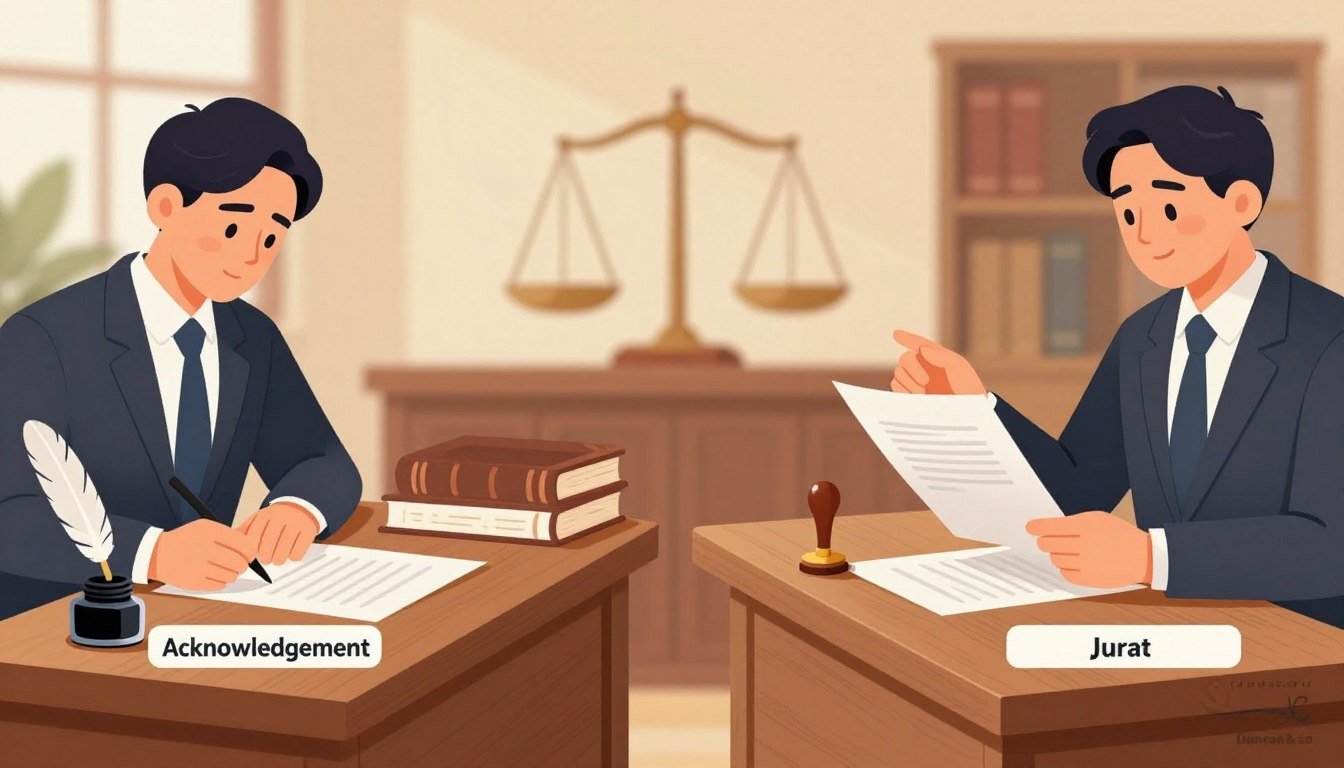
    An acknowledgment focuses on confirming the signer’s identity and willingness to sign. A jurat focuses on oath or affirmation about the truthfulness of statements in the document.

    What can go wrong if the wrong certificate is used

    Institutions such as courts, recorders, lenders, and agencies review the notary certificate. If the certificate does not match the document’s intent, they often reject the filing.

    Consequences include processing delays, re-signing, re-notarization, extra fees, and missed deadlines. Remember: the notary does not change the document content — the role is to perform the correct notarial act and complete the certificate properly.

    Quick example: a deed or contract commonly needs an acknowledgment; an affidavit or application commonly needs a jurat. For questions about which act your signer needs for a specific document, call or text 3038270632 or stop by 350 Terry St Ste 229 Longmont CO 80501 for help with notary services.

    Difference between an Acknowledgement and a Jurat

    What the notary signs off on affects whether a document proves intent or sworn truth.

    Acknowledgment defined

    An acknowledgment tells the notary public that the signer made the signature willingly and knew the document’s effects. The notary confirms identity, appearance, and the proper ceremony. The notary does not attest to the truth of the document’s content.

    Jurat defined

    A jurat is a verification on oath or affirmation. The signer swears or affirms to the notary public that the document’s contents are true. This act requires the signer to take an oath or affirmation in the notary’s presence.

    Verbal ceremony and timing

    An acknowledgment uses a confirmation statement to the notary public; it may cover a signature made before or during the appointment. A jurat requires the actual oath or affirmation and the signature must occur in the notary’s presence.

    What the notary certifies

    The notary certifies identity, proper ceremony, and that the required oath or acknowledgement took place. The notary does not verify factual accuracy unless the act specifically involves an oath. Jurats commonly appear on affidavits, court filings, and applications because they deal with sworn information.

    How to Choose the Right Notarial Certificate Without Crossing Legal Lines

    Read the paperwork first. Many forms include notarial wording that tells which certificate to use. If that wording is clear, follow it.

    Who decides: the signer, an attorney, an escrow or loan officer, or written document instructions make the call—not the notary. Letting a notary pick the certificate can look like legal advice and risk unlicensed practice of law.

    Document clues

    Look for contract language, deeds, or acceptance terms when the paper shows agreement content. Those often need a certificate for signature verification.

    If the file contains sworn statements, affidavits, court filings, or applications, it usually requires a jurat-style act that verifies statements under oath.

    Practical workflow

    1. Check the notarial wording on the document.
    2. If wording is missing, ask the signer to contact the issuer (attorney, lender, or agency).
    3. When a signed document arrives, have the person appear, state the signature is theirs, and compare the mark to ID.

    “Do not add or swap certificates unless the issuer or law allows it; follow instructions and state rules.”

    Scenario Likely certificate Action for notary
    Deed or contract Signature verification certificate Confirm issuer wording; verify signer identity
    Affidavit or court filing Oath/affirmation certificate Administer oath; witness signing in person
    Loan package with mixed papers Multiple certificate types Verify each document; follow lender instructions

    How the Notarization Process Works for Each Type of Notarial Act

    Prepare before the appointment. Bring the signing document, valid ID, and be ready to appear in person. The notary public must see the person and confirm identity before any notarial act.

    Acknowledgment workflow

    For an acknowledgment: the notary confirms the signer is the person named and that the signature was made willingly. The signer may have signed earlier or sign in the notary’s presence. The notary completes the certificate, signs, and applies the seal.

    Jurat workflow (jurat definition)

    For a jurat: the signer must appear, swear or affirm an oath, and sign in the notary’s presence. The notary records the oath affirmation, completes the jurat certificate, signs, and stamps the record.

    Seals, missing wording, and split signings

    Typical seals list Notary Public, state, name, commission number, and expiration. Never guess missing certificate wording; ask the document issuer. Split signings or adding certificates can change the intended act and cause rejection. Using the wrong certificate or stamp can invalidate the notarization and create costly delays.

    Conclusion

    Confirm the correct notarial certificate before your appointment. A quick check of the certificate block helps your document clear recorders and lenders. Remember: acknowledgment = willing signature and awareness; jurat = oath or affirmation that confirms truthfulness and must be signed in person.

    Who decides the certificate? The signer or the document issuer directs which notarial certificate to use, often via an attorney, escrow officer, or lender. The notary public verifies identity and performs the proper ceremony; the notary does not rewrite or give legal advice.

    Review certificates, confirm requirements with the receiving agency, and prevent delays. For local help with notary certificates and document readiness, call or text 3038270632 or visit 350 Terry St Ste 229 Longmont CO 80501 to move your signer and paperwork forward smoothly.

    FAQ

    What is an acknowledgment and when is it used?

    An acknowledgment is a notarial act that confirms a signer personally appeared, was identified, and acknowledged signing a document willingly. It’s commonly used for deeds, real estate transactions, and closing documents to verify the signature’s authenticity rather than the truth of the document’s content.

    What is a jurat and how does it differ in purpose?

    A jurat is a notarial act where the signer swears or affirms that the statements in the document are true. It requires the signer to personally appear, take an oath or affirmation, and sign in the notary’s presence. Jurats are typical for affidavits, sworn statements, and court filings.

    How does the verbal ceremony differ for each notarial act?

    For an acknowledgment the notary asks if the signer signed willingly and understands the document. For a jurat the notary administers an oath or affirmation, and the signer promises the truth of the contents. The jurat includes an explicit pledge of truth while the acknowledgment does not.

    When must the document be signed relative to the notary’s presence?

    For an acknowledgment the signer may have signed earlier but must appear to acknowledge the signature. For a jurat the signer must sign in the notary’s physical presence at the time of the oath or affirmation. Timing rules protect the integrity of the oath.

    What exactly does a notary certify in each act?

    In an acknowledgment the notary certifies the signer’s identity and that the signature was made voluntarily. In a jurat the notary certifies the identity of the signer, that the signer took an oath or affirmation, and that the signature was made in the notary’s presence.

    Who decides which notarial certificate to use?

    The signer, the document’s drafter, an attorney, escrow or loan officer, or the document’s instructions should specify the required certificate. The notary should follow the document’s directions and applicable state law rather than choosing based on convenience.

    How can I tell from the document which act is appropriate?

    Look for language requesting an oath, verification, sworn statement, or jurat for a jurat. Deeds, mortgages, and closing packages often request an acknowledgment. If wording is unclear, contact the document preparer or attorney for direction before notarizing.

    What should I do if the document was already signed but needs an acknowledgment?

    The signer must personally appear and acknowledge the previously made signature to the notary. The notary should verify identity, confirm voluntariness, and follow state rules for completing the acknowledgment certificate.

    What are the steps for completing an acknowledgment notarization?

    Verify the signer’s identity with acceptable ID, confirm the signer signed willingly or will sign before acknowledging, ensure the document contains the proper certificate wording, complete the notarial certificate, affix seal, and record the act in the notary journal if required.

    What are the steps for completing a jurat?

    Verify identity with acceptable ID, administer the oath or affirmation, have the signer sign in your presence (or confirm a signature executed in your presence), complete the jurat wording, affix seal, and record the act according to state law.

    What information appears on notary seals and stamps?

    Typical seals include the notary’s name, commission number, commission expiration date, the state or jurisdiction, and often the county. Some states require a round stamp; others permit rectangular embosser and ink stamp combinations.

    How should a notary handle missing or incorrect certificate wording in a signing package?

    Do not improvise wording. Contact the document preparer, lender, or attorney to obtain corrected language. If allowed by state law, some notaries may attach an addendum or certificate with proper wording, but only after confirming authorization.

    What are split signings and why can adding certificates cause problems?

    Split signings occur when different signers or documents are completed at separate times or locations. Adding certificates later can raise questions about the signer’s presence or the timing of signature, so follow strict procedures and get clear authorization before combining or adding certificates.

    What legal risks arise from using the wrong notarial certificate?

    Using the incorrect certificate can invalidate the notarization, delay closings or filings, and expose the notary or parties to liability. It may require reexecution of documents, and in some cases, create issues with lenders, courts, or public records.

    Are there best practices for notaries when choices are unclear?

    Verify signer identity, read the document instructions, contact the preparer or attorney for clarification, refuse to notarize if unsure, and keep clear journal entries. Staying within state statutes and notarial guidelines protects everyone involved.

    Can a notary add a jurat or acknowledgment after the fact if the signer already left?

    No. The signer must personally appear before the notary for both jurats and acknowledgments. Adding a certificate without the signer present violates notarial law and can invalidate the act.

    Where can I find state-specific notarial certificate wording and rules?

    State government websites, the Secretary of State office, and state notary handbooks provide required wording and procedures. Industry groups like the National Notary Association also offer guidance tailored to each state’s rules.

  • What Documents Require a Notary? A quick guide for first-timers.

    Have you ever wondered why some paperwork demands that extra stamp of approval? This official validation transforms ordinary forms into legally binding instruments that courts, banks, and government agencies trust.

    Notarization serves as a critical fraud prevention measure. An impartial witness verifies identities and ensures all parties sign voluntarily. This process provides essential legal protection for everyone involved.

    Many people encounter this requirement during major life events. From purchasing property to establishing a will, proper authentication saves significant time and prevents future complications. Understanding which items need this service is crucial for smooth transactions.

    First-timers often feel overwhelmed by legal terminology and procedural details. However, with proper guidance, navigating these requirements becomes manageable. This comprehensive overview covers the most common scenarios where official certification is mandatory.

    Key Takeaways

    • Notarization provides legal authenticity to signatures and agreements
    • An impartial witness prevents fraud and validates identities
    • Many major life events require properly authenticated paperwork
    • Understanding requirements saves time and prevents legal issues
    • Different states have varying rules for which items need certification
    • Courts, banks, and government agencies rely on properly executed documents
    • Common examples include real estate agreements, wills, and powers of attorney

    Understanding Notarization and Its Importance

    Legal validation through impartial witnessing provides essential security for binding agreements. This formal process establishes trust between parties and institutions.

    Defining Notarization and Its Role

    Notarization represents a formal procedure where a commissioned official acts as an unbiased witness. The notary public verifies identities and confirms voluntary participation.

    This authentication process transforms ordinary paperwork into legally enforceable instruments. Courts and financial institutions rely on properly executed documents for important transactions.

    How Notarization Prevents Fraud and Verifies Identity

    Identity confirmation stands as the cornerstone of fraud prevention. Notaries examine government-issued identification to ensure signer authenticity.

    The signing ceremony creates an official record of the transaction. This documentation prevents future claims of coercion or misunderstanding.

    Aspect Purpose Benefit
    Identity Verification Confirm signer authenticity Prevents identity theft
    Voluntary Participation Ensure willing signatures Eliminates coercion claims
    Official Documentation Create permanent record Provides legal protection

    Financial organizations and government agencies mandate this protection measure. The system maintains transaction integrity across various legal contexts.

    What Documents Require a Notary: A Comprehensive Overview

    Many critical agreements and contracts need formal authentication to become legally enforceable instruments. This comprehensive overview organizes paperwork into three primary categories for easy identification.

    Understanding which items demand official certification helps streamline important processes. Proper validation ensures institutions will accept your paperwork without delays.

    Legal and Financial Documents

    Legal instruments like powers of attorney and affidavits often require notarization for validity. Financial agreements including loan documents and promissory notes also need this certification.

    These items protect rights and responsibilities during significant life events. Banks and courts rely on properly executed paperwork for important transactions.

    Real Estate, Wills, and Trusts

    Property deeds and mortgage agreements demand official witnessing for recording purposes. Estate planning instruments benefit greatly from proper authentication.

    Wills and trusts with notarization expedite probate proceedings. This reduces legal challenges and confirms the testator’s intentions were clear.

    Document Category Common Examples Primary Benefit
    Legal Documents Powers of attorney, affidavits Court acceptance and legal protection
    Financial Papers Loan agreements, deeds Bank validation and transaction security
    Estate Planning Wills, trusts, guardianship forms Probate efficiency and intention clarity

    State regulations vary significantly regarding mandatory certification requirements. Some jurisdictions consider notarization optional but highly recommended for added protection.

    Notarization in Real Estate and Property Transactions

    Real estate dealings involve considerable financial investments that demand rigorous verification procedures. Property transfers represent major life events where proper authentication becomes essential.

    The stakes are high when buying, selling, or refinancing homes. Official certification protects all parties from potential legal complications.

    Mortgage Agreements and Property Deeds

    Lenders insist on proper notarization for mortgage documents to validate borrower identity. This process confirms understanding of loan terms before signing.

    Financial institutions rely on authenticated paperwork to create legally binding contracts. The notary ensures voluntary participation during closing.

    Property deeds require official certification for county recording offices. Clear ownership establishment prevents fraudulent transfers of real estate assets.

    Without proper notarization, property transactions may lack legal enforceability. This could invalidate sales agreements and create significant complications.

    Different jurisdictions have varying standards for real estate documents. Working with knowledgeable professionals ensures compliance with state requirements.

    The notary creates an official record of who signed the property deeds. This documentation provides crucial protection against future disputes.

    Ensuring Validity for Power of Attorney, Wills, and Trusts

    Personal legal arrangements involving significant authority require careful validation through official witnessing procedures. These instruments govern critical life decisions and asset management.

    A power of attorney grants someone authority to act on your behalf. Different types include general, durable, and healthcare POAs. Proper authentication confirms voluntary signing and prevents exploitation.

    Wills benefit greatly from official certification even when not legally mandatory. Notarized testamentary documents streamline probate proceedings. They reduce challenges from beneficiaries questioning validity.

    Trust agreements manage asset distribution according to specific instructions. Revocable and irrevocable trust arrangements gain legal enforceability through proper notarization. This prevents disputes among heirs.

    Instrument Type Primary Purpose Notarization Benefit
    Power of Attorney Delegate decision-making authority Prevents elder abuse and coercion
    Last Will Asset distribution after death Expedites probate and reduces challenges
    Living Trust Manage assets during lifetime Ensures clear instructions are followed

    State regulations vary significantly for these sensitive legal document types. Some jurisdictions mandate authentication while others strongly recommend it. Understanding local requirements provides essential protection.

    The notary creates an official record that validates each trust arrangement. This documentation protects against future legal complications. Proper execution ensures your intentions are clearly established.

    Notarizing Business Contracts and Financial Documents

    Business operations depend on clear, enforceable agreements that protect all parties involved. Official certification transforms these papers into trusted instruments.

    This validation process confirms that signatures are voluntary and informed. It adds a crucial layer of credibility to commercial dealings.

    Regulatory Compliance and Fraud Protection

    Many commercial transactions mandate notarization for legal acceptance. Partnership agreements and commercial leases often need this step.

    Financial institutions rely on authenticated paperwork for loan approvals. This verification process helps prevent identity theft and misrepresentation.

    Notaries check government-issued IDs and confirm signing authority. This diligence protects companies from unauthorized agreements.

    Document Type Primary Purpose Notarization Benefit
    Business Contracts Establish partnership terms Prevents future contractual disputes
    Loan Agreements Outline borrowing terms Ensures regulatory compliance
    Promissory Notes Document debt repayment Creates legally binding record

    This official procedure provides strong fraud protection for sensitive transactions. It creates a permanent record that is difficult to challenge later.

    Remote Online Notarization: Process and Benefits

    Technology has transformed how we authenticate important paperwork through remote online notarization. This innovative approach maintains legal validity while offering unprecedented convenience for signers.

    The online notarization system eliminates traditional scheduling delays. Users can connect with commissioned officials within minutes rather than days.

    How Remote Notarization Works

    This digital process begins with secure document uploads to specialized platforms. Users then undergo multi-step identity verification before the live session.

    A state-commissioned notary public conducts the signing via video conference. The entire remote online procedure creates a tamper-proof digital record.

    Advanced technology scans government-issued identification cards. Knowledge-based authentication questions provide additional security layers.

    Ensuring a Secure Online Transaction

    Security measures in online notarization often exceed traditional standards. Facial recognition technology matches users with their identification.

    Every remote online session generates comprehensive audit trails. These records include timestamps and complete video documentation.

    State regulations vary regarding acceptable documents for remote online notarization. Some jurisdictions restrict real estate transactions from digital processing.

    Properly executed online notarization carries the same legal weight as in-person services. Courts and financial institutions recognize these authenticated papers.

    Preparing Your Documents for a Successful Notarization

    Before visiting a notary public, gathering the correct identification represents the most critical preparatory step. Proper preparation ensures your appointment proceeds smoothly without unexpected delays.

    Gathering Required Identification

    Each signer must present valid government-issued photo identification. Washington State mandates that IDs be current or expired no more than three years.

    Accepted forms include driver’s licenses, passports, military cards, and tribal identification. The notary public verifies each signer’s identity through this documentation.

    Acceptable ID Type Key Requirements Verification Elements
    Driver’s License Current or expired ≤3 years Photo, signature, physical description
    U.S. Passport Valid and unexpired Photo, signature, personal details
    Military ID Active duty status Photo, signature, service information
    Permanent Resident Card Valid immigration status Photo, signature, alien registration number

    Notaries may request additional documentation to ensure compliance with state regulations. This verification step protects against identity fraud.

    When assisting loved ones in healthcare facilities, confirm they have proper identification available. Bring completed forms, all required signers, and payment for services.

    Proper identification validation forms the foundation of legally binding notarization. Without adequate verification, the process cannot proceed.

    Thorough preparation prevents complications and ensures efficient transactions. This approach benefits all parties involved in the authentication process.

    Steps to Get Your Documents Notarized

    The journey to properly authenticated paperwork begins with selecting the right service method for your needs. Understanding the complete procedure helps first-timers navigate this essential legal step efficiently.

    In-Person Versus Online Notarization

    Traditional face-to-face appointments remain available at banks, post offices, and law firms. These services provide personal interaction and immediate physical stamping.

    Digital platforms offer remote authentication through secure video connections. Online options save travel time and provide flexible scheduling.

    Consider your recipient’s requirements before choosing a method. Some institutions still mandate traditional ink signatures for certain transactions.

    Time-Saving Tips for First-Timers

    Prepare all paperwork completely before your appointment. Ensure every required signature line remains blank until the witnessing ceremony.

    Bring valid government-issued photo identification to verify your identity. Having proper credentials ready prevents delays.

    Schedule appointments during off-peak hours for quicker service. Early mornings or late afternoons often have shorter wait times.

    Mobile notaries can travel to your location for added convenience. This eliminates commuting time and accommodates busy schedules.

    Remote online services connect you with professionals within minutes. Digital platforms streamline the entire authentication process efficiently.

    Conclusion

    Proper authentication stands as the final safeguard in protecting your most significant legal arrangements. This official validation process brings essential credibility to paperwork across various contexts.

    From real estate agreements to estate planning instruments, certified documentation ensures acceptance by courts and financial institutions. Business contracts and affidavits also benefit from this protective measure.

    The dual advantages include robust fraud prevention through identity verification and voluntary signing confirmation. These procedures meet strict legal standards for complex transactions.

    First-timers can approach this process with confidence when properly prepared. Whether choosing traditional or online services, proper preparation ensures smooth authentication.

    Understanding state-specific requirements helps select the right service method. Professional assistance is available for both routine and urgent validation needs.

    Secure proper authentication for lasting legal protection and peace of mind. This final step transforms ordinary paperwork into trusted instruments.

    FAQ

    Which common legal documents need to be notarized?

    Many important papers require this service. Key examples include real estate deeds, mortgage agreements, powers of attorney, wills, and certain business contracts. This process adds a layer of trust and legal credibility to these critical transactions.

    How does remote online notarization work?

    Remote online notarization uses secure video technology. You connect with a commissioned notary public live online. The notary verifies your identity, witnesses the signing electronically, and applies a digital seal and signature. This method is fast, secure, and legally binding in most states.

    Why is notarization so important?

    The primary role of a notary public is to prevent fraud. They confirm the signer’s identity and ensure they are signing willingly without any coercion. This verification process protects all parties involved and gives the document greater legal weight.

    What identification do I need to bring to a notary?

    You must present a current, government-issued photo ID. Acceptable forms typically include a driver’s license, state ID card, passport, or military identification. The ID must be original and valid; photocopies are not accepted for the identity verification step.

    Can any document be notarized online?

    While remote online notarization is available for many documents, some state-specific restrictions may apply. Complex real estate paperwork or certain court documents might require an in-person session. It’s best to check with your notary service provider to confirm if your specific document is eligible for an online process.

    What’s the difference between a notary and an attorney?

    A notary public is not a lawyer. They are authorized to witness signatures, verify identities, and administer oaths. They cannot provide legal advice or prepare legal documents. An attorney is licensed to practice law, offer legal counsel, and represent clients in court.

  • Understanding ‘Capacity’ vs. ‘Competency’ in Notarization

    Understanding ‘Capacity’ vs. ‘Competency’ in Notarization

    Nearly one in five legal documents involving elderly signers faces challenges due to questions about mental state. This startling fact highlights a critical risk for notary professionals. Every signature carries immense weight.

    A professional must ensure a signer grasps the document’s nature and consequences. This is a core part of the law. Confusing two key concepts—capacity and competency—can invalidate an entire transaction.

    This guide clarifies these vital distinctions. It provides practical steps for protecting both the signer and the notary. You will learn to navigate complex situations with confidence.

    Key Takeaways

    • Grasping the difference between capacity and competency is fundamental for a valid notarization.
    • The law requires signers to understand the document’s purpose, benefits, and risks.
    • Proper assessment protects the notary from future legal challenges and liability.
    • Recognizing warning signs of confusion or undue influence is an essential skill.
    • This knowledge is crucial when handling documents like powers of attorney or property deeds.
    • Implementing best practices safeguards the integrity of the entire process.

    Introduction to Capacity and Competency in Notarization

    At the heart of proper notarial practice lies the critical assessment of a person’s mental faculties. This evaluation forms the bedrock of document validity and legal enforceability.

    Defining Capacity and Competency in Legal Terms

    Mental capacity refers to a person’s cognitive ability to comprehend a specific legal instrument. It focuses on whether the individual grasps the nature and consequences of that particular transaction.

    Competency represents a broader legal status. It presumes general decision-making capability unless a court rules otherwise through formal proceedings.

    California law establishes clear benchmarks. The standards for executing a Durable Power of Attorney mirror contract formation criteria under Probate Code § 4120 and Civil Code § 1556.

    Why Notarization Requires Clear Understanding

    The notarial act demands that the signer demonstrates sufficient mental capacity. They must understand what they are signing and its legal implications.

    This requirement protects all parties involved. It ensures documents withstand potential challenges based on claims of insufficient cognitive awareness.

    Proper assessment safeguards the notary from liability. It also preserves the integrity of the entire legal process.

    Legal Standards and Evaluation Criteria

    Statutory guidelines provide notaries with measurable criteria for mental state assessment. These standards help professionals identify when a signer may lack the necessary comprehension.

    Statutory Guidelines and the Role of California Codes

    California law establishes specific benchmarks through the Due Process in Competence Determinations Act. This framework appears in Probate Code § 810-813.

    The law clarifies that having a mental or physical disorder doesn’t automatically mean incapacity. There must be evidence of specific functional limitations.

    legal standards evaluation criteria

    Understanding the Due Process in Competence Determinations Act

    The DPCDA outlines comprehensive evaluation criteria. These include level of consciousness and orientation to time, place, and situation.

    Memory function represents another critical component. The ability to retain and process information is essential for informed decisions.

    Higher-level cognitive abilities are also assessed. These include logical reasoning and planning actions in one’s rational self-interest.

    Understanding this legal framework helps notaries recognize borderline situations. It enables better documentation when potential challenges might arise.

    Influences on Notarization: Family Disputes and External Pressures

    Family disagreements often create the most difficult situations for notaries during document signing. These conflicts frequently surface when one person, like a child or caregiver, presents a new power of attorney document. This can happen without other relatives knowing, raising serious questions.

    Suspicions may arise about whether the signer truly understood the document’s contents. Concerns about trickery or coercion are common in these tense family dynamics.

    Challenges Arising from Family Disputes

    Two specific issues can invalidate a signing: undue influence and duress. Undue influence involves manipulation by someone in a position of trust. This person might isolate the signer or apply persistent pressure.

    Duress is more overt, involving threats or intimidation to force a signature against the signer’s will. Both problems completely undermine the voluntary nature of the act.

    Notaries must be alert to warning signs during the appointment. Red flags include a family member or proposed agent who:

    • Dominates the conversation and answers for the signer.
    • Refuses to allow the signer to speak with the notary privately.
    • Seems to be rushing or pressuring the signing process.

    Preventive Measures and Documentation Practices

    When contentious family dynamics are known, proactive steps are essential. These measures help protect the document from future legal challenges.

    Strong documentation practices provide crucial evidence of the signer’s intent and capacity. Consider having disinterested witnesses present who can later attest to the signer’s clear state of mind.

    Obtaining a dated, written opinion from the signer’s doctor is another powerful tool. A video recording of the signer explaining their understanding and intent can also be invaluable. If a notary suspects any improper influence, the safest course is to decline the notarization.

    Assessing and Documenting Mental Capacity for Notarization

    Proper documentation practices create a defensible record of mental state evaluation. These methods protect all parties when questions arise later.

    assessing mental capacity for notarization

    A systematic approach begins with clear communication. The notary should confirm the signer understands the document‘s purpose. Ask open-ended questions about the transaction.

    Best Practices: Witnesses, Doctor’s Opinion, and Video Statements

    When potential challenges exist, additional safeguards become crucial. Disinterested witnesses provide objective observations of the signing event.

    These individuals should sign statements describing what they observed. Their notes should include the signer‘s coherence and apparent understanding.

    A doctor’s written opinion offers medical validation. This dated information confirms sound mind at the time of execution.

    Video recordings capture the signer stating their name, the date, and their voluntary intent. This visual evidence is powerful in legal situations.

    Steps to Secure and Verify Consent

    Verification starts with basic identification confirmation. The signer should state their name and match their ID.

    They must articulate the document‘s general purpose in their own words. This demonstrates comprehension beyond mere recognition.

    Detailed journal entries by the notary should note the signer‘s alertness and responsiveness. Preserve all supporting materials with the original document.

    While not medical experts, notary professionals make reasonable judgments about present understanding. Proper documentation validates these assessments.

    Understanding “Capacity” vs. “Competency” in Notarization

    Notaries face daily decisions that hinge on properly distinguishing between present understanding and legal status. This distinction forms the foundation of valid document execution.

    Side-by-Side Comparison of the Two Concepts

    Mental capacity refers to a signer’s immediate ability to comprehend a specific document. It focuses on whether they grasp the transaction’s nature and consequences at the moment of signing.

    Legal competency represents a broader status determined through court proceedings. A judge must formally declare someone incompetent for this status to apply.

    Capacity is situational and time-sensitive. A person might understand a simple acknowledgment but struggle with complex estate planning documents. Their awareness can vary throughout the day.

    Competency remains constant until a court rules otherwise. This legal presumption protects individuals from arbitrary determinations.

    How These Distinctions Impact Notary Decisions

    The practical difference guides a notary’s approach. Professionals assess present capacity rather than making medical judgments about overall competency.

    When a signer appears confused or cannot explain the document’s purpose, the notary should decline the acknowledgment. This indicates insufficient capacity regardless of legal status.

    Proper documentation of observations becomes crucial. It provides evidence of the signer’s understanding if questions arise later about the transaction’s validity.

    Conclusion

    Every notarial appointment carries the responsibility to protect both the signer’s rights and the document’s legal integrity. This article has equipped notary professionals with essential tools for this critical task.

    The core distinction lies in evaluating present understanding rather than making broad judgments. Each signing requires assessing whether the signer grasps the specific transaction at that moment.

    Implementing protective practices during appointments safeguards all parties. Detailed journal entries and witness statements create vital records. These measures prove invaluable when handling complex documents like power of attorney forms.

    Ongoing education remains crucial for navigating various situations. Professional notary services maintain the highest standards through continuous learning. This knowledge ensures confident handling of every acknowledgment.

    FAQ

    What is the main difference between capacity and competency in notarization?

    Capacity refers to a signer’s immediate ability to understand the transaction and document at hand. Competency is a broader, legal determination of a person’s overall mental soundness, often made by a court. A notary public assesses capacity, not competency.

    Can a notary refuse to proceed if they suspect a signer lacks capacity?

    Yes. A notary has a duty to refuse the notarization if they have a good-faith belief that the signer does not appear to understand the document or is acting under duress. This protects the integrity of the notarial act.

    How can family disputes affect a notarization?

    Family disagreements can create pressure on a signer, raising concerns about undue influence. A notary must be alert to signs of coercion and may need to speak with the signer privately to ensure their willingness is genuine.

    What steps can a notary take to verify a signer’s mental capacity?

    A notary can ask simple, direct questions about the document’s purpose and consequences. Having a disinterested witness present or a recent doctor’s note stating the signer is of sound mind can also provide valuable support for the record.

    Does a Power of Attorney grant the agent the authority to sign for the principal?

    It depends on the specific powers granted in the document. A notary must carefully review the Power of Attorney to confirm the agent is authorized to sign the specific type of document requiring notarization on behalf of the principal.

    What should a notary do if a signer’s identification raises concerns?

    The notary must positively identify the signer using acceptable forms of ID. If the identification is questionable or does not match the signer’s appearance, the notary should not proceed until proper identification is provided.

  • The Role of a Notary in ‘Signature by Mark’ Explained

    The Role of a Notary in ‘Signature by Mark’ Explained

    Over 32 million American adults struggle with basic literacy skills, creating significant barriers when legal documents require signatures. This reality makes alternative signing methods essential for equal access to legal processes.

    A signature mark serves as a vital accommodation for individuals who cannot write their name. This method involves making a distinctive symbol or mark instead of a traditional written signature. It ensures everyone can participate in important legal matters regardless of physical limitations or educational background.

    The notary public plays a critical function in these situations. Their presence guarantees the signer understands the document’s contents. This authentication process prevents fraud and protects individual rights.

    This accommodation carries the same legal weight as conventional signatures across most U.S. jurisdictions. It represents a fundamental right to engage with legal systems without discrimination based on ability or education level.

    Key Takeaways

    • Signature by mark provides legal access for individuals who cannot write
    • This method holds equal legal validity to traditional signatures
    • Notaries ensure proper understanding and prevent fraud
    • The process protects rights for people with physical or literacy challenges
    • This accommodation promotes inclusivity in legal documentation
    • Proper authentication maintains document integrity and legal standing

    Understanding Signature by Mark and Its Significance

    When physical limitations prevent conventional signing, the law provides an accessible alternative. This accommodation allows individuals to use a distinctive symbol instead of a written name.

    Defining a Signature by Mark

    A signature mark involves creating a simple symbol like an “X” or unique design. This method serves as a valid alternative to traditional handwriting.

    The Uniform Commercial Code and state statutes recognize this mark as legally binding. It carries the same weight as any conventional signature on important documents.

    Legal Importance and Inclusivity

    This legal accommodation protects fundamental rights for diverse circumstances. Physical disabilities, age-related limitations, and literacy challenges all qualify for this method.

    Every person deserves equal access to legal processes regardless of ability. The signature mark ensures no individual faces exclusion from civic participation.

    This practice represents society’s commitment to inclusivity. It validates every signer’s intent and agreement with transaction terms.

    How Notaries Approach the Signature by Mark Process

    Notaries employ a systematic approach when authenticating documents signed with distinctive marks. This methodical process ensures legal validity while protecting vulnerable individuals.

    Steps Involved for Witnessing a Mark

    The witnessing procedure begins with proper identification of the individual. Notaries must verify the person’s identity before proceeding with the signing.

    Next, the notary positions the document correctly and explains the process. They observe carefully as the signer makes their distinctive symbol on the designated line.

    Proper notation is critical for legal recognition. The notary prints the first name before the mark and the last name after it. Below the symbol, they write “his mark” or “her mark” to clearly identify the signer.

    notary signature mark process

    Process Element Traditional Signature Signature Mark
    Identification Required Standard verification Enhanced verification
    Notation Method Standard notary seal Name printing + mark designation
    Witness Requirements Notary only Notary + additional witnesses

    Ensuring Signer Comprehension and Consent

    Assessing mental capacity represents the most critical responsibility. Notaries must confirm the individual understands the document’s purpose and implications.

    This involves asking clear questions about key provisions. Observing the person’s responses and demeanor provides additional insight into their comprehension level.

    “The notary’s duty extends beyond witnessing to actively verifying understanding. This protective role prevents exploitation while empowering vulnerable signers.”

    When concerns about cognitive capacity arise, notaries should decline the notarization. This protects both the individual and the integrity of the legal process.

    Detailed Procedures and State Requirements

    State-specific regulations dictate precise requirements for notaries handling distinctive mark signatures. These guidelines ensure proper authentication while maintaining legal validity across jurisdictions.

    Documentation and Notary Journal Guidelines

    Proper journal entries capture essential details for each transaction. The signer’s distinctive symbol must be recorded alongside witness information.

    Florida’s process involves four systematic steps. Location data comes first, followed by the person’s details. Document information follows, with witness data completing the entry.

    Witness Requirements and Best Practices

    Florida law mandates two disinterested witnesses for mark-based signatures. These individuals cannot have financial or personal stakes in the documents.

    Best practices include having a witness write the signer’s name beside their mark. This additional step provides clarity and strengthens authentication.

    Compliance with Florida and U.S. Laws

    State laws vary significantly regarding witness requirements. While Florida requires two witnesses, other states may differ. Notaries must consult local statutes for compliance.

    Electronic journal systems now accommodate digital capture of marks and witness signatures. These tools maintain security while streamlining documentation.

    Requirement Type Florida Specifications Recommended Practice
    Witness Count Two disinterested parties Verify no financial interest
    Journal Entry Four-step process Capture mark symbol digitally
    Name Documentation Optional clarification Witness writes name by mark

    Certificate wording must explicitly describe the signature method used. This ensures proper documentation and legal standing for all parties involved.

    The Role of a Notary in “Signature by Mark”

    The verification process for symbolic signatures demands careful oversight from certified professionals. Public officials must balance accessibility with rigorous authentication standards.

    Notary’s Responsibilities in Authenticating a Mark

    Authentication begins with thorough identity confirmation. Officials examine identification documents before proceeding.

    Direct observation of the mark creation is essential. The individual must place their symbol intentionally and voluntarily.

    notary verifying signature mark

    Proper documentation captures every detail of the transaction. This includes witness information and specific notation methods.

    Verifying Cognitive Capacity and Document Understanding

    Assessing mental awareness represents the most critical duty. Professionals must confirm comprehension through direct questioning.

    Communication techniques involve reviewing key terms and purposes. Observing responses helps gauge genuine understanding.

    Red flags like confusion or coercion require immediate action. When concerns exist, officials should decline the procedure.

    “Proper authentication safeguards vulnerable individuals while maintaining legal integrity. This protective function prevents exploitation.”

    These practices ensure equal access while protecting all parties involved. The process upholds fundamental rights for every individual.

    Best Practices and Common Pitfalls for Notaries

    Professional notaries must master specific protocols when handling documents signed with distinctive symbols. Proper execution ensures legal validity while protecting vulnerable individuals.

    Maintaining Impartiality and Accurate Record Keeping

    Strict neutrality forms the foundation of proper notary practice. Officials must never serve as proxy signers or show favoritism.

    Comprehensive journal entries capture essential transaction details. Recording witness names and signing methods creates vital documentation.

    Thorough records protect both the signer and the notary public. This practice maintains integrity even when not legally mandated.

    Avoiding Conflicts of Interest

    Witness selection requires careful vetting for impartiality. Disinterested parties must have no financial or personal stakes.

    Family members often present conflict concerns. Proper notaries verify witness independence before proceeding.

    “Meticulous documentation prevents future legal challenges while ensuring dignified service for every signer.”

    Common errors include forgetting to annotate marks properly. Printing the name alongside “his/her mark” notation prevents ambiguity.

    Best Practice Common Pitfall Consequence
    Verify witness independence Allow conflicted witnesses Document invalidation
    Journal all transaction details Incomplete documentation Legal liability exposure
    Proper mark annotation Missing name notation Authentication challenges

    Additional time investment often proves necessary. Capacity assessment and witness coordination require patience.

    Efficient workflows balance accommodation with procedure. This approach maintains dignity while fulfilling all legal requirements.

    Conclusion

    Beyond procedural requirements, symbolic signatures represent a fundamental commitment to equal access under the law. This accommodation ensures every individual can participate in legal processes regardless of physical capabilities or educational background.

    Professionals serving the public must balance meticulous documentation with compassionate service. Each signer deserves dignified treatment when they make their mark on important documents. Proper execution of this process protects vulnerable individuals while maintaining legal integrity.

    Continuous education about state-specific laws remains essential for competent practice. Professionals should regularly consult updated statutes and seek training when needed. This knowledge ensures proper handling of every transaction involving alternative signing methods.

    Ultimately, these practices contribute to broader social goals of inclusion and equal participation. Every properly executed signature mark reinforces our legal system’s commitment to accessibility for all citizens.

    FAQ

    What is a signature by mark?

    A signature by mark is a legally recognized way for a person to sign a document when they are unable to write their full name. This typically involves making a simple symbol, such as an “X,” which is then properly witnessed and notarized to give it legal standing.

    Why is the notary’s role so critical in this process?

    The notary public serves as an official, impartial witness. Their primary role is to verify the identity of the signer, ensure they are signing willingly and understand the document, and to properly record the event in their notary journal. This authentication prevents fraud and upholds the document’s validity.

    Are witnesses always required for a signature by mark?

    A> Witness requirements vary by state law. Many jurisdictions, including Florida, mandate that two disinterested witnesses observe the person making their mark. These witnesses must also sign the document alongside the notary public to attest to the signing event.

    What specific details must a notary record in their journal?

    The notary journal entry should be thorough. It must include the date, the type of document, the signer’s name, a description of the mark used, and the printed names and signatures of all required witnesses. This detailed record-keeping is essential for legal compliance and creating a reliable paper trail.

    How does a notary verify a signer’s capacity and understanding?

    The notary must communicate directly with the signer to confirm they are mentally alert and aware of the document’s significance. This involves asking clear questions to assess their comprehension and ensuring they are acting of their own free will, without any pressure or coercion.

    What are common mistakes notaries should avoid?

    Key pitfalls include failing to use the required number of witnesses, providing unauthorized legal advice about the document’s content, and keeping incomplete journal entries. Notaries must remain strictly impartial and avoid any situation that could be seen as a conflict of interest.

  • The “Sound Mind” Requirement: What You Need to Know

    The “Sound Mind” Requirement: What You Need to Know

    Every year, thousands of wills and legal agreements face challenges in court due to questions about mental capacity at signing. This startling reality highlights why the concept of being of sound mind matters so deeply in legal proceedings.

    When you sign important papers, a notary public serves as an impartial witness. Their role goes beyond just watching you sign. They help verify that you possess the mental clarity needed to understand what you’re agreeing to.

    This protective measure ensures your wishes are honored exactly as intended. Whether creating a will, power of attorney, or trust, having proper mental capacity makes your document legally binding and resistant to future disputes.

    The principles behind this requirement apply consistently across different states. They protect both the individual signing and their loved ones from potential legal battles down the road.

    This guide explores how mental capacity assessments work during notarization. You’ll learn practical strategies to meet these important legal requirements with confidence.

    Key Takeaways

    • The sound mind requirement ensures signers understand their legal actions
    • Notarization provides crucial protection against future document challenges
    • Mental capacity verification applies to wills, trusts, and powers of attorney
    • Proper notarization makes documents more resistant to legal disputes
    • State laws vary but fundamental capacity principles remain consistent
    • Understanding these requirements protects both individuals and families

    Overview of the “Sound Mind” Requirement

    Mental clarity at the moment of signing serves as a critical safeguard in document execution. This principle ensures agreements reflect genuine intent rather than confusion or coercion.

    Defining a Sound Mind in Legal Terms

    A sound disposing mind means the signer comprehends several key aspects. They must understand what they own and what the paper accomplishes.

    The person should recognize who benefits from their decisions. They need to grasp any claims from excluded parties. This functional understanding makes the instrument legally valid.

    Importance in Document Notarization

    Notaries verify mental capacity during the signing process. This temporal assessment protects against future challenges.

    The standard applies to various instruments like trusts and powers of attorney. Proper verification ensures the testator’s wishes withstand legal scrutiny.

    Understanding the “Sound Mind” Requirement for Notarization

    Assessing signatory awareness forms the cornerstone of reliable document authentication procedures. This evaluation occurs during the notarization process to ensure agreements reflect genuine intent.

    Key Criteria and Guidelines

    Notaries follow specific guidelines when evaluating a person’s mental capacity. They assess responsiveness to questions and understanding of document contents.

    The individual should articulate reasons for their decisions clearly. Notaries must reasonably believe the signer comprehends the transaction and acts voluntarily.

    These professionals are trained to recognize signs of confusion or disorientation. While not medical experts, they identify obvious capacity concerns.

    How Mental Capacity Impacts Document Validity

    Mental capacity must exist precisely at the moment of signing. This temporal requirement protects document validity against future challenges.

    Witnesses provide crucial corroboration of the signatory’s cognitive state. Their observations strengthen the legal standing of executed instruments.

    When doubts arise about capacity, notaries ethically refuse service. This protection ensures documents withstand legal scrutiny and reduce dispute risks.

    Legal and Mental Capacity Considerations

    Legal systems require clear evidence of cognitive function when people create binding documents. This protection ensures agreements reflect genuine intent rather than confusion.

    Elements of Testamentary Capacity

    A testator must meet specific criteria to validate their will. They need to be at least 18 years old in most states. The individual must possess a sound mind and act without undue influence.

    This legal standard focuses on functional abilities rather than medical diagnoses. The person should understand they’re creating a will and know their property’s extent. They must recognize natural beneficiaries and grasp distribution plans.

    Assessing Your Mental Capacity for Notarization

    Mental capacity can fluctuate, making timing critical for document execution. What matters is the person’s state at the exact moment of signing. This temporal requirement protects against future challenges to the estate plan.

    Practical assessment includes discussing property ownership clearly. The testator should articulate distribution wishes and explain decision reasoning. When circumstances raise concerns, professional evaluators can provide expert opinions.

    Notary publics document demonstrated capacity during the signing process. Their observations help create legally binding documents that withstand scrutiny. This protection serves both the individual and their intended beneficiaries.

    Step-by-Step Guide to Meeting the Requirement

    A systematic approach to document signing protects against future challenges and ensures legal validity. This process involves careful preparation and strict adherence to verification protocols.

    document execution process

    Preparing Your Documentation Effectively

    Begin by ensuring your document is drafted clearly without ambiguities. Gather all necessary materials before your appointment. This includes the original document and valid government-issued identification.

    Select a qualified notary public with experience handling your specific type of instrument. Verify their licensing status and availability. Proper preparation streamlines the entire execution process.

    Ensuring Notary and Witness Compliance

    The signing must occur with all parties present simultaneously. The notary public verifies your identity and confirms voluntary participation. They assess apparent understanding of the document’s contents.

    Most states require two independent witnesses for certain documents. These individuals must have no financial interest in the transaction. Witnesses must observe the principal signature and sign immediately afterward.

    Modern technology enables remote online notarization services in some jurisdictions. These services use audio-visual communication while maintaining strict verification standards. The notary must also document the transaction in their official journal.

    Navigating Document Validity and Legal Requirements

    Navigating the maze of state-specific notarization requirements is essential for creating enforceable legal documents. Each jurisdiction maintains unique protocols that determine whether your instrument will withstand legal scrutiny.

    Certifying Legally Binding Documents

    A legally binding document requires proper execution with precise adherence to formalities. Notarization serves as critical authentication when mandated by specific legal provisions.

    The notary public verifies identity and confirms voluntary participation during signing. Their official seal provides third-party validation of the transaction’s validity. Proper execution includes witness presence where required by state law.

    Adhering to State-Specific Notarization Standards

    State variations significantly impact document requirements. Some jurisdictions mandate two witnesses for wills while others require none. Remote online notarization is permitted in certain states but prohibited elsewhere.

    Professional services can guide you through these complex notarization protocols. Seeking legal advice ensures your estate planning documents meet all jurisdictional requirements for being legally valid.

    Benefits of Complying with the Sound Mind Requirement

    Following proper mental capacity protocols yields significant advantages that extend far beyond the signing ceremony. These protective measures create documents that withstand legal scrutiny while providing lasting security.

    benefits of sound mind compliance

    The compliance process delivers tangible value for individuals creating important instruments. It transforms basic paperwork into robust legal protections.

    Enhanced Credibility in Document Execution

    Proper verification establishes document authenticity from the moment of signing. Courts give greater weight to instruments where capacity was clearly demonstrated.

    This creates a presumption of validity that challengers must overcome with substantial evidence. The notary’s contemporaneous record becomes powerful proof if questions arise later.

    Your estate planning documents gain immediate credibility when properly executed. This reduces the likelihood of successful challenges from dissatisfied parties.

    Achieving Peace of Mind Through Professional Verification

    Working with qualified professionals provides confidence that all formalities were satisfied. You gain assurance that your wishes will be honored exactly as intended.

    This peace of mind extends to your loved ones, who avoid complex legal battles during difficult times. The relatively small investment in proper notarization delivers enormous protective benefits.

    Your estate settlement becomes smoother and more efficient. Proper compliance ensures your plans remain legally binding for years to come.

    Common Challenges and How to Overcome Them

    Document signings encounter predictable obstacles when verifying cognitive function meets legal standards. These hurdles can undermine even well-intentioned estate planning efforts if not properly addressed.

    Identifying Pitfalls Related to Mental Capacity

    Subtle cognitive decline often creates the most difficult assessment circumstances. Distinguishing normal aging from genuine incapacity requires careful observation over time.

    Many people delay important documents until advanced age or health concerns arise. This timing increases the risk of capacity questions during the signing process.

    Fluctuating mental states present particular challenges for witnesses and professionals. What appears clear one day might be confused the next.

    Strategies to Prevent Undue Influence

    Undue influence occurs when someone pressures a testator to change their wishes. Warning signs include sudden estate plan alterations after new relationships form.

    Isolation from family members and unexplained beneficiary changes should raise concerns. The testator’s inability to independently explain decisions indicates potential problems.

    Effective prevention strategies include:

    • Involving neutral professionals without conflicts of interest
    • Conducting formal capacity assessments when questions arise
    • Choosing independent witnesses who understand their role
    • Documenting the entire process thoroughly

    The signing must also include careful recording of discussions and circumstances. Using technology like video recording creates valuable evidence when permitted by law.

    Following established guidelines protects your legal document for years. When doubts exist about capacity or influence, delay signing and seek professional evaluation.

    Conclusion

    Adhering to mental capacity standards during document signing provides a powerful shield for your final wishes. This vital process ensures your agreements remain legally binding and reflect your true intentions.

    Core principles demand you are of legal age and possess clear understanding. While state requirements differ, these fundamentals protect your estate planning from future disputes.

    Proper execution involves careful preparation and qualified notary services. Independent witnesses must observe the signing to confirm your voluntary participation.

    Seeking specific legal advice is crucial for navigating these protocols. Professional guidance ensures your document is legally valid, offering lasting peace to your loved ones.

    FAQ

    What does "sound mind" mean for a notary public?

    For a notary public, a “sound mind” means the person signing the document must understand the nature and consequences of their actions. This mental capacity is a key legal requirement to ensure the document is legally binding and valid. The notary must be reasonably sure the signer is not confused or under undue influence.

    How does a notary assess if someone is of sound mind?

    A notary assesses mental capacity through simple interaction. They may ask basic questions about the document being signed. The goal is to confirm the signer understands what they are doing. Notaries are not doctors, but they must use judgment to spot signs of confusion or incapacity that could invalidate the execution process.

    Can a document be notarized if the signer has a dementia diagnosis?

    It depends on the person’s mental state at the exact time of signing. A dementia diagnosis alone does not automatically disqualify someone. The notary public must determine if the individual has lucid moments and possesses testamentary capacity during the notarization. If the person appears disoriented, the notary should refuse services to protect the document’s legal validity.

    What happens if a document is notarized when the signer lacked capacity?

    If it is later proven the signer lacked mental capacity, the document’s validity can be legally challenged in court. It may be declared void. This underscores the critical importance of the notary’s role in verifying the signer’s sound mind to prevent future disputes over the estate or other matters.

    Are there specific legal requirements for witnesses regarding sound mind?

    A> Yes, for certain documents like wills, witnesses must also be present and may need to attest to the testator’s sound mind. The notary and witnesses serve as a safeguard. Their presence helps certify that the signing was voluntary and the person was of sound mind, free from undue influence, adding a layer of authenticity to the process.

    What steps can I take to ensure compliance with the sound mind requirement?

    To ensure compliance, schedule the notarization for a time when the signer is alert and rested. Have all documentation prepared in advance. Be ready to explain the document’s purpose clearly. Engaging a notary public with experience in estate planning documents can provide additional peace of mind that all legal requirements are met.